

What do fleas look like on a dog?
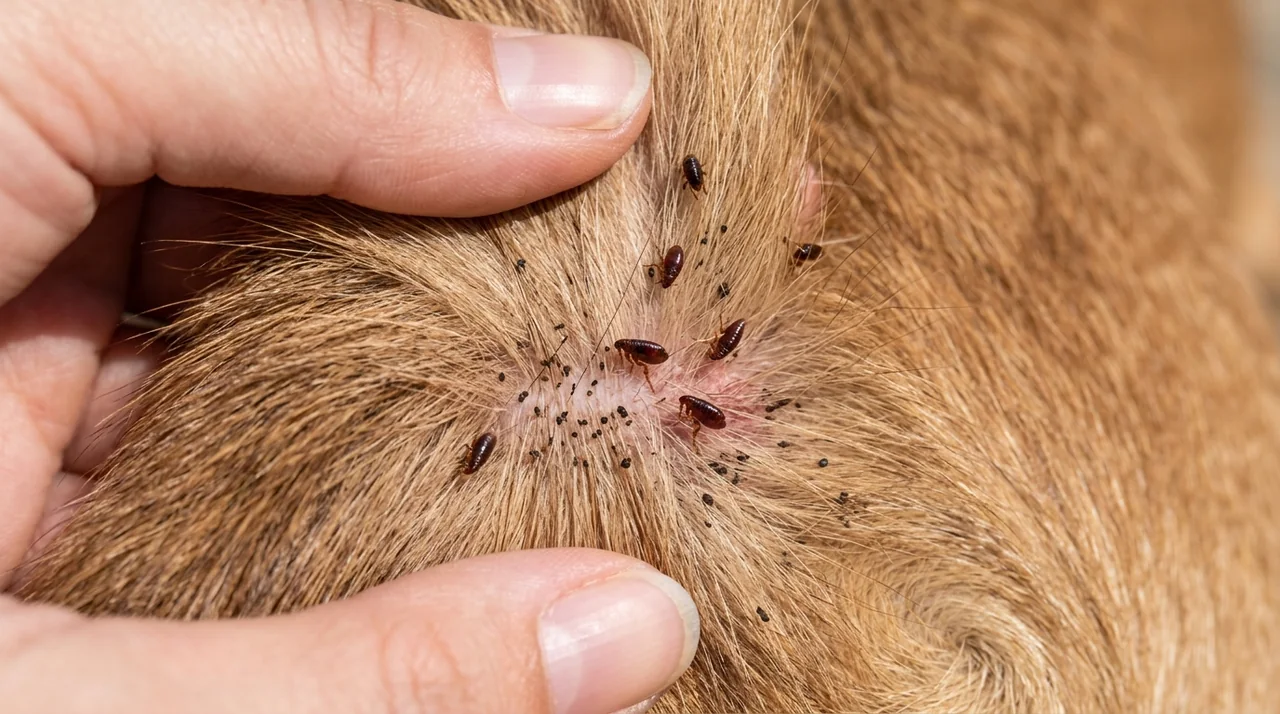
Fleas on a dog are small, but visible if you part the fur and look closely. The species you will almost always find is the cat flea (Ctenocephalides felis). Despite its name, it is the flea found on most dogs and cats. Each adult is:
- Roughly the size of a pinhead to a sesame seed (about 1 to 3 millimeters).
- Dark reddish-brown and shiny.
- Flattened side-to-side, so it slips easily between hairs.
- Wingless, but built to jump and to run fast when the coat is disturbed.
What is flea dirt, and how do I test for it?
"Flea dirt" is flea feces, made largely of digested blood. It is one of the clearest signs of an infestation. It looks like scattered specks of black pepper down in the coat, especially near the skin. You can confirm it is flea dirt and not ordinary dirt. Comb some specks onto a damp white paper towel. Flea dirt smears rust-red or reddish-brown as the blood rehydrates, while regular grime stays dark. A flea comb dragged slowly through the fur is the easiest way to collect both flea dirt and live fleas.
Where should I look on my dog?
Fleas prefer warm, sheltered spots where the fur is thinner and the skin is easy to reach. Concentrate your search on:
- The base of the tail and the lower back.
- The belly and groin.
- The "armpits" behind the front legs.
- Behind and inside the ears.
What are the signs of fleas beyond seeing them?
Sometimes the dog's behavior and skin tell the story before you spot a single flea:
- Frequent scratching, biting, chewing, or licking, often focused near the tail base.
- Small red bumps, scabs, or thinning hair from irritation.
- Restlessness or visible discomfort.
- Tiny white specks (flea eggs) or pale, comma-shaped larvae in bedding.
How is a flea different from a tick or other bug?
It is easy to mix up small parasites. A flea is wingless, jumps, and keeps moving through the fur. A tick does not jump. It crawls, then attaches head-first and stays put. It swells as it feeds until it looks like a small bean. Walking dandruff (a mite) and specks of ordinary dirt behave differently, too. They do not smear red on a damp towel the way flea dirt does. If you are unsure what you found, that red-smear test is the quickest tell.
What do I do if I find fleas?
Treat the dog and the home at the same time. Most of a flea population — eggs, larvae, and pupae — lives off the pet in bedding, carpet, and floor cracks, not on the animal.
- Talk to your veterinarian about a proven flea-control product suited to your dog's age and weight.
- Never put a product labeled for dogs on a cat, and vice versa, without veterinary advice.
- Wash all pet bedding in hot water and dry on high heat.
- Vacuum floors, rugs, and furniture thoroughly, then discard or seal the vacuum contents.
- Use any home flea product strictly per its EPA-registered label.
When should I see a vet?
Fleas can transmit tapeworm and trigger flea-allergy dermatitis. On a puppy or a small, older dog, a heavy infestation can even cause anemia from blood loss. Contact your veterinarian if your dog is losing hair, has raw or infected-looking skin, or seems weak or lethargic. Also call if the infestation does not clear despite treatment. Prompt, thorough action on both the pet and the home is what finally breaks the cycle.