

What do fleas and their eggs look like?
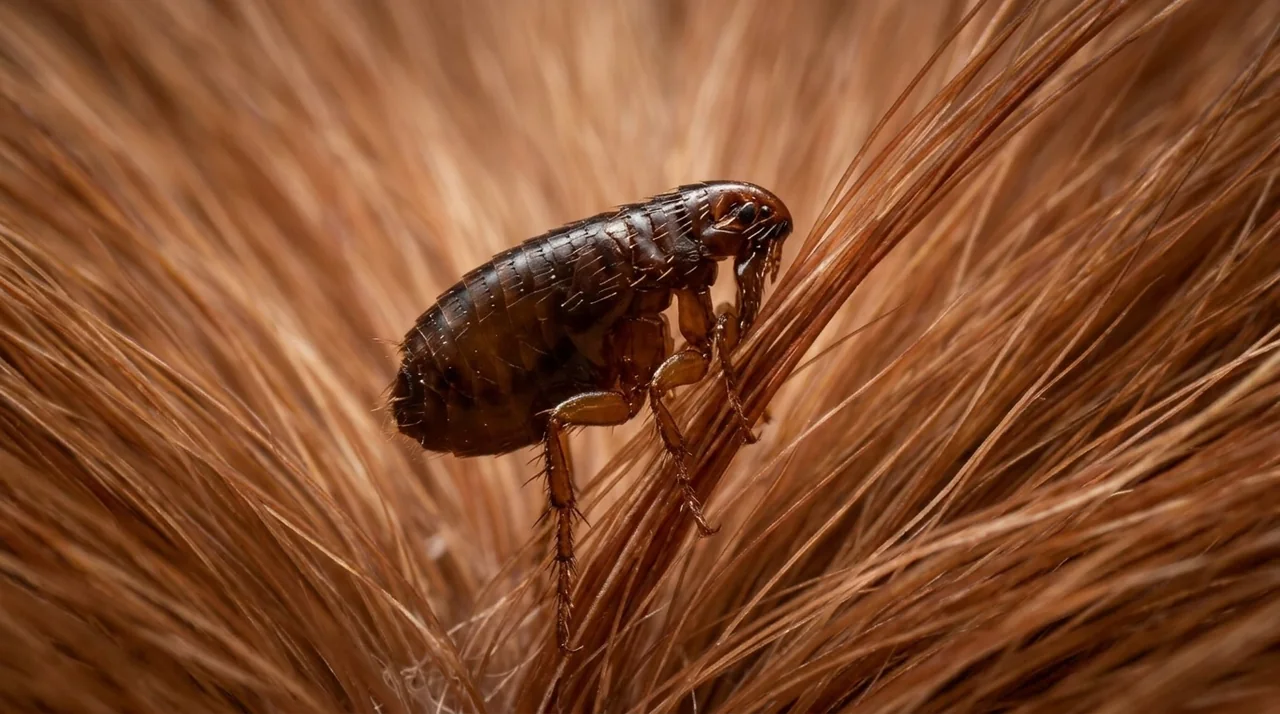
Adult fleas are small but visible. The cat flea (Ctenocephalides felis) is the species found on most U.S. cats and dogs. It is about one-eighth of an inch long and dark reddish-brown. Its body is flattened side to side, which helps it slip through fur. Fleas have no wings. Instead of flying, they jump, disappearing quickly when disturbed.
Flea eggs look quite different:
- Very small, about the size of a grain of salt
- Oval and off-white or translucent
- Smooth and not sticky, so they roll off the pet into the environment
What does the full flea life cycle look like?
The four stages explain why fleas are so hard to clear with a single treatment:
- Egg: laid on the animal, then falling off into the surroundings within hours
- Larva: a tiny, pale, worm-like stage that hides deep in carpet fibers and cracks, avoiding light
- Pupa: a protected cocoon that can wait weeks for the right cue to emerge, shielded from many sprays
- Adult: the biting stage you actually see on the pet
How can I tell flea bites from other bites?
On people, flea bites often appear as small, very itchy red bumps. They show up most often on the lower legs and ankles, sometimes with a tiny red center. They can look like other insect bites. So location, and the presence of fleas on a pet, are better clues than the marks alone. Bite appearance is not a diagnosis. If a bite becomes infected or a reaction is severe, see a healthcare provider.
Where should I look?
Because eggs drop off easily, they collect in carpet, pet bedding, upholstery, and floor cracks rather than staying on the host. Check your animal with a fine-toothed flea comb, especially around the neck and the base of the tail. Also inspect bedding and resting areas for adults, eggs, and flea dirt. The cat flea library page covers identification and habits in more detail.
How do I get rid of fleas in the home?
Breaking the cycle takes a coordinated effort on both the pet and the home:
- Treat every pet with a veterinarian-recommended flea product
- Wash pet bedding in hot water and dry on high heat
- Vacuum carpets, rugs, and upholstery thoroughly, then discard or empty the contents right away
- Repeat over several weeks so newly emerged adults are caught, and use any home flea product strictly per the EPA label