


What cockroach droppings look like
Cockroach feces are one of the clearest signs of an infestation. What they look like depends heavily on the species and its size.
Small roaches (German cockroach)
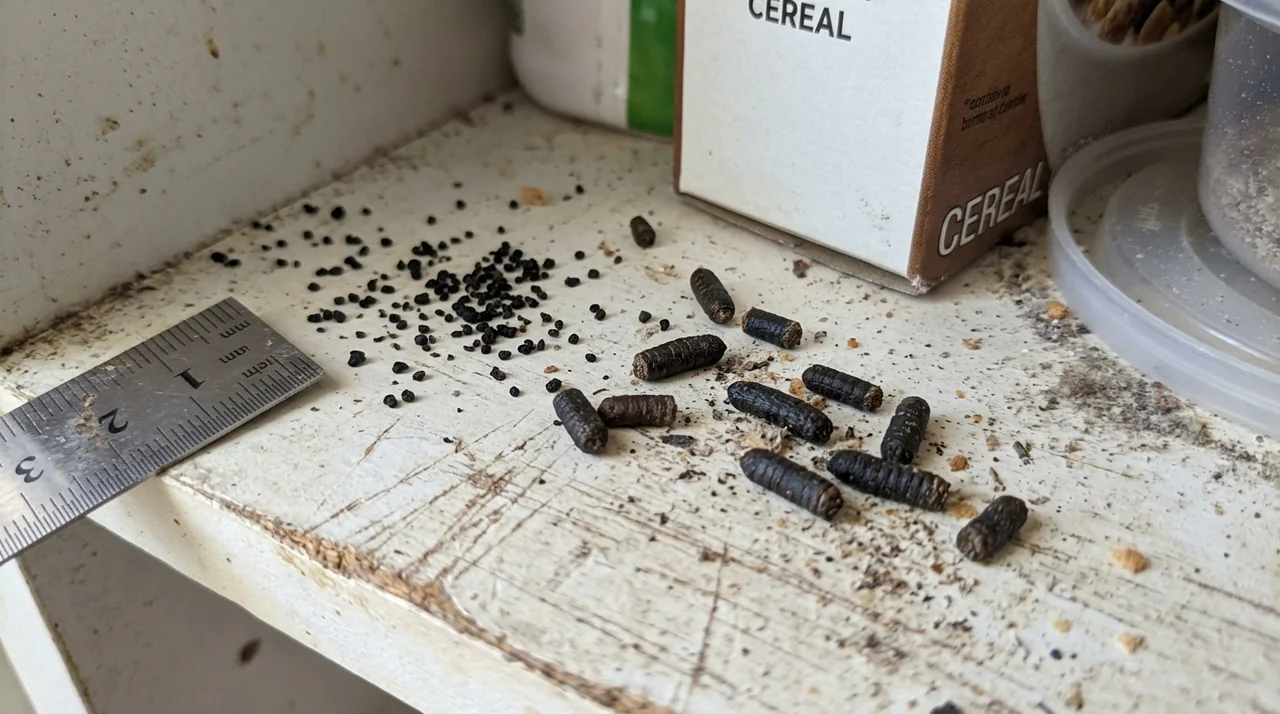
The German cockroach (Blattella germanica) is the most common indoor roach. Its droppings look like tiny black or dark-brown specks. People often compare them to ground pepper, coffee grounds, or flecks of dirt. In humid, heavily used areas you may also see dark smear marks or streaks where roaches travel along surfaces.
Large roaches (American cockroach)
The American cockroach (Periplaneta americana) and other large species produce bigger droppings. They are cylindrical, with blunt ends and visible ridges or grooves along the sides. These are big enough that people sometimes mistake them for mouse droppings.
How to tell roach droppings from mouse droppings
This mix-up is common with the larger roaches, but there are reliable differences:
- Cockroach droppings have blunt, rounded ends and lengthwise ridges.
- Mouse droppings are similar in size but taper to pointed ends and are smooth, without ridges.
Other signs that come with droppings
Droppings rarely appear alone. Alongside them you may notice a musty, oily odor in heavily infested areas. You may also find discarded egg cases (oothecae) that look like small brown capsules, shed skins from molting, or live roaches scattering when you turn on a light. Seeing several of these together points to an established population.
Where to look for droppings
Roaches leave droppings where they hide, feed, and travel, especially in warm, dark, humid spots:
- Inside and under kitchen cabinets and drawers
- Behind and beneath the refrigerator, stove, and dishwasher
- Along baseboards and in pantry corners
- Near plumbing, under sinks, and in warm, dark voids
Are cockroach droppings a health concern?
Cockroach droppings, shed skins, and body parts contain proteins that are well-established indoor allergens. For some people, especially children, exposure is a recognized trigger for asthma and allergy symptoms. Droppings can also contaminate food-contact surfaces. This is general information rather than medical advice. If someone in the home has worsening allergy or asthma symptoms, discuss it with a healthcare provider.
How to clean them up safely
Because of the allergen and contamination risk, clean carefully:
- Wear disposable gloves.
- Avoid dry-sweeping or vacuuming without a proper filter, which can stir particles into the air.
- Wipe surfaces with a damp cloth and a general cleaner, then disinfect food-contact areas.
- Wash your hands afterward, and follow the label if a cleaning product irritates skin or eyes.
Treating the infestation
Finding droppings means it is time to act, because cockroaches multiply quickly and hide well. Remove food and water sources, store food in sealed containers, fix leaks, and seal cracks and crevices where roaches shelter. EPA-registered cockroach baits and gels, used according to the label, are among the most effective do-it-yourself tools. If you keep finding droppings or see live roaches despite your efforts, a licensed pest control professional can locate the harborage and treat it more thoroughly.