


Ticks can't fly or jump
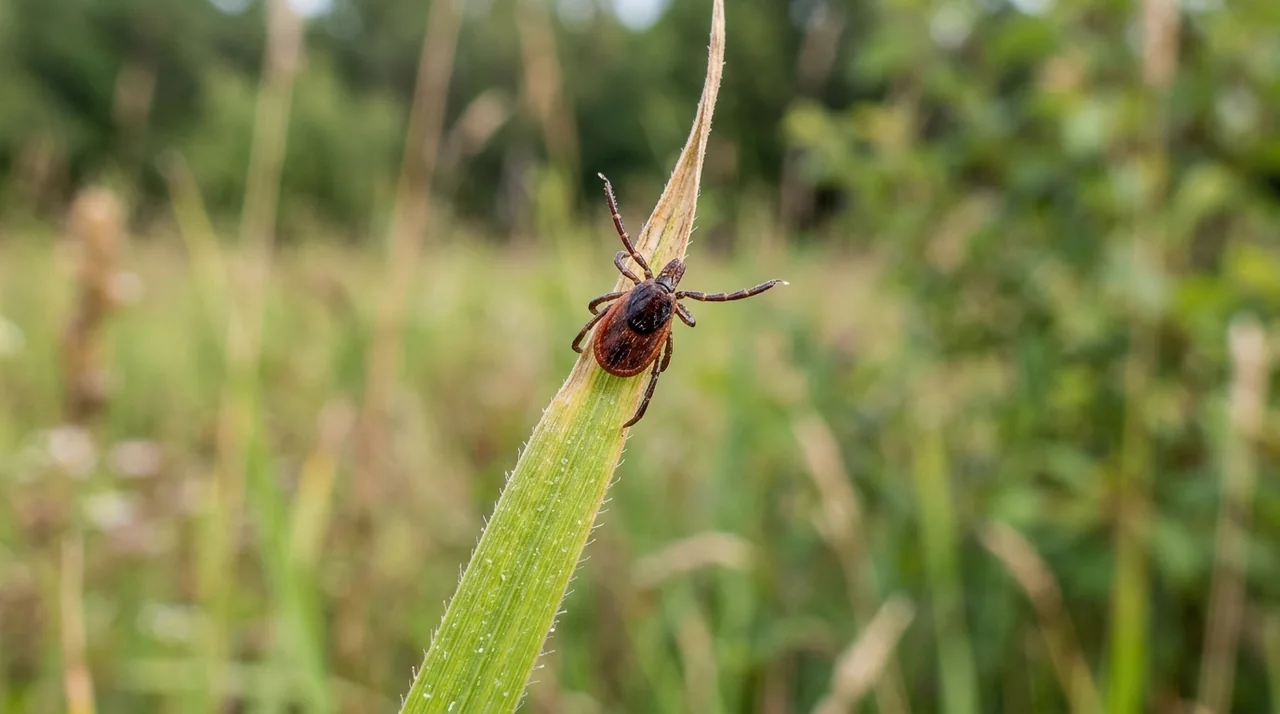
Ticks have no wings, so flying is impossible. And despite a common belief, they cannot jump either. Instead, ticks use a patient strategy called questing. A tick such as the blacklegged (deer) tick climbs onto grass, leaf litter, or the tip of a shrub. It stretches out its front legs and waits. When an animal or person brushes against that plant, the tick grabs hold and climbs aboard.
How do ticks actually find a host?
Ticks move only by crawling, yet they are well equipped for ambush hunting. They detect passing hosts by sensing exhaled carbon dioxide, body heat, moisture, vibration, and shadow. A special sensory structure on their front legs picks up these cues. They then position themselves along the edges of trails and grassy paths where animals travel. They do not chase. They wait for the host to come to them, then transfer on contact.
Do ticks fall from trees?
Rarely, if ever. The idea that ticks drop out of trees onto people is a persistent myth. Most ticks quest close to the ground, usually within a few feet. That is why bites so often start low on the body. A tick found on your scalp usually got there by crawling upward after attaching lower down. It did not drop from above.
Where are ticks most active?
Because of how they travel, ticks gather in specific places rather than spreading evenly:
- Tall grass, weeds, and brush along the edges of lawns and fields
- Leaf litter and the shaded margins of wooded trails
- Areas where deer, rodents, and other wildlife pass through
How do I remove a tick safely?
If you find an attached tick, prompt and proper removal matters:
- Use fine-tipped tweezers and grasp the tick as close to the skin as possible
- Pull straight upward with steady, even pressure; do not twist or jerk
- Avoid crushing the body, and do not use heat, petroleum jelly, or nail polish
- Clean the bite area and your hands afterward, and note the date
How do I lower my risk?
Because ticks quest rather than fly, prevention is practical. Stay on cleared trails, tuck pants into socks, and use an EPA-registered repellent applied per the label. Check yourself, children, and pets after time outdoors, and shower soon after coming inside. Around the home, keep grass trimmed and clear brush and leaf litter. Create a barrier between lawn and woods to make the yard less inviting. Ticks share this ground-based, host-hitching approach with fleas, which also cannot fly.