

Do fleas bite humans?
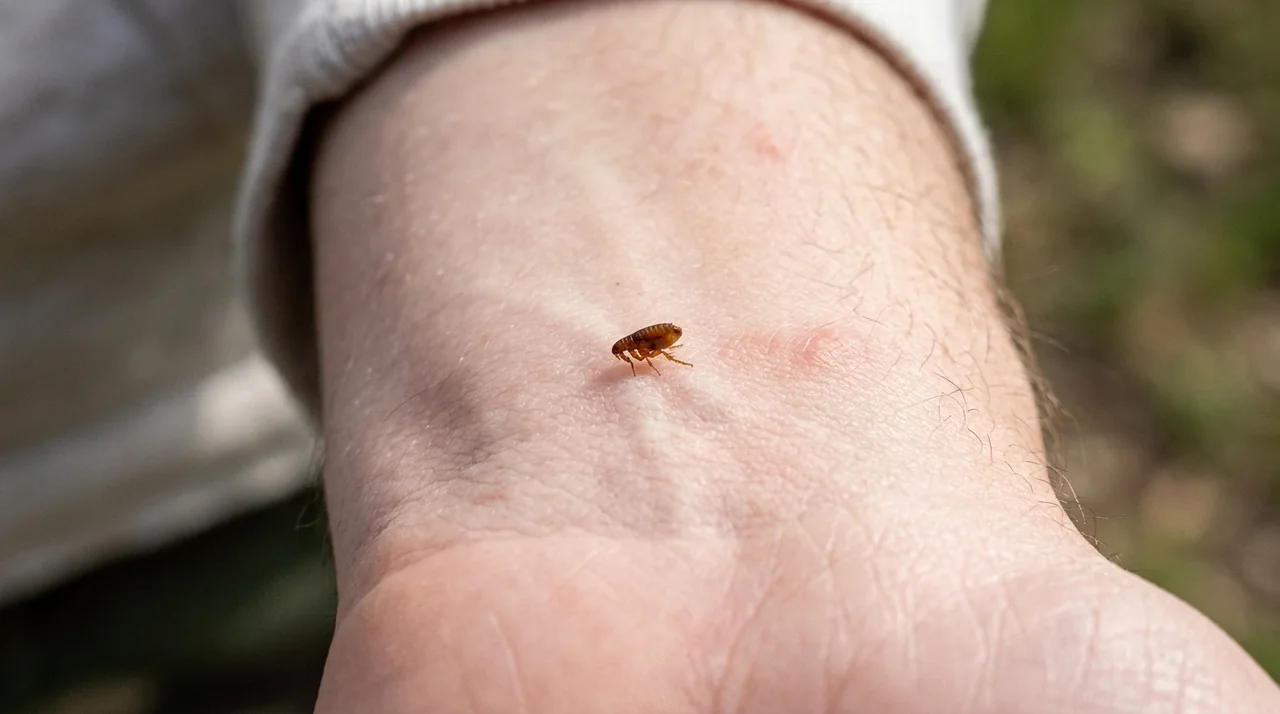
They do. The cat flea (Ctenocephalides felis) and dog flea strongly prefer pets. But they will readily bite people, especially when a furry host is absent or the flea population has grown large. Flea bites on humans tend to cluster on the lower legs, ankles, and feet. These are the parts of the body closest to the carpets and floors, where fleas wait for something to walk by. Each bite is usually a small, red, itchy bump, and several often appear together. You can read about the main household species in the cat flea profile.
What do flea bites on people look like?
Flea bites have some recognizable features:
- Small red spots or raised bumps, frequently in groups or a rough line.
- Intense itching, most often on the ankles, feet, and lower legs.
- A lighter or reddened halo sometimes surrounding a darker central point.
Why do fleas bite people if they prefer pets?
Fleas are opportunists. Their bodies are adapted to live in fur, so a pet is the ideal home. But a hungry adult flea will take a blood meal wherever it can reach one. This happens most in a few situations:
- The flea population has outgrown the available pets.
- A pet has been removed or a previously infested home is re-entered, and starving fleas emerge from pupae looking for any host.
- People spend time on infested carpet or furniture, putting ankles within jumping range.
Can fleas live on humans?
No. Fleas cannot establish themselves on people. Human skin lacks the dense hair fleas need to shelter, feed repeatedly, and lay eggs. A flea may bite you, but it will not take up residence or breed on your body. Fleas also do not spread directly from person to person. This is why the solution is never about your skin. It is about the pet and the home, where fleas actually live and reproduce.
Are flea bites on people dangerous?
For most people, flea bites are an itchy nuisance. The main risk is a secondary skin infection from scratching them open. That said, fleas can transmit certain diseases and can carry the tapeworm that infects pets. So an infestation is worth addressing promptly. This is general information rather than medical advice. If you develop a fever, a spreading rash, or other unusual symptoms after flea exposure, see a doctor. Call Poison Control at 1-800-222-1222 with questions about any treatment product.
How do I soothe flea bites?
While you deal with the underlying infestation, general care helps the bites themselves:
- Wash the bites with soap and water.
- Apply a cool compress to reduce swelling and itch.
- Use an over-the-counter anti-itch cream or antihistamine as directed.
- Avoid scratching, and watch for signs of infection.
How do I actually stop the biting?
Treating bites alone will not end the problem. The fleas keep coming from the pet and the environment. To stop the source:
- Use a veterinarian-recommended flea product on all pets, never mixing products between species without guidance.
- Wash pet bedding in hot water and vacuum floors, rugs, and upholstery thoroughly, discarding the contents afterward.
- Apply any home flea treatment strictly according to its EPA-registered label.