

Do mosquitoes bite dogs?
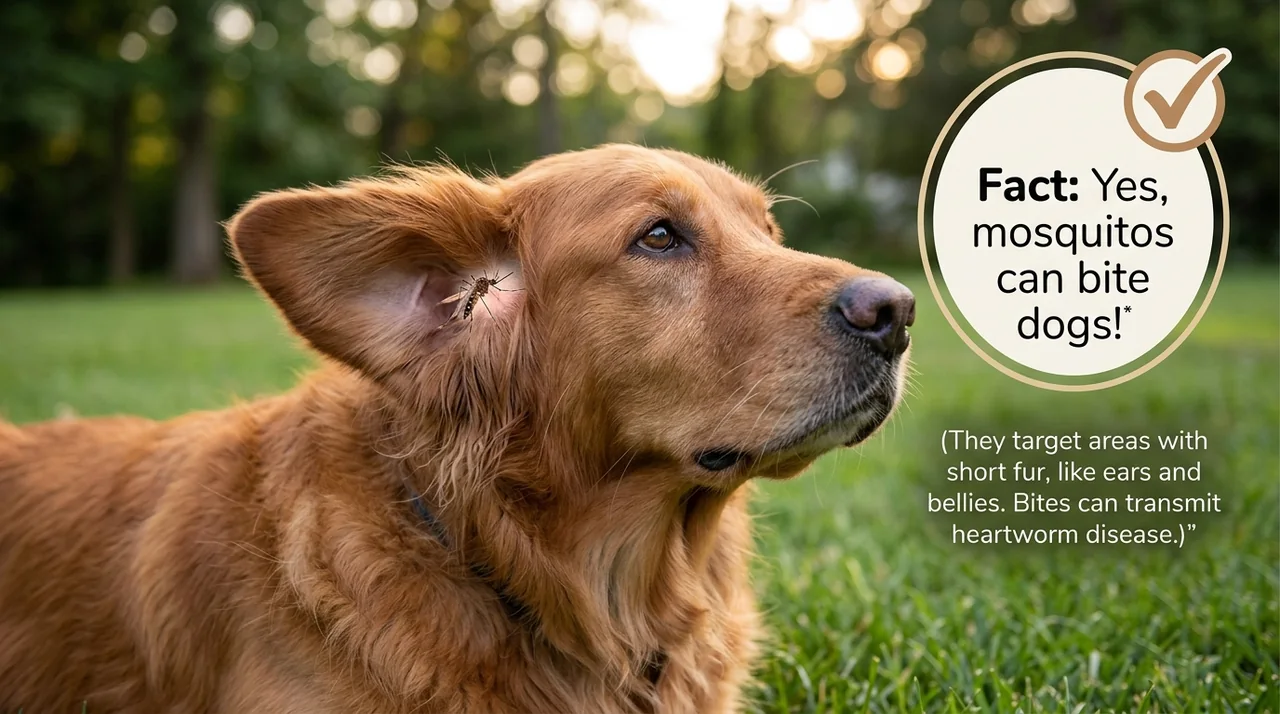
Dogs are not off-limits to mosquitoes. A coat of fur offers some protection, but mosquitoes readily find and bite where the hair is thin: the ears, nose, muzzle, belly, and groin. Just as on people, a bite can leave a small, itchy bump, and some dogs will scratch, lick, or nibble at the spot. The same species that pester us will feed on dogs, including the northern house mosquito and the Asian tiger mosquito.
An occasional bite is usually just a minor irritation. The bigger reason to take mosquitoes seriously around dogs is disease.
Why is heartworm the real risk?
Mosquitoes are how heartworm disease spreads to dogs. When a mosquito carrying heartworm larvae bites a dog, it can pass those larvae into the dog. There they can mature into worms that live in the heart, lungs, and nearby blood vessels. Heartworm disease is serious and potentially life-threatening. It is also far easier and cheaper to prevent than to treat.
The good news is that prevention is very effective. Talk with your veterinarian about year-round heartworm preventive medication, which is the standard recommendation in most of the U.S. Your vet can also advise on testing, since dogs are typically tested before starting or renewing prevention.
How do you protect a dog from mosquito bites?
A layered approach works best:
- Use vet-recommended prevention. Year-round heartworm preventives are the foundation.
- Reduce mosquitoes at home. Empty standing water from bowls, buckets, gutters, saucers, and toys at least weekly, since that is where mosquitoes breed.
- Limit exposure at peak times. Many mosquitoes are most active at dawn and dusk, so plan around that when you can, and keep window and door screens in good repair.
- Do not use human repellents on dogs. Never apply DEET or other human insect repellents to your dog. Some ingredients that are fine for people can be unsafe for pets, and dogs lick their coats. Use only products your veterinarian recommends.
Do mosquito bites make dogs itchy or sick beyond heartworm?
Most individual bites just cause a small, itchy welt that fades on its own, much like on people, and many dogs barely notice. Some dogs are more sensitive and may develop redness or swelling at the bite. Persistent scratching or licking can occasionally break the skin and lead to a secondary infection. In North America, heartworm remains the primary mosquito-related health concern for dogs. Other mosquito-borne illnesses in dogs are far less common, and your veterinarian is the right person to weigh any local risks for your area.
What about dog-safe repellents?
There are repellent and parasite-control products made specifically for dogs, and some flea-and-tick products offer mosquito protection as well. Safe formulations and doses vary by a dog's size, age, and health, and some products are toxic to cats in the same household. So choose these only on your veterinarian's advice rather than guessing. Grooming to keep the coat healthy, and avoiding walks in the buggiest spots at dawn and dusk, can also cut down on bites.
When should you call your veterinarian?
Contact your veterinarian if your dog has a strong reaction to bites, develops a skin infection from scratching, or shows signs that concern you, such as coughing, tiredness, or reduced appetite. Your vet can also set up or review heartworm testing and prevention. For heavy mosquito pressure around your property, a licensed pest control professional can find and treat breeding sites to lower the overall mosquito population, complementing the protection your vet provides for the dog itself.