


Can you catch fleas from your dog?
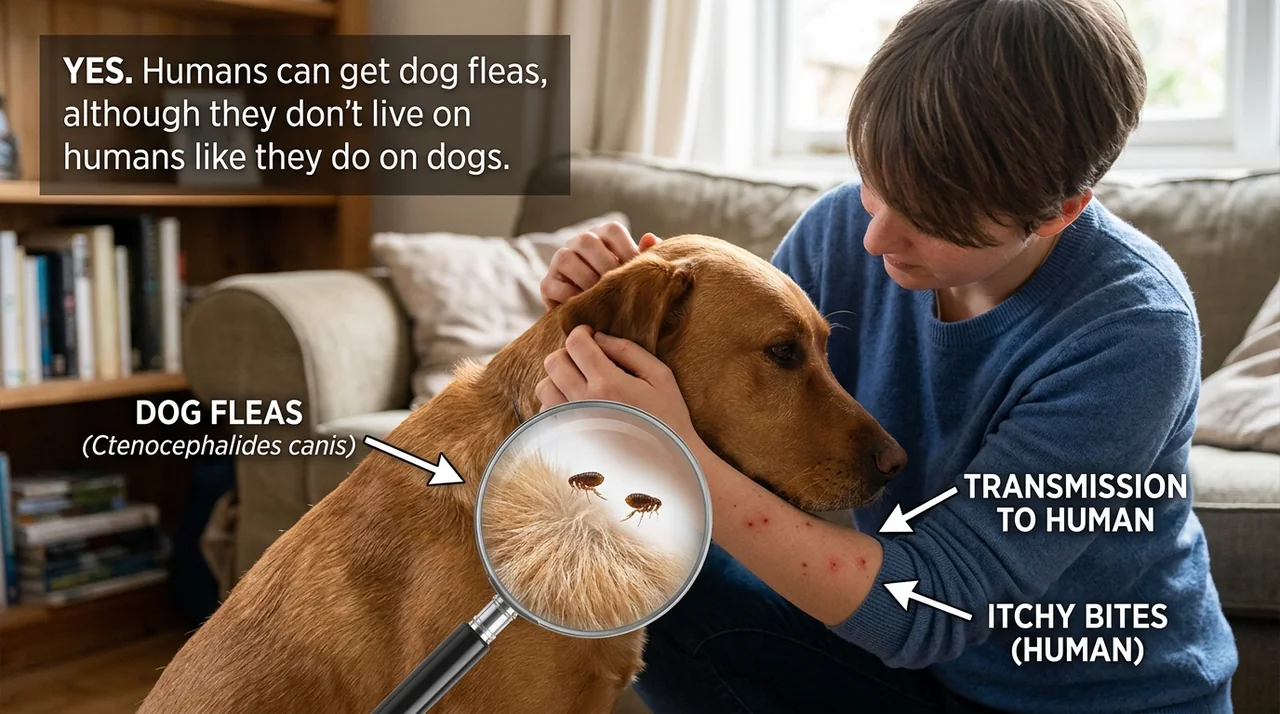
You can be bitten by your dog's fleas, but you cannot really become their home. The common cat flea (Ctenocephalides felis) is the species found on most dogs and cats in the United States. It is built to live and breed in animal fur. Human skin and body hair do not give fleas the shelter they need. So a flea may hop onto you for a blood meal and then leave. But it cannot establish a breeding colony on a person, or pass directly from human to human.
What usually happens is this:
- Fleas feed and reproduce on the pet and in the surrounding environment.
- Eggs fall off the animal into carpet, bedding, and floor cracks, where larvae develop.
- Hungry adult fleas jump onto whoever is nearby, including people, and bite, often around the ankles and lower legs.
What do flea bites on people look like?
Flea bites on humans are typically small, red, raised bumps. Sometimes a lighter ring surrounds a darker center. They often appear in small groups or a rough line on the lower legs, ankles, and feet. That is because fleas wait low to the ground. The bumps are usually very itchy. As with any bite, appearance alone is not proof. Confirm the source by checking your pet and its resting areas.
Why do fleas prefer pets over people?
Fleas evolved alongside furry and feathered hosts. Dense fur provides warmth, humidity, and hiding places. These let fleas feed repeatedly and lay eggs undisturbed. A person's relatively bare skin offers none of that. So people are a target of convenience rather than a preferred host. This is also why treating your own bites does nothing to solve the problem. The real population is living on the animal and in the home.
Can fleas from dogs make people sick?
For most people, flea bites are an itchy nuisance. Scratching them open is the main risk, because it can lead to a secondary skin infection. Beyond that, fleas can transmit certain diseases and can carry the tapeworm that infects pets. That is one reason infestations should not be ignored. This is general information, not a diagnosis. If you develop a fever, spreading rash, or other worrying symptoms after flea exposure, see a doctor. Call Poison Control at 1-800-222-1222 with questions about any treatment product.
How do I protect my household?
The pet and the home are the true reservoirs. So you have to treat both at once:
- Work with your veterinarian on a proven flea-control product for your dog. Never use a product labeled for dogs on a cat, or vice versa, without veterinary guidance. Some ingredients are dangerous to cats.
- Wash pet bedding in hot water regularly.
- Vacuum floors, rugs, and upholstery thoroughly and often, then seal and discard the vacuum contents so captured fleas cannot escape.
- Use any home flea-control product strictly according to its EPA-registered label.
How do I soothe the bites in the meantime?
While you clear the infestation, you can ease your own bites. Wash them, apply a cool compress, and use an over-the-counter anti-itch cream or antihistamine as directed. Try not to scratch. Scratching prolongs the irritation and can break the skin. See a doctor if a bite looks infected.
When should I call a professional?
Suppose flea numbers stay high despite treating the pet, laundering bedding, and vacuuming for several weeks. Then the environment is likely reinfesting your animal from eggs and larvae in the carpet. A licensed pest professional can treat the home effectively and help break the life cycle. They work alongside your veterinarian's care for the pet. Persistent flea problems, like tick problems, are worth taking seriously rather than living with.