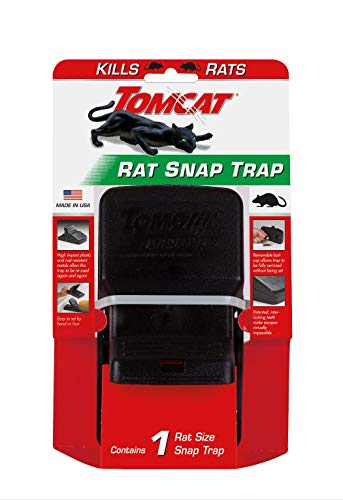
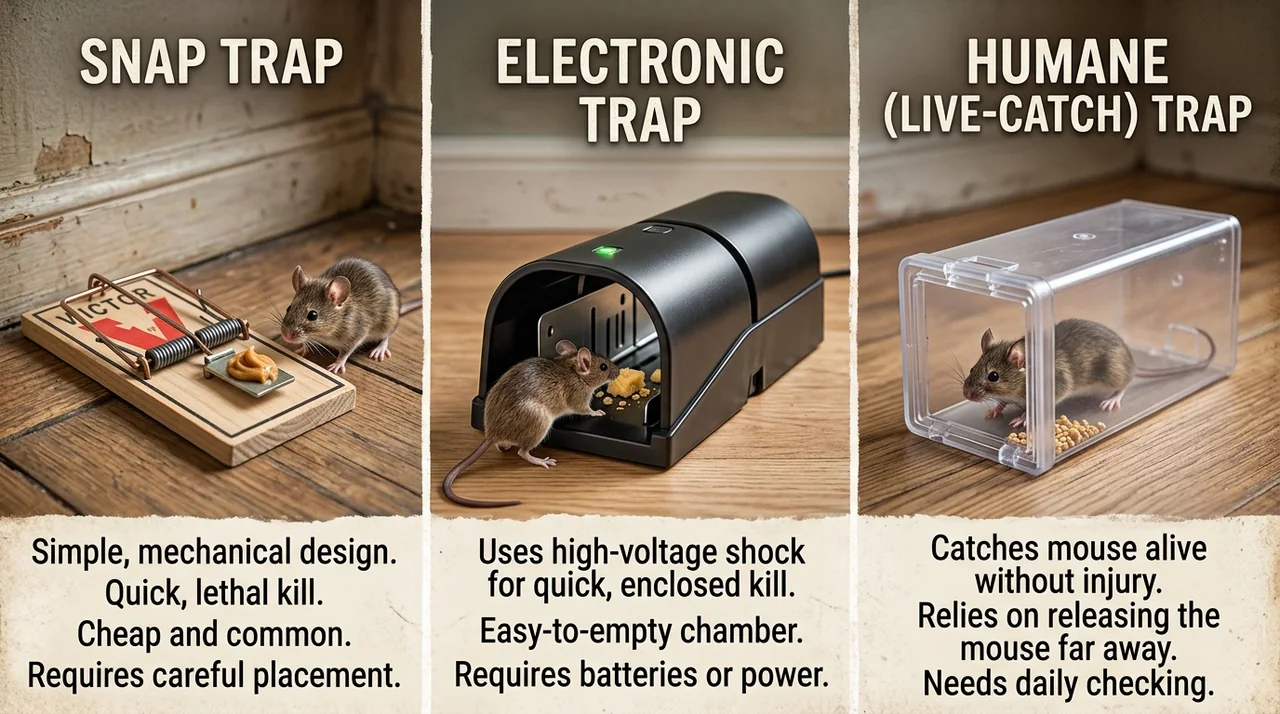


A snap trap is cheap, effective, and among the most humane options when used correctly, because it kills quickly. Most people who complain that snap traps do not work are making small, fixable mistakes in bait, placement, or setup. Here is how to set them so they actually catch mice.
Bait It Right (Less Is More)
Forget the cartoon wedge of cheese. Mice are drawn most reliably to a small dab of something sticky and aromatic: peanut butter is the classic, and it works because the mouse has to work at it, tugging the trigger. Other good options include a bit of chocolate, a sunflower or pumpkin seed, or a nesting material like a small tuft of cotton, which appeals to their instinct to build nests.
Use a tiny amount, roughly pea-sized. A large glob lets a mouse feed from the edge without triggering the trap, or lets it steal bait cleanly. Press or smear the bait so the mouse must disturb the trigger to get it. Do not handle the trigger with greasy fingers so much that the mouse can lick bait off without tripping the mechanism.
Placement Beats Everything
Mice run along walls, not across open floors, guided by their whiskers. Place traps flush against the wall with the trigger end facing the wall, so a mouse traveling the baseboard runs directly over the trigger. Set traps in pairs a few inches apart along the same wall; a mouse dodging one may hit the other, and it covers animals moving either direction.
Concentrate traps where you see evidence: droppings, gnaw marks, a musky smell, or rub marks along baseboards. Good spots include behind the stove and fridge, under sinks, along the back of cabinets, in the garage against walls, and near where pipes or wires enter the house. More traps catch more mice; setting six or a dozen is reasonable for an active problem, since mice reproduce quickly and a couple of traps rarely keep up.
Get Them Used to It (Pre-Baiting)
Mice are cautious about new objects (a trait called neophobia). If they are trap-shy, set baited but unset traps for a night or two so mice feed freely and lose their wariness, then set them for real. You will catch far more this way than by expecting a kill the first night.
Handle Safely and Reset
Wear disposable gloves when handling traps and dead mice, since rodents can carry disease; place the carcass in a sealed bag in an outdoor bin and wash your hands afterward. Avoid handling droppings or nests dry; dampen the area with a disinfectant first rather than sweeping or vacuuming, to reduce airborne particles. Reset and re-bait promptly, because where there is one mouse there are usually more.
Snap traps knock down the mice already inside, but they do not stop new ones from entering. Pair trapping with sealing entry points and removing food sources. If you are still catching mice week after week, or you suspect a large population in walls or an attic, a licensed professional can find entry points and infestation sources you may be missing.