
A simple apple cider vinegar (ACV) trap is one of the most reliable DIY tools against fruit flies, because it plays directly to what draws them: the smell of fermentation. It is cheap, safe around the kitchen, and genuinely effective as part of a plan that also removes what is attracting the flies in the first place.
Why Apple Cider Vinegar Works
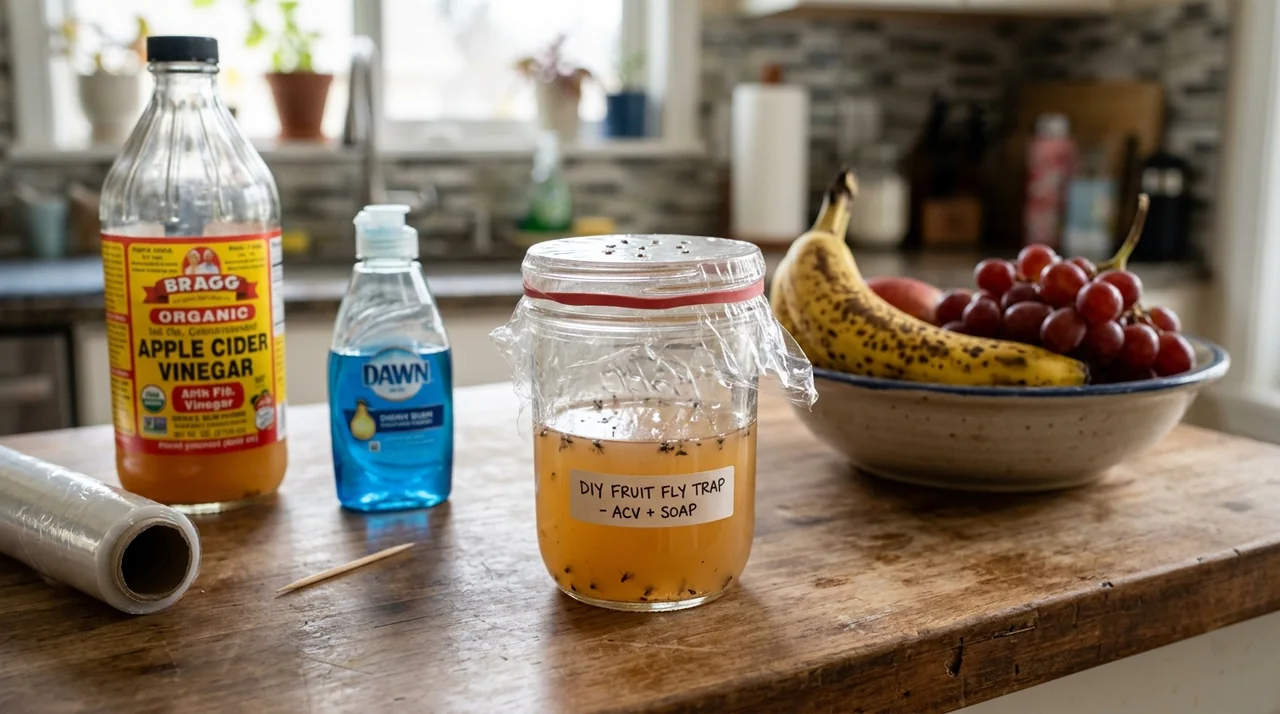
Fruit flies are drawn to ripening and fermenting fruit and to the yeasty, sour aromas that signal it. Apple cider vinegar smells like exactly that, so it lures them in. The refinement that makes the trap work is adding a drop of dish soap. Vinegar alone has surface tension that lets a fly land, sip, and fly off. A drop of soap breaks that surface tension, so flies that touch the liquid sink and cannot escape. That small step is the difference between a trap that catches flies and a dish they drink from and leave.
Building the Trap
The core recipe is easy:
For a self-funneling version, cover the jar with plastic wrap, secure it with a rubber band, and poke a few small holes; flies enter easily but struggle to find their way out. Alternatively, roll a paper cone with a small opening at the bottom and set it in the jar. Both designs work; the plastic-wrap version is quickest.
Placement and Refresh
Set traps where you see the most fly activity: near the fruit bowl, the trash and recycling, the sink, and the compost bin. Using two or three traps in different spots catches more than one. Refresh the vinegar every few days, since it loses its punch and the trap fills; a stale trap stops pulling flies.
Traps Alone Are Not Enough
Here is the honest limitation: a trap catches adult flies, but it does nothing about the breeding source producing new ones. Fruit flies reproduce fast in overripe fruit, spills, sticky drain film, damp rags, and the gunk in recycling bins. If you trap without removing the source, the trap fills forever and the problem never ends.
So pair the trap with source elimination: refrigerate or discard overripe produce, take out food waste and recycling often, rinse cans and bottles before binning them, wipe up spills, clean under and behind appliances, and address slow drains where a film of organic matter can breed flies. Clean the drains (a good scrub with a brush and hot water helps) if you suspect that source.
With the breeding sites removed and traps mopping up the remaining adults, most fruit fly problems clear within a week or two. If flies persist despite eliminating obvious sources and running traps, you may be dealing with a hidden breeding site (a forgotten potato, a leaking pipe, a drain) or a different small fly entirely, and it is worth investigating further or consulting a professional.