

German cockroaches are the small, tan roaches that thrive indoors, especially in kitchens and bathrooms. They are the hardest household roach to eliminate because they breed fast, hide in tight cracks, and stay close to food and moisture. Beating them takes a targeted, gel-bait-driven approach and consistency, not a can of spray.
Why German Roaches Are Different
Unlike larger roaches that wander in from outdoors, German cockroaches live and reproduce entirely inside. A single female carries an egg case holding dozens of eggs, so a small problem becomes a large one quickly. They prefer warm, humid, tight spaces: the hinge of a cabinet, the motor compartment of a fridge, the seam behind a dishwasher, the gap under a sink. Because they rarely leave these harborages except to feed, treatments that do not reach the hiding spots fail.
Gel Baits Are Your Primary Weapon
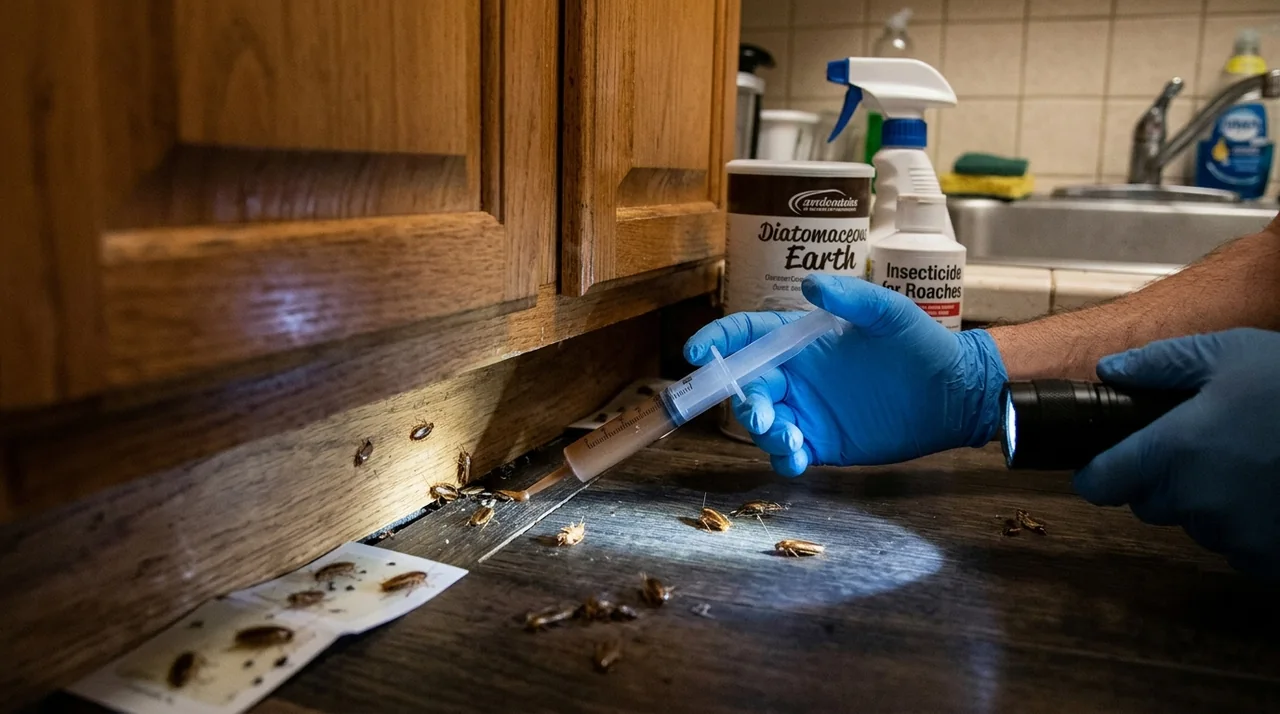
For German roaches, an EPA-registered gel bait is the most effective DIY tool available. Place small dots of gel inside and near harborages: cabinet corners, hinge areas, behind and under the fridge and stove, along the top inside edges of drawers, and around plumbing penetrations. Many small placements beat a few large ones, because you want a foraging roach to encounter bait within a short walk. Roaches that eat the bait return to the harborage and die, and other roaches are killed through contact with feces and carcasses, spreading the effect through the population.
Read and follow the EPA product label for placement and amounts. Do not apply liquid sprays over your gel bait; repellent sprays drive roaches away from the bait and undermine it. If bait stops being eaten (bait aversion can develop), switch to a gel with a different active ingredient or food base.
Sanitation and Moisture: Removing the Competition
Bait competes with every crumb and drip in your kitchen. Deny roaches food and water and your bait becomes the most attractive meal available. Wipe counters nightly, sweep under appliances, store food and pet food in sealed containers, take out trash regularly, and fix leaks and dripping faucets. Roaches can survive a surprisingly long time without food but need moisture, so drying out sinks and drains at night pressures the population.
Monitor, Reduce Harborage, and Repeat
Place sticky monitors in corners and under sinks to track numbers over time; a downward trend confirms progress, and a fresh trap full of nymphs tells you an egg case has recently hatched nearby. Reduce hiding spots by sealing cracks and gaps with caulk and decluttering cabinets (cardboard and paper bags are prime harborage, so recycle them rather than storing them under the sink). Then keep baiting. It commonly takes several weeks and repeat placements to clear an established infestation, because you must catch newly hatched nymphs as egg cases open.
German cockroach infestations can be stubborn, particularly in apartments where roaches travel between units through shared walls and plumbing. If numbers stay high after several weeks of diligent baiting and sanitation, or the source is a neighboring unit, involve your landlord and a licensed pest professional who can coordinate a building-wide approach and use professional-grade products.