

Boric acid is a time-tested, low-cost tool against cockroaches, and when applied correctly it can be very effective. The trick that trips up most people is application: a thick, visible line of powder does almost nothing, because roaches avoid crossing it. Applied as a barely-there dusting in the right places, boric acid quietly kills roaches for weeks.
How Boric Acid Kills Roaches
Boric acid works two ways. Roaches walk through the fine powder, it clings to their legs and body, and they ingest it while grooming; it also damages them internally once eaten, acting as a stomach poison. Because it is slow-acting and a roach carries traces back to harborages, the effect spreads. It does not evaporate or break down quickly, so a proper application keeps working as long as it stays dry and undisturbed.
Apply a Thin Film, Not a Pile
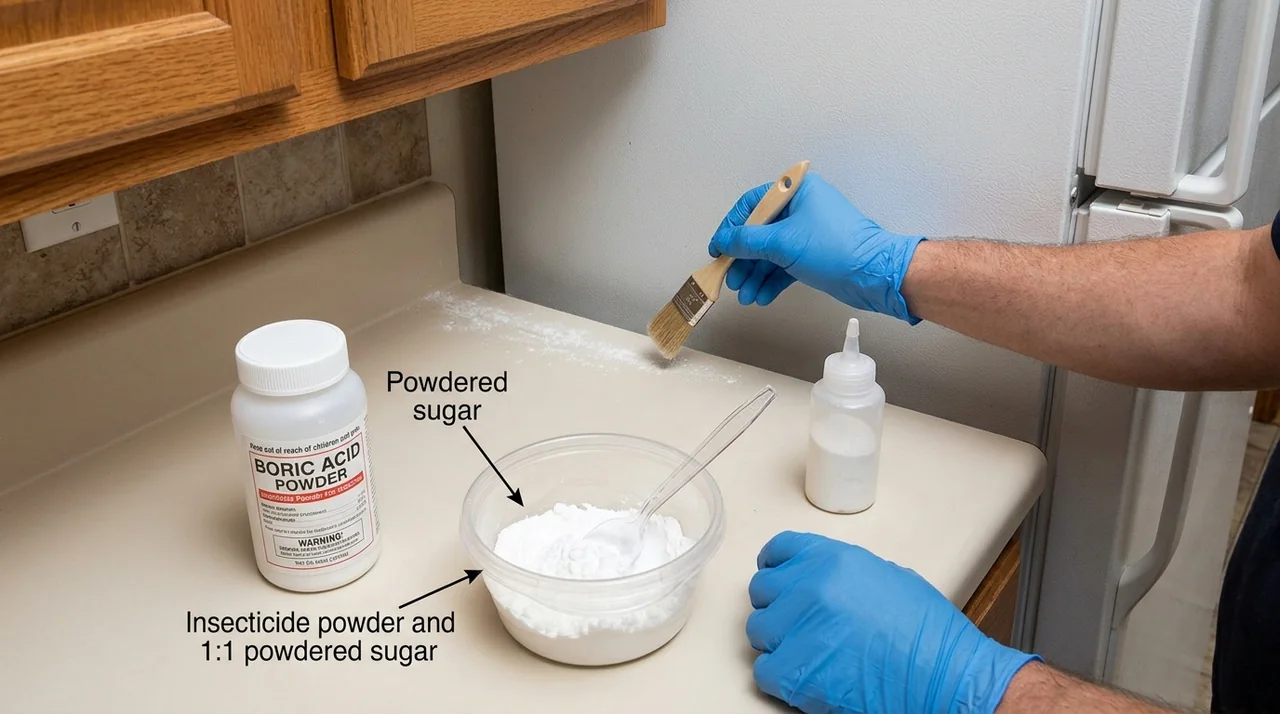
This is the whole game. Roaches will detour around a visible heap of powder, so a thick line is wasted and can even push them elsewhere. You want a light film you can barely see. A small hand duster or a squeeze bottle lets you puff a fine layer into:
- The void under and behind the refrigerator, stove, and dishwasher
- Cracks and crevices along baseboards and cabinet edges
- Under and behind the sink, around plumbing penetrations
- Inside the motor compartments of appliances (where safe and dry)
Safety and Placement
Boric acid is low in toxicity compared to many pesticides but is not harmless. Keep it away from food-prep surfaces, dishes, and any spot children or pets can reach. Do not apply it on countertops, inside cutlery drawers, or open pantry shelves. Read and follow the label on the boric acid product you buy, since labeled directions and precautions apply. Wear a dust mask while applying to avoid breathing the powder, and wash your hands afterward. If a child or pet ingests boric acid, call Poison Control at 1-800-222-1222, or your veterinarian for an animal.
Combine, Keep Dry, and Be Patient
Boric acid pairs well with gel baits: the bait draws roaches out to feed while the dust treats the travel routes and voids between harborages. Keep the two separate rather than mixed on the same surface. Because moisture ruins boric acid, wipe up leaks and reapply if an area gets wet or cleaned.
Give it time. It may take a few weeks to see a strong decline, and you will likely need to reapply after cleaning or if the dust is disturbed. Use sticky monitors to confirm numbers are dropping.
Boric acid is excellent for maintenance and for reaching voids, but a heavy, established German cockroach infestation usually needs baits and sanitation working alongside it, and sometimes a professional. If roach numbers stay high after several weeks, or roaches keep arriving from a neighboring unit, bring in a licensed pest professional.