
Yellow Garden Spider
Argiope aurantia · also called black and yellow garden spider, writing spider, corn spider
Quick answer
The yellow garden spider (Argiope aurantia) is a large, striking black-and-yellow orb-weaver common in gardens across the US. Females build big circular webs with a distinctive zigzag silk band down the middle. They are harmless, beneficial insect-eaters; a bite is rare and no worse than a bee sting. They do not damage homes or plants.
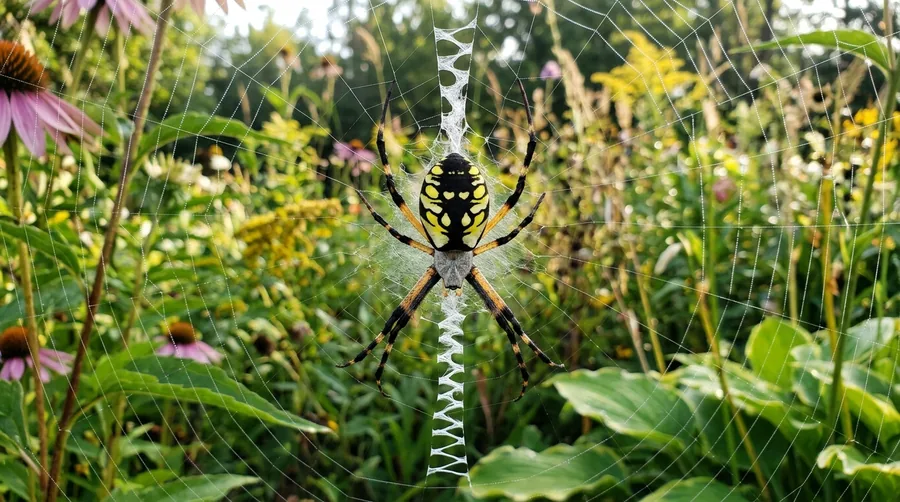
Black and yellow garden spider on a web with a white zigzag silk band down the center
Recommended Products


What it does
The yellow garden spider sits head-down in the center of a large vertical orb web, often adding a bold zigzag of white silk called a stabilimentum. It waits for prey, wraps it in silk, and rebuilds the web's center nightly. It is not aggressive and will drop from the web or hide if threatened rather than approach people.
Where it lives
This native spider favors sunny, sheltered spots with tall plants: gardens, meadows, field edges, and the eaves of homes, sheds, and porches. It anchors its web among vegetation, fences, and structures out of the wind. It is found across the continental US, from backyards to farms.
How it breeds
There is one generation a year. In late summer the female produces one or more round, papery brown egg sacs holding up to a thousand eggs, attaching them near the web. Adults die in fall, and the spiderlings overwinter inside the sac, emerging in spring to disperse and grow through summer.
What it eats
Yellow garden spiders are beneficial predators that eat flying and jumping insects snared in the web, including flies, mosquitoes, grasshoppers, aphids, and wasps. By trapping garden pests, they help with natural insect control and take nothing from plants.
Identification
Females are large and showy: a shiny black body marked with bright yellow or orange, silvery hairs on the head region, and long legs banded black and yellow. Males are much smaller and plainer. The signature clue is the heavy zigzag silk stripe running down the center of the web.
Signs of an infestation
- A large orb web with a white zigzag band in the garden
- A big black-and-yellow spider hanging head-down
- Papery brown, round egg sacs near the web in fall
- Webs rebuilt in the same sheltered spot each night
- Wrapped insect prey stored in the web
Prevention tips
- Clear webs with a broom only where they block doorways or paths
- Trim back dense vegetation against the house if webs are unwanted
- Reduce outdoor lighting that attracts the insects they hunt
- Relocate rather than kill this beneficial garden spider
- Leave webs in the garden, where the spider controls pests
Professional solutions
Yellow garden spiders do not warrant professional pest control; they are harmless and helpful. If one has built a web across a frequently used door, simply relocate it or remove that web. Broad spraying is unnecessary and kills a beneficial predator. Reducing the insects it feeds on will naturally lower how often it settles nearby.
Health & safety
The yellow garden spider is not dangerous to people or pets. It is docile and bites only if grabbed or pinned; the bite is mild, comparable to a bee sting, causing brief redness and swelling. It carries no disease. Wash a bite and watch for an unusual reaction, but serious effects are not expected.
Relevant Products




Frequently asked questions
Is the yellow garden spider poisonous or dangerous?
No. The yellow garden spider is harmless to people and pets. It is not aggressive and bites only if handled roughly, and the bite is mild, like a bee sting, with brief redness. It carries no disease and is actually a helpful predator of garden pests.
Why does the garden spider put a zigzag in its web?
The bold zigzag of silk, called a stabilimentum, is a signature of Argiope spiders. Scientists think it may make the web visible to birds so they don't fly through it, help attract insect prey, or camouflage the spider. Either way, it is a reliable way to identify this species.
Should I kill a yellow garden spider in my garden?
It is best not to. This spider is harmless and eats many garden pests, including flies, mosquitoes, and grasshoppers. If its web is in an inconvenient spot, gently relocate it or clear that web rather than killing a beneficial predator that is helping your garden.
Fact-checked by Morgan Vance, Editorial Director (editorial review, not a professional pest-control or medical sign-off). Last reviewed June 14, 2026. We correct anything a reader shows us is wrong — see our corrections policy.