
Grasshopper
Acrididae (Melanoplus spp. and others) · also called grasshoppers, short-horned grasshopper
Quick answer
Grasshoppers are familiar jumping insects with big hind legs and short antennae that chew the leaves of garden plants, crops, and rangeland. Usually a minor nuisance, they can swarm and strip vegetation during hot, dry outbreak years, especially across the Great Plains and West. They do not spread disease and rarely bother people directly.
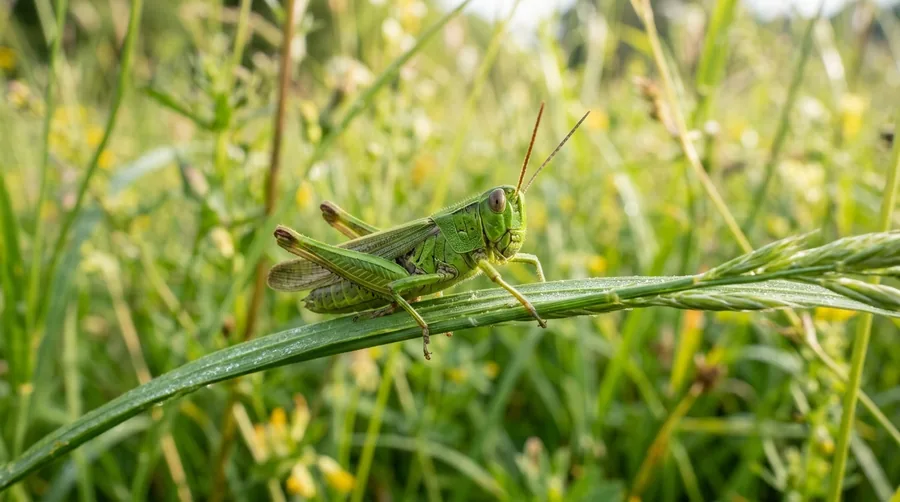
Brown-green grasshopper with large hind legs on a chewed garden leaf
Recommended Products


What it does
Grasshoppers chew ragged holes and notches in leaves, stems, and sometimes fruit, and can defoliate garden plants and crops when abundant. Most of the year they are a scattered nuisance, but in hot, dry seasons their numbers can surge and they move in large groups from drying rangeland into gardens, fields, and yards to feed.
Where it lives
Many species live nationwide in grasslands, fields, roadsides, gardens, and yards, favoring warm, sunny, weedy areas. Outbreaks are most severe across the Great Plains, Mountain West, and other dry western regions, where drought reduces natural controls and lets populations build over consecutive years.
How it breeds
Most pest grasshoppers have one generation a year. Females lay pods of eggs in the soil in late summer and fall; the eggs overwinter and hatch in spring. The wingless nymphs feed and molt through several stages over summer before becoming winged adults, which continue feeding and lay the next season's eggs.
What it eats
Grasshoppers eat a wide range of plants, grasses, garden vegetables, field crops, and rangeland forage, chewing leaves, stems, and occasionally fruit.
Identification
Grasshoppers have large, powerful hind legs for jumping, short antennae (much shorter than the body), and, as adults, two pairs of wings folded over the back. Colors range from green to brown to gray, often mottled for camouflage. The short antennae separate them from long-antennaed crickets and katydids.
Signs of an infestation
- Ragged holes and notches chewed in leaves
- Sudden defoliation during hot, dry weather
- Numerous insects jumping and flying up as you walk
- Chewed stems and scarred fruit in the garden
- Waves of grasshoppers moving in from dry fields
Prevention tips
- Use floating row covers to protect valued garden plants
- Keep weeds and tall grass down around gardens and fields
- Encourage birds and other natural predators
- Till in fall to expose overwintering egg pods
- Treat young nymphs early in outbreak years, when control is easier
Professional solutions
Scattered grasshoppers rarely need more than row covers and cleanup. During regional outbreaks, a local extension office can advise on options, including baits and labeled treatments best applied to young nymphs on nearby rangeland or field margins before the winged adults invade, since large mobile adults are very hard to control.
Health & safety
Grasshoppers do not spread disease to people or pets, and while a large one may give a harmless pinch if held, they do not meaningfully bite or sting. The damage is to plants, chewed foliage and, in outbreak years, defoliated gardens, crops, and rangeland.
Relevant Products


Frequently asked questions
Do grasshoppers bite people?
Not meaningfully. A large grasshopper may deliver a harmless nip if held tightly, but they do not bite or sting in any way that matters, and they carry no disease that affects people. They are strictly a plant-feeding pest.
Why are there so many grasshoppers some years?
Grasshopper numbers surge in hot, dry years, because drought weakens the fungal diseases and other natural controls that normally keep them in check. Several dry seasons in a row can build large populations, especially across the Great Plains and West.
Fact-checked by Morgan Vance, Editorial Director (editorial review, not a professional pest-control or medical sign-off). Last reviewed August 11, 2026. We correct anything a reader shows us is wrong — see our corrections policy.