Alfalfa Weevil
Hypera postica · also called alfalfa weevils
Quick answer
The alfalfa weevil (Hypera postica) is a small brown weevil whose green, white-striped larvae are the main pest stage, chewing alfalfa leaves and buds. Heavy feeding skeletonizes the first cutting and gives fields a frosted, gray-green look. An introduced pest of alfalfa nationwide, it is harmless to people.
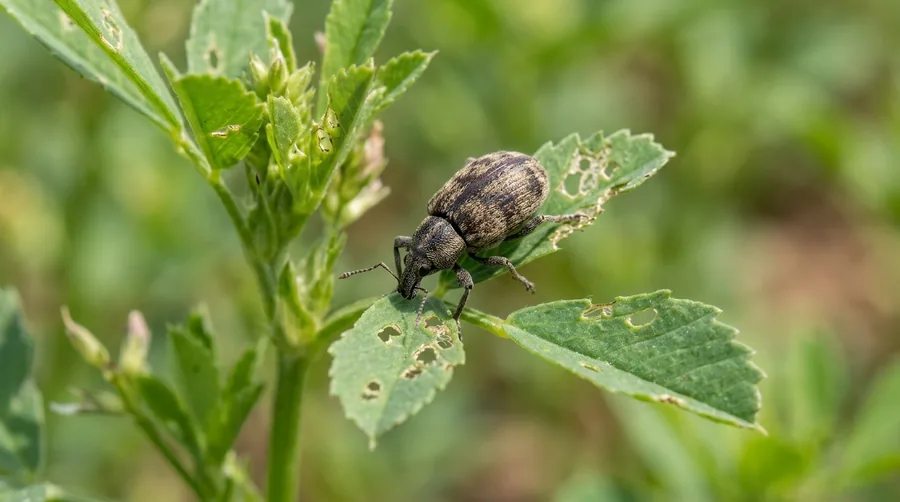
Green alfalfa weevil larva with a white back stripe on a chewed alfalfa leaf
Recommended Products


What it does
The green larvae feed on alfalfa's growing tips, buds, and leaves, chewing tissue between the veins and skeletonizing foliage. When numerous, they can strip the top growth so a field takes on a frosted, gray or whitish cast. Feeding hits the first spring cutting hardest, reducing both yield and forage quality.
Where it lives
A pest of alfalfa and some other legumes, the alfalfa weevil occurs across US alfalfa-growing regions. Adults overwinter in field debris, crowns, and along field margins, becoming active in early spring. Larvae feed in the crop canopy in spring, making this a field-crop rather than household pest.
How it breeds
Adults lay eggs in alfalfa stems in late winter and spring (and some in fall). The larvae hatch and feed for several weeks through four stages, then pupate in a loose cocoon among the foliage or litter before emerging as adults. There is generally one generation a year, with damage concentrated in spring.
What it eats
Alfalfa weevils feed on alfalfa, mainly the leaves, growing tips, and buds, and occasionally on other legume forages.
Identification
Adults are about 1/5 inch, brown with a darker stripe down the back and a short, blunt snout typical of weevils. The larvae are the more familiar stage: green, legless-looking grubs with a black head and a distinct white stripe down the back, found feeding on the growing tips.
Signs of an infestation
- Chewed, skeletonized alfalfa leaves and tips
- A frosted, gray-green cast to the field
- Green white-striped larvae in the growing tips
- Reduced yield and quality of the first cutting
- Adults and larvae dislodged when the canopy is shaken
Prevention tips
- Scout alfalfa in spring and use stem-count thresholds
- Time the first cutting to remove larvae with the harvest
- Conserve natural enemies such as parasitic wasps
- Avoid unnecessary insecticide that harms beneficials
- Manage field margins where adults overwinter
Professional solutions
This is a forage-crop pest managed with a local extension agent or agronomist, who can scout larval counts against economic thresholds and recommend either an early cutting or a labeled insecticide when numbers are high. Well-timed harvest often controls the larvae without spraying, protecting both yield and beneficial insects.
Health & safety
Alfalfa weevils do not bite, sting, or carry any disease that affects people or pets, so they present no health risk. The impact is agricultural: larval feeding that reduces the yield and quality of alfalfa hay, most severely in the first spring cutting.
Relevant Products


Frequently asked questions
Which stage of the alfalfa weevil causes the damage?
The larvae cause almost all the damage. These green, white-striped grubs chew the leaves, buds, and growing tips of alfalfa, skeletonizing foliage and hitting the first spring cutting hardest. The adult weevils feed much less.
Can cutting alfalfa control the weevil?
Yes, often. Timing the first cutting to coincide with peak larval feeding removes both the larvae and their food supply, and the exposed, stubble-bound larvae are vulnerable to heat and predators. A well-timed harvest can replace or reduce the need for spraying.
Fact-checked by Morgan Vance, Editorial Director (editorial review, not a professional pest-control or medical sign-off). Last reviewed May 7, 2026. We correct anything a reader shows us is wrong — see our corrections policy.