
Wheel Bug
Arilus cristatus · also called wheel bug, assassin bug, cogwheel bug
Quick answer
The wheel bug (Arilus cristatus) is a large gray assassin bug named for the cog-like crest on its back. It is a beneficial predator that hunts caterpillars and other insects, so it is welcome in gardens. It rarely bites people, but its bite is painful, so it should not be handled. It does not spread disease or damage property.
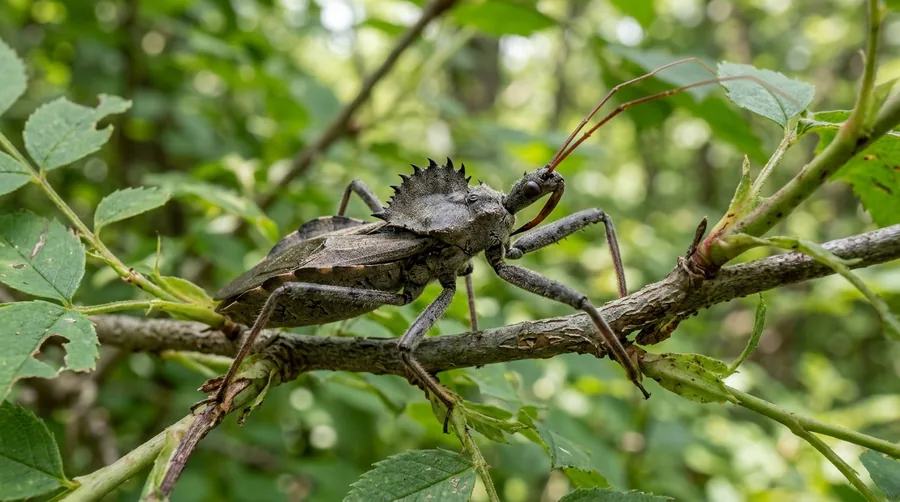
Gray wheel bug with a spiny cogwheel-shaped crest on its back perched on a leaf
Recommended Products


What it does
The wheel bug is a slow-moving ambush predator. It stalks other insects on foliage and trunks, seizes them with strong front legs, and injects saliva through a stout beak to subdue and liquefy the prey. It is not aggressive toward people but will jab defensively if grabbed. It flies weakly and often shelters on tree bark and walls.
Where it lives
Wheel bugs live in gardens, orchards, woodland edges, and yards with plenty of prey insects. They rest on tree trunks, shrubs, and outdoor walls, and adults sometimes wander onto homes in fall. They are common through the eastern, southern, and central US, wherever their insect prey is plentiful.
How it breeds
There is one generation a year. In fall the female lays clusters of brown, bottle-shaped eggs on bark or stems, cemented together, which overwinter. Nymphs hatch in spring, looking like red-and-black spiny insects without the wheel, and grow through several molts. They develop the signature crest only as adults by mid to late summer.
What it eats
Wheel bugs are predators that feed on soft-bodied insects, including caterpillars, beetles, stink bugs, aphids, and even pest species like Japanese beetles and cabbageworms. This diet makes them valuable natural pest control. They take no plant material and nothing from the home.
Identification
Adults are large, an inch or more, gray to brownish-gray, with a distinctive semicircular, cog- or wheel-shaped crest with tooth-like points rising from the thorax, unique among US insects. Nymphs lack the wheel and are smaller with red or orange abdomens and long legs, resembling other assassin bugs.
Signs of an infestation
- A large gray insect with a cogwheel crest on plants or walls
- Clusters of brown, bottle-shaped eggs on bark or stems
- Spiny red-and-black nymphs on foliage in spring
- Wheel bugs seizing caterpillars or beetles as prey
- Occasional adults on outdoor walls in fall
Prevention tips
- Simply leave wheel bugs alone; they are beneficial predators
- Never pick one up by hand, since the bite is painful
- Wear gloves when working where they rest if you are sensitive
- Teach children to look but not touch these bugs
- Gently coax one outdoors with a container if it enters the home
Professional solutions
Wheel bugs do not require pest control; they are considered garden allies and occur in low numbers. No treatment is recommended or necessary. If one wanders indoors, guide it outside with a cup and card rather than handling it. Broad insecticide use in the garden can needlessly kill this and other helpful predators.
Health & safety
Wheel bugs are not dangerous in the sense of disease or venom risk, but their bite is genuinely painful, often described as worse than a bee sting, and can stay sore for days. If bitten, wash the area with soap and water, apply a cold compress, and take an over-the-counter pain reliever. See a doctor if pain is severe, if swelling spreads, or if signs of infection or an allergic reaction develop; Poison Control (1-800-222-1222) can advise. Do not handle wheel bugs.
Relevant Products




Frequently asked questions
Does a wheel bug bite hurt?
Yes. Although wheel bugs are shy and rarely bite unless handled, the bite is notably painful, often described as worse than a bee or wasp sting, and can stay sore for days. Wash the area, use a cold compress, and see a doctor if pain is severe or a reaction develops.
Are wheel bugs good or bad for the garden?
Good. Wheel bugs are beneficial predators that eat caterpillars, beetles, stink bugs, and other pests, providing natural pest control. Aside from their painful defensive bite if handled, they are welcome allies. The best approach is to leave them alone and simply not pick them up.
What should I do if I find a wheel bug in my house?
Do not grab it. Place a cup over it and slide a piece of card underneath, then release it outdoors, where it helps control pests. Wheel bugs only wander inside occasionally in fall and are not looking to infest your home. Handling one is the only real way to get bitten.
Fact-checked by Morgan Vance, Editorial Director (editorial review, not a professional pest-control or medical sign-off). Last reviewed July 30, 2026. We correct anything a reader shows us is wrong — see our corrections policy.