
Tawny Crazy Ant
Nylanderia fulva · also called crazy ant, raspberry crazy ant, hairy crazy ant
Quick answer
The tawny crazy ant (Nylanderia fulva) is a small reddish-brown ant known for fast, erratic movement and staggering numbers along the Gulf Coast. It doesn't follow neat trails, overwhelms yards and homes, and nests in and short-circuits electrical equipment. It bites but doesn't sting, and it displaces other ants, including fire ants.
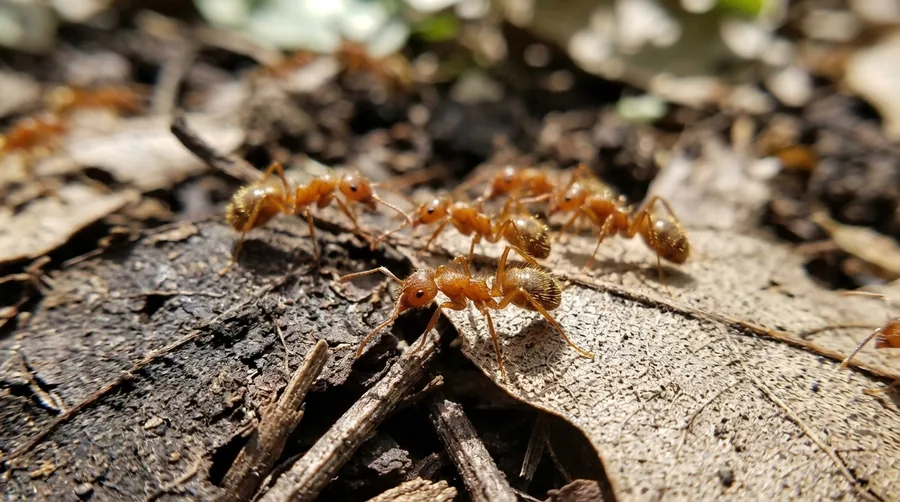
Large numbers of small reddish-brown tawny crazy ants swarming erratically over the ground
Recommended Products
See the full ranking →

What it does
Tawny crazy ants move rapidly and erratically without following clear trails, and they form massive multi-queen colonies with huge worker numbers. They nest in countless sheltered spots and are strongly drawn to electrical equipment, where they cause shorts and malfunctions.
Where it lives
They nest under mulch, landscaping, debris, rocks, and potted plants, and inside walls, electrical boxes, and equipment. They are established across the Gulf Coast and Southeast in warm, humid areas, where populations can reach extreme densities.
How it breeds
Colonies have many queens and no distinct mating swarms; they spread by budding and by hitchhiking in soil, potted plants, and cargo. Populations build to enormous numbers through the warm season, then contract in cold weather.
What it eats
Tawny crazy ants feed heavily on honeydew from aphids and scale insects, and also on sweets, proteins, insects, and grease. They actively tend honeydew-producing insects, which supports their large populations.
Identification
Workers are small, a uniform reddish-brown, densely covered in fine hairs, with a single waist node and no sting. Their erratic movement and overwhelming numbers, rather than orderly trails, set them apart from most other ants.
Signs of an infestation
- Sudden huge numbers of fast, erratic ants
- Ants swarming electrical equipment and causing faults
- Piles of dead ants where populations are dense
- Reduced fire ant activity where they take over
- Ants nesting under mulch, debris, and potted plants
Prevention tips
- Reduce mulch, debris, and moisture around the home
- Seal entry points and electrical enclosures
- Remove harborage like rocks, logs, and clutter outdoors
- Inspect potted plants and items moved from infested areas
- Use EPA-labeled baits and perimeter treatments per the label
Professional solutions
Tawny crazy ants are very hard to control with DIY methods because of their numbers and multiple queens. A professional using perimeter treatments and baits over time is usually needed, and reinfestation from surrounding areas is common. Always read and follow the EPA label.
Health & safety
Tawny crazy ants bite but do not sting and are not known to spread disease. The main problems are overwhelming numbers, nuisance, and damage to electrical equipment they nest in. Overall household risk is moderate.
Relevant Products



Frequently asked questions
Why are these ants called crazy ants?
They move in a fast, erratic, seemingly random way rather than following neat trails, which looks chaotic or crazy. Combined with their enormous numbers, that jittery movement is one of the easiest ways to recognize them.
Do tawny crazy ants damage electronics?
Yes. They are strongly attracted to electrical equipment and nest inside boxes, outlets, and devices, where their bodies can bridge contacts and cause shorts or malfunctions. This is one reason they are considered more than a simple nuisance.
Are tawny crazy ants replacing fire ants?
In some Gulf Coast areas they have displaced red imported fire ants locally through sheer numbers. Unlike fire ants they bite but do not sting, so they pose less of a sting risk, but their populations can be far larger and harder to control.
Fact-checked by Morgan Vance, Editorial Director (editorial review, not a professional pest-control or medical sign-off). Last reviewed May 30, 2026. We correct anything a reader shows us is wrong — see our corrections policy.