Springtail
Collembola (order) · also called springtails, snow flea, snow fleas
Quick answer
Springtails (order Collembola) are tiny, wingless arthropods, usually under 2 mm, that leap using a spring-like tail. They swarm by the thousands in damp soil, mulch, and around sinks, pools, and potted plants. Springtails feed on mold and decaying matter, do not bite or damage property, and signal excess moisture.
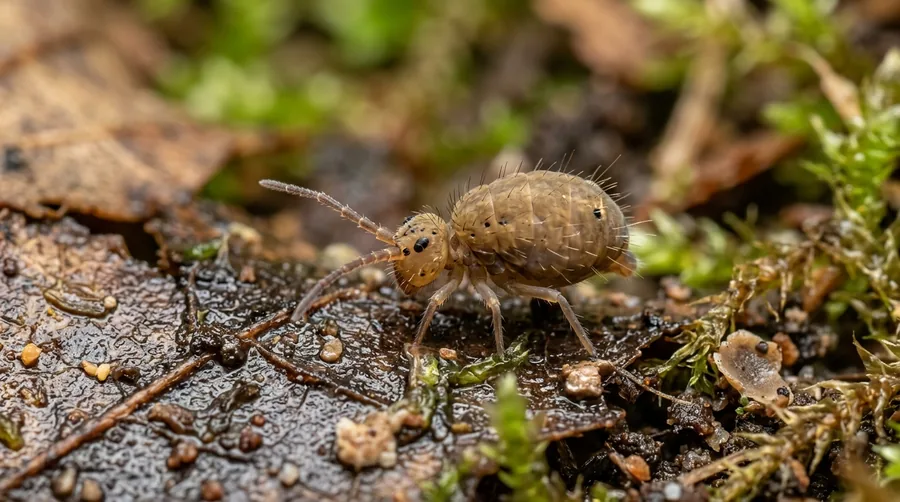
Cluster of tiny gray springtails on wet soil near the edge of a plant pot
Recommended Products
See the full ranking →


What it does
Springtails get their name from a forked, tail-like appendage (the furcula) folded under the body that snaps down to fling them into the air when disturbed, so they appear to jump like fleas. They are harmless, move in huge numbers, and gather wherever surfaces stay damp and mold grows.
Where it lives
They live in moist soil, leaf litter, mulch, and compost outdoors, and indoors around sinks, drains, bathtubs, damp basements, and the soil of overwatered houseplants. They flourish where humidity is high and mold is present, and often appear after heavy rain or in new, still-damp construction.
How it breeds
Springtails develop through simple molts rather than a larval stage, with young resembling small adults. In warm, damp conditions they breed continuously and populations explode quickly, sometimes reaching thousands in a small area. Many complete a generation in a few weeks and stay active year-round indoors.
What it eats
Springtails feed mainly on mold, mildew, algae, fungi, decaying plant matter, and bacteria in damp soil. They do not eat wood, fabric, or stored food, and they do not feed on people, pets, or blood.
Identification
Most springtails are tiny, 1-2 mm, wingless, and range from white or gray to dark blue or black. Up close they have a rounded or elongated soft body and short antennae. The telltale sign is their sudden hopping, which distinguishes them from mold mites, gnats, or fleas.
Signs of an infestation
- Clouds of tiny hopping specks around sinks, tubs, or drains
- Masses of tiny bugs in overwatered potted-plant soil
- Large numbers on damp patios, pool edges, or mulch after rain
- Tiny dark specks collecting in window sills or standing water
Prevention tips
- Lower indoor humidity with ventilation and a dehumidifier
- Fix plumbing leaks and dry out damp basements and bathrooms
- Let houseplant soil dry between waterings and avoid overwatering
- Move mulch and leaf litter away from the foundation
- Repair door and window seals where damp air enters
Professional solutions
Springtails rarely justify professional pest treatment because they are harmless and disappear once dampness is corrected. Insecticides give only brief relief if the moisture remains. If infestations are large or persistent, the priority is finding and fixing the humidity or leak source, which a professional can help locate.
Health & safety
Springtails pose no health risk. They do not bite, sting, carry disease, or infest food, and they cannot harm people, pets, or the home. Rare reports of skin irritation are generally unproven. They are a nuisance and, most usefully, a clear signal of excess moisture that should be addressed.
Relevant Products




Frequently asked questions
Do springtails bite or harm people?
No. Springtails do not bite humans or pets, spread disease, or damage the home. They feed on mold and decaying matter in damp areas. They are strictly a nuisance, and their presence mainly signals that an area is too moist.
How do I get rid of springtails indoors?
Because springtails need dampness and mold, the lasting fix is drying the area: run a dehumidifier, fix leaks, ventilate bathrooms, and let houseplant soil dry out. Once moisture and mold are gone, springtails leave on their own; sprays alone rarely work.
Why did thousands of tiny bugs suddenly appear?
Springtails breed fast and swarm after heavy rain, overwatering, or high humidity, so large numbers can appear overnight around sinks, plants, patios, or pools. Reducing moisture is the key to clearing them out and keeping them from returning.
Fact-checked by Morgan Vance, Editorial Director (editorial review, not a professional pest-control or medical sign-off). Last reviewed July 29, 2026. We correct anything a reader shows us is wrong — see our corrections policy.