
Mold Mite
Tyrophagus putrescentiae · also called mould mite, cheese mite, grain mite
Quick answer
Mold mites (Tyrophagus and related species) are microscopic, whitish-tan mites that swarm over damp, moldy surfaces and stored foods. Often seen as moving 'dust' or brown film, they feed on mold, not people, and do not bite. They are a nuisance and a sign of excess moisture rather than a health threat.
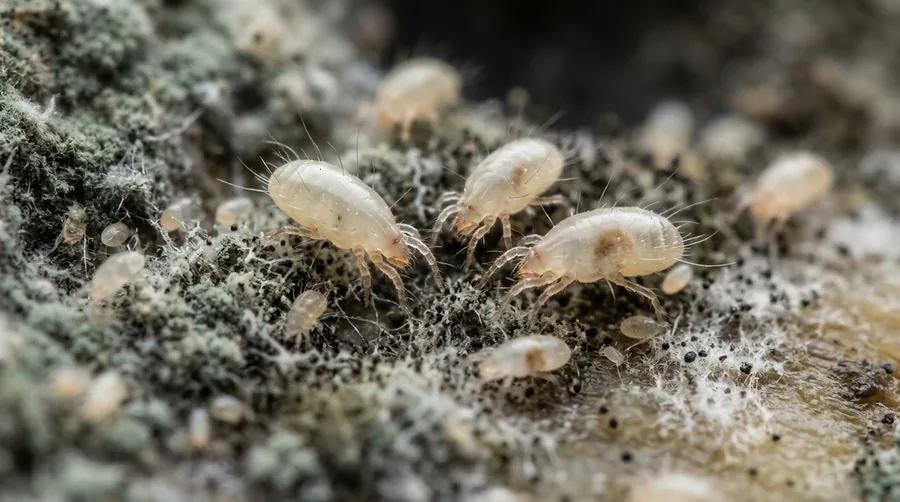
Whitish-tan mold mites clustered as a moving film on a damp, mold-spotted surface
Recommended Products


What it does
Mold mites feed on mold and fungi growing on damp materials and stored foods. They reproduce explosively when humidity is high, forming visible swarms that look like moving dust or a slowly creeping brown film. When food or moisture runs low, huge numbers can migrate across nearby surfaces before dying back.
Where it lives
They thrive anywhere with mold and moisture: damp pantries, cellars, crawl spaces, around leaks, on new or water-damaged wood, and in stored grains, flour, cheese, dried fruit, and pet food. They are found nationwide indoors and in food-storage and manufacturing settings wherever dampness allows mold to grow.
How it breeds
Mold mites breed extremely fast under warm, humid conditions, completing egg-to-adult development in as little as one to two weeks. A single female can lay hundreds of eggs, so populations can erupt within days and collapse just as quickly once the moisture and mold are removed.
What it eats
They feed primarily on mold and fungal growth, and on the high-fat, high-protein foods that support it, such as cheese, cured meats, grain, flour, seeds, and dried pet food. It is really the mold they are after.
Identification
Individually they are nearly microscopic (0.3-0.5 mm), whitish to tan, some species bearing long hairs. What people actually notice is the mass: a fine, moving grayish-brown dust or film on damp surfaces or infested food. A hand lens reveals countless tiny crawling mites.
Signs of an infestation
- Fine grayish-brown 'dust' that appears to move
- Slowly spreading film on damp shelves or food
- Swarms near leaks, condensation, or moldy areas
- Infested flour, grain, cheese, or dried pet food
- Mite numbers spiking in humid weather then vanishing when dry
Prevention tips
- Lower indoor humidity with dehumidifiers and ventilation
- Fix leaks, condensation, and damp spots that grow mold
- Store flour, grain, and pet food in airtight containers
- Discard mold-infested or heavily infested foods
- Clean and dry pantries, cellars, and crawl spaces thoroughly
Professional solutions
Mold mites rarely need professional pest treatment because the fix is moisture and mold control, not insecticide. Removing infested food, cleaning surfaces, and drying the space out eliminates them. If mold is widespread, a mold-remediation or moisture professional addressing the underlying dampness is more useful than any spray.
Health & safety
Mold mites do not bite people or spread disease. In sensitive individuals, handling heavily infested food or breathing mite debris can cause skin irritation ('grocer's itch') or allergy and asthma symptoms. Contaminated food should be discarded. The real underlying issue, excess moisture and mold, is the more meaningful health concern to correct.
Relevant Products


Frequently asked questions
Do mold mites bite?
No. Mold mites do not bite people or pets. They feed on mold and fungi. In sensitive people, heavy exposure to infested food or mite debris can cause skin irritation or allergy symptoms, but there is no biting and no disease transmission.
How do I get rid of mold mites for good?
Fix the moisture. Mold mites explode in damp, moldy conditions, so run a dehumidifier, repair leaks, improve ventilation, discard infested food, and store dry goods in airtight containers. Once the mold and dampness are gone, the mites disappear without needing insecticide.
Fact-checked by Morgan Vance, Editorial Director (editorial review, not a professional pest-control or medical sign-off). Last reviewed May 5, 2026. We correct anything a reader shows us is wrong — see our corrections policy.