Booklice (Psocid)
Liposcelis spp. · also called psocid, psocids, booklouse
Quick answer
Booklice, or psocids (Liposcelis species), are tiny, soft-bodied, pale insects about 1 mm long, often mistaken for dust specks. Despite the name they are not true lice and do not bite people or pets. They feed on mold and starch in humid spots, thriving in damp books, pantries, and new construction.
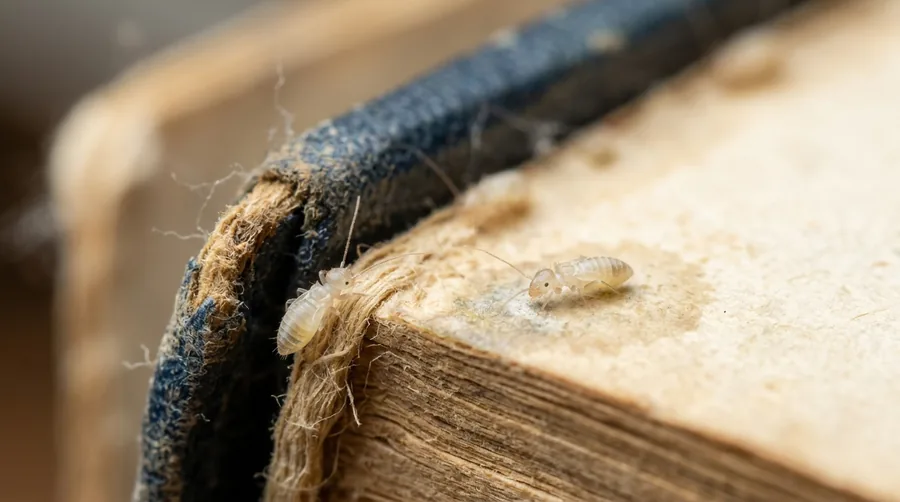
Very small pale booklouse on the yellowed page of a damp old book
Recommended Products
See the full ranking →


What it does
Booklice are tiny, quick, soft-bodied insects that scurry across damp surfaces feeding on microscopic mold. Despite the name, they are not true lice and are unrelated to head or body lice. They do not bite people or pets. Their populations grow fast in humid conditions and drop sharply once the air dries.
Where it lives
They thrive anywhere humidity is high and mold grows: damp books and paper, cardboard, wallpaper paste, window frames, and pantry shelves. They are common in new homes where plaster and framing are still curing, and in stored grain, flour, and cereals. Indoor pest species are usually wingless.
How it breeds
Many indoor booklice reproduce rapidly, and some can reproduce without mating. Females lay small eggs in cracks and on stored items; nymphs resemble tiny adults and mature in as little as two to four weeks in warm, humid conditions. Multiple overlapping generations occur each year, especially in summer.
What it eats
Booklice feed mainly on mold, mildew, and fungi, plus starchy materials like paper, book bindings, wallpaper paste, and grain dust. They are drawn to stored foods more for the mold on them than the food itself, though they can infest flour, cereal, and other dry goods.
Identification
Booklice are very small, about 1-2 mm, and pale gray, tan, or nearly translucent, so they are easily mistaken for moving flecks of dust. They have a soft body, a relatively large head, long thread-like antennae, and, in indoor forms, no wings.
Signs of an infestation
- Tiny pale specks moving across books, paper, or damp walls
- Insects in stored flour, cereal, or grain, or on pantry shelves
- Sightings near mold, mildew, or condensation
- Presence in new construction where materials are still damp
Prevention tips
- Keep indoor humidity low with ventilation and a dehumidifier
- Store dry foods in airtight glass or plastic containers
- Discard or dry out moldy books, papers, and cardboard
- Fix leaks and condensation on windows and pipes
- Improve airflow in closets, pantries, and basements
Professional solutions
Booklice seldom need professional treatment. Reducing humidity below about 50 percent usually eliminates them within days by killing the mold they eat. Insecticides are rarely necessary. Persistent infestations, especially in stored food or a business, may warrant a pest professional to find the moisture source and check for contamination.
Health & safety
Booklice do not bite, sting, or transmit disease to people or pets, and they do not damage the structure of a home. The main concerns are contamination of stored food and, in large numbers, contribution to indoor allergens. Overall risk is low; controlling moisture is the safe, effective fix.
Relevant Products




Frequently asked questions
Are booklice actually lice, and do they bite?
No. Booklice are not true lice and are unrelated to the lice that infest people or pets. They do not bite, feed on blood, or spread disease. They eat mold and starch in humid spots, so they are a nuisance, not a health threat.
How do I get rid of booklice?
Lower the humidity. Booklice depend on mold and dampness, so running a dehumidifier, fixing leaks, ventilating, and discarding moldy paper or food usually clears them within days. Store dry foods in airtight containers. Insecticides are rarely needed.
Why do I have booklice in a brand-new house?
New construction holds a lot of moisture in fresh plaster, wood, and drywall, which feeds the mold booklice eat. As the building dries out over the first months, the humidity drops and the booklice usually disappear on their own.
Fact-checked by Morgan Vance, Editorial Director (editorial review, not a professional pest-control or medical sign-off). Last reviewed July 6, 2026. We correct anything a reader shows us is wrong — see our corrections policy.