Body Louse
Pediculus humanus humanus · also called body lice, body louse, clothes louse
Quick answer
The body louse (Pediculus humanus humanus) lives and lays eggs in the seams of clothing and bedding, moving to the skin only to feed. Unlike head lice, body lice can spread serious diseases such as epidemic typhus and trench fever. They are linked to crowded conditions and infrequent access to laundering.
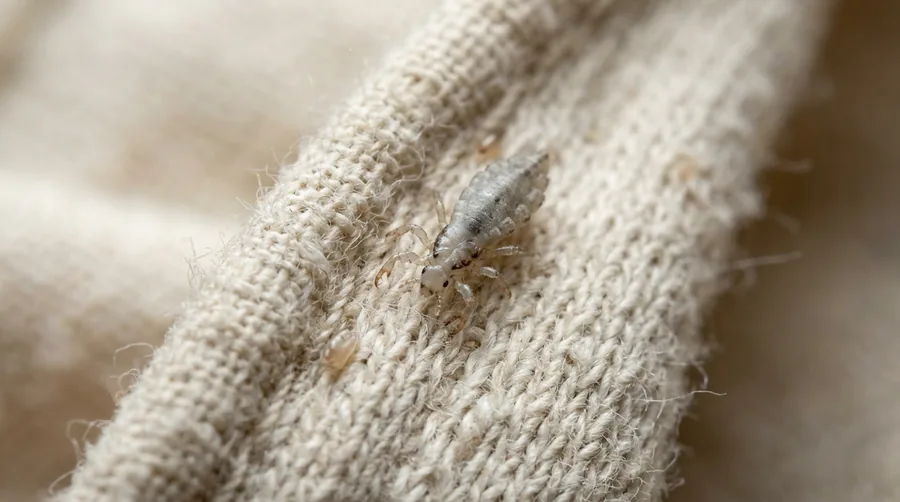
Pale body louse on the seam of a piece of clothing next to fabric fibers
Recommended Products


What it does
Body lice differ from head lice in where they live: they stay in the seams of clothing and bedding and crawl onto the skin only to feed on blood, several times a day. They spread through direct contact and by sharing infested clothing or bedding. Their bites cause itching, and heavy, long-standing infestations can thicken and darken the skin.
Where it lives
Body lice live in clothing, especially along seams, and in bedding, not on the body itself, returning to the skin to feed. They are strongly associated with crowded living and limited access to regular bathing and laundry, such as in some shelter and disaster settings. They occur worldwide and nationwide but are uncommon where laundering is routine.
How it breeds
Females glue eggs (nits) to the fibers and seams of clothing. Nits hatch in about a week into nymphs that mature to adults in another week or so, feeding on the skin throughout. Adults can live about a month on a clothed host but die within days if separated from a person and warmth.
What it eats
Body lice feed exclusively on human blood, moving from clothing seams to the skin to feed several times a day. They do not feed on any other host or food source and cannot survive long away from a human.
Identification
Body lice are 2-4 mm, wingless, pale gray to tan insects that look almost identical to head lice but are found in clothing and bedding rather than on the scalp. Nits are pale oval eggs attached to clothing fibers and seams. The location, in garments rather than hair, is the key distinction.
Signs of an infestation
- Itchy bite welts on the trunk, waist, and shoulders
- Lice or pale nits in the seams of worn clothing
- Thickened, darkened skin in long-standing cases
- Bites concentrated where clothing seams touch skin
- Infestation linked to crowded or low-laundry conditions
Prevention tips
- Bathe regularly and change into clean clothing often
- Wash and hot-dry clothes and bedding at high heat
- Avoid sharing clothing, towels, and bedding
- Improve access to laundry in group living settings
- Discard heavily infested items that cannot be washed hot
Professional solutions
Body lice are controlled chiefly through hygiene: regular bathing and washing clothing and bedding in hot water and drying on high heat, which usually eliminates them without treating the body. Where disease transmission is a concern or infestations are widespread, public-health authorities and clinicians guide management, sometimes with pediculicides. Structural pest control is not the tool for body lice.
Health & safety
Unlike head lice, body lice can transmit serious bacterial diseases, including epidemic typhus, trench fever, and louse-borne relapsing fever, historically in crowded, unsanitary conditions. Such transmission is rare in the US today but remains a genuine reason body lice are taken seriously. Bites also itch and can become infected. Seek medical care for fever with a body louse infestation.
Relevant Products




Frequently asked questions
What is the difference between head lice and body lice?
Head lice live on the scalp and glue their eggs to hair, while body lice live in the seams of clothing and bedding and only move to the skin to feed. The two look nearly identical, but body lice can spread disease and are managed mainly through bathing and hot laundering.
Can body lice make you sick?
Yes, unlike head lice, body lice can transmit bacterial diseases such as epidemic typhus, trench fever, and relapsing fever, historically in crowded, unsanitary conditions. This is rare in the US today but is why body lice are taken seriously. Seek medical care for fever alongside an infestation.
How do you get rid of body lice?
Body lice are usually eliminated by hygiene rather than pesticides: bathe regularly and wash clothing and bedding in hot water, drying on high heat, since the lice live in fabric. Improving access to regular laundering is key, and a clinician can advise where infestations persist.
Fact-checked by Morgan Vance, Editorial Director (editorial review, not a professional pest-control or medical sign-off). Last reviewed August 8, 2026. We correct anything a reader shows us is wrong — see our corrections policy.