
Head Louse
Pediculus humanus capitis · also called head lice, head louse, nits
Quick answer
The head louse (Pediculus humanus capitis) is a tiny, wingless insect that lives on the human scalp and feeds on blood. It spreads mainly through direct head-to-head contact and is very common among school-age children. Head lice cause itching but are not known to spread disease and are not a sign of poor hygiene.
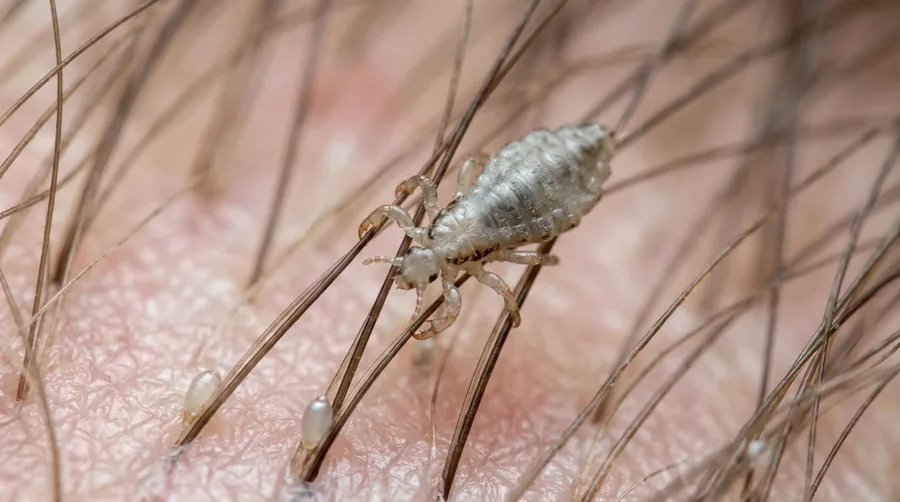
Tan head louse gripping a strand of human hair near the scalp
Recommended Products


What it does
Head lice live their entire life on the human scalp, crawling among hairs and feeding on blood several times a day. They cannot jump or fly and spread almost entirely through direct head-to-head contact, and rarely via shared combs, hats, or pillows. Itching comes from an allergic reaction to their saliva and may take weeks to begin.
Where it lives
Head lice live close to the scalp, especially behind the ears and at the nape of the neck, where it is warm. They cannot survive long off a human head, usually only a day or two, and do not live in carpets, furniture, or on pets. They occur worldwide and nationwide, most often on school-age children.
How it breeds
A female cements tiny eggs (nits) to hair shafts near the scalp. Nits hatch in about a week into nymphs, which mature to adults in another week or so. Adults live about a month on the head. Because eggs are glued near the scalp, treatment usually must be repeated to catch newly hatched lice.
What it eats
Head lice feed exclusively on small amounts of human blood from the scalp, feeding several times a day. They do not feed on any other food source and cannot survive without regular blood meals from a human host.
Identification
Adult head lice are 2-3 mm, wingless, tan to grayish-white, with six clawed legs adapted to grip hair. Nits are tiny oval eggs firmly glued to hair shafts near the scalp, often mistaken for dandruff but, unlike flakes, cannot be easily brushed off. Live nits sit within a quarter inch of the scalp.
Signs of an infestation
- Itching of the scalp, neck, and behind the ears
- Tiny tan lice crawling close to the scalp
- Oval whitish nits glued firmly to hair shafts
- A tickling or moving feeling in the hair
- Trouble sleeping from nighttime scalp itching
Prevention tips
- Avoid head-to-head contact during play and photos
- Discourage sharing combs, brushes, hats, and helmets
- Check children's heads regularly during outbreaks
- Tie back long hair in busy group settings
- Wash recently used bedding and hats in hot water
Professional solutions
Head lice are typically treated at home with over-the-counter or prescription pediculicide products plus thorough nit combing with a fine-toothed comb, repeated as the label directs to catch newly hatched lice. If treatments fail repeatedly, a clinician or pharmacist can advise on prescription options and confirm the diagnosis. Household pest professionals are not needed.
Health & safety
Head lice are not known to transmit disease and are not a sign of poor hygiene or an unclean home. The main effects are itching, disrupted sleep, and occasional skin infection from scratching, plus social stress. Follow product label directions carefully, especially for children, and consult a pharmacist or clinician with questions about treatment.
Relevant Products




Frequently asked questions
How do head lice spread?
Head lice spread almost entirely through direct head-to-head contact, common during play, sports, and photos. They cannot jump or fly, and spread through shared combs, hats, or pillows is much less common. They are not caught from pets and are not a sign of poor hygiene.
Are head lice dangerous or a sign of a dirty home?
No. Head lice are not known to spread disease and have nothing to do with cleanliness; anyone can get them. The main issues are scalp itching, disrupted sleep, and occasional infection from scratching. Treatment with a lice product plus nit combing usually resolves them.
How do I tell nits from dandruff?
Nits are tiny oval eggs firmly cemented to individual hair shafts near the scalp and cannot be flicked off, while dandruff flakes brush away easily. Live infestations usually show nits within about a quarter inch of the scalp. Finding crawling lice confirms an active case.
Fact-checked by Morgan Vance, Editorial Director (editorial review, not a professional pest-control or medical sign-off). Last reviewed June 11, 2026. We correct anything a reader shows us is wrong — see our corrections policy.