
Plaster Beetle
Latridiidae spp. · also called plaster beetles, minute brown scavenger beetle, fungus beetle
Quick answer
Plaster beetles (family Latridiidae) are minute brown beetles that feed on mold and mildew in damp buildings, often swarming in newly built or water-damaged homes. Barely larger than a pinhead, they neither bite nor damage anything. Their presence signals excess moisture and hidden mold, which is the real problem to fix.
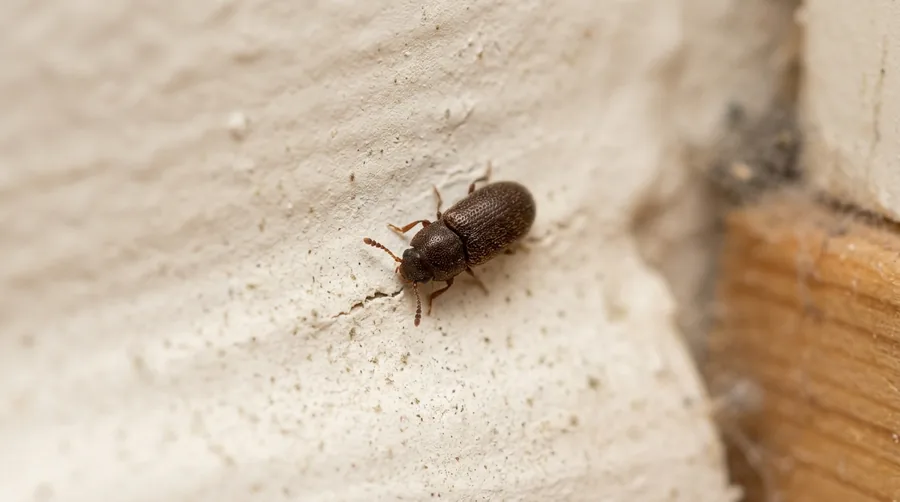
Very small brown plaster beetle on a damp painted wall surface, shown magnified
Recommended Products


What it does
Plaster beetles feed and breed on the microscopic molds and mildews that grow on damp surfaces. They multiply wherever humidity keeps mold growing, then wander toward windows, lights, and sinks. Because they depend entirely on mold, they appear and vanish with the moisture that supports it, and they do no harm as they crawl.
Where it lives
They are classic pests of new construction and water-damaged buildings, thriving on damp plaster, drywall, framing, and behind wallpaper before everything dries out. They also turn up in humid pantries, cellars, bathrooms, and around leaks. They occur nationwide indoors wherever mold has a foothold.
How it breeds
Development is quick in warm, humid conditions, with eggs, larvae, and pupae all completing on or near the mold food source in a matter of weeks. Populations build rapidly while dampness lasts and decline steeply once the mold dries up, so infestations are often self-limiting after the moisture is corrected.
What it eats
Plaster beetles eat mold spores and fungal growth. They do not feed on the plaster, wood, fabric, or stored food itself, only on the mold growing on damp materials, which is why drying those materials starves them out.
Identification
They are tiny brown to reddish-brown beetles, roughly 1-3 mm, easily overlooked or mistaken for specks of dirt. A hand lens shows a typical oval beetle shape with clubbed antennae. Context is a strong clue: many tiny brown beetles in a new, humid, or water-damaged building almost always means plaster beetles.
Signs of an infestation
- Many tiny brown beetles in a new or damp building
- Beetles gathering at windows, lights, and sinks
- Sightings tied to humid weather or a recent leak
- Mold or mildew present on nearby surfaces
- Populations fading once the area dries out
Prevention tips
- Reduce indoor humidity with ventilation and a dehumidifier
- Let new construction dry fully and address damp framing
- Fix leaks, condensation, and poor drainage promptly
- Clean mold and mildew from damp surfaces
- Improve airflow in bathrooms, cellars, and crawl spaces
Professional solutions
Plaster beetles almost never justify insecticide treatment; controlling moisture eliminates them. If the source is hidden water damage or widespread mold, a moisture or mold-remediation professional is more appropriate than a pesticide application. Drying the structure removes both the mold and the beetles that depend on it.
Health & safety
Plaster beetles do not bite, sting, or spread disease, and they do not damage the home or its contents. They are purely a nuisance and, more usefully, an indicator: their appearance flags excess moisture and mold, which can itself affect indoor air quality. Correcting the dampness is the meaningful step.
Relevant Products




Frequently asked questions
Why are there tiny brown beetles all over my new house?
Plaster beetles thrive on the mold that grows on damp new plaster, drywall, and framing before a building fully dries out. They are harmless and temporary. As the structure dries and the mold disappears, the beetles die off, so improving ventilation and lowering humidity is the fix.
Do plaster beetles damage the house or need spraying?
No. Plaster beetles eat only mold, not wood, plaster, fabric, or food, and they do no structural harm. Insecticide is rarely needed; drying out the damp areas and removing the mold starves them out and prevents them from returning.
Fact-checked by Morgan Vance, Editorial Director (editorial review, not a professional pest-control or medical sign-off). Last reviewed May 8, 2026. We correct anything a reader shows us is wrong — see our corrections policy.