
Sowbug
Porcellio scaber · also called woodlouse, wood louse, sow bug
Quick answer
The sowbug (Porcellio scaber) is a small, gray, oval land crustacean, not an insect, related to shrimp and crabs. It has seven pairs of legs, a segmented armored back, and two short tail projections. Sowbugs live in damp soil and mulch, feed on decaying plant matter, and are harmless nuisances that wander into damp basements.
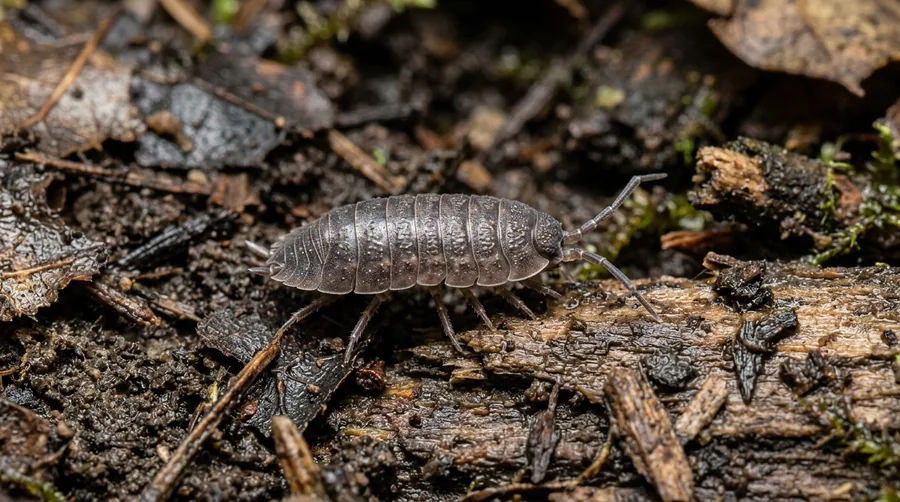
Gray, oval, segmented sowbug crawling on damp soil among mulch and decaying leaves
Recommended Products
See the full ranking →


What it does
Sowbugs are slow-moving, night-active scavengers that shelter in dark, damp places by day and feed after dark. Unlike the closely related pillbug, a sowbug cannot roll into a tight ball. They cause no structural or food damage indoors and simply wander in from wet soil, dying quickly in dry rooms.
Where it lives
They live outdoors under mulch, leaf litter, logs, stones, and flowerpots, anywhere soil stays moist. Because they breathe through gill-like structures, they need constant humidity. Indoors they turn up in damp basements, crawl spaces, garages, and ground-floor door thresholds, usually near a moisture problem.
How it breeds
Sowbugs breed in spring and summer. Females carry eggs and newly hatched young in a fluid-filled brood pouch on their underside for several weeks. Young resemble tiny adults and molt as they grow. They can live two to three years, longer than most insects, with one or two broods a year.
What it eats
Sowbugs eat decaying leaves, mulch, and other rotting plant matter, recycling it into soil. In gardens and greenhouses they occasionally nibble tender seedlings or ripe fruit resting on damp ground, but indoors they find nothing to eat and cannot survive long.
Identification
A sowbug is a land crustacean, not an insect: 10-15 mm, oval, slate-gray, with a segmented, armored back, seven pairs of legs, and two short tail-like projections (uropods). The look-alike pillbug rolls into a ball and lacks those tails; sowbugs do not roll up.
Signs of an infestation
- Slow gray, segmented bugs in damp basements or under door thresholds
- Clusters under flowerpots, mulch, or stored items on the ground
- Dead, dried-up sowbugs along walls and in window wells
- Repeated sightings that signal excess moisture nearby
Prevention tips
- Reduce moisture with dehumidifiers and by fixing leaks and drainage
- Move mulch, leaves, and firewood back from the foundation
- Seal gaps under doors and around basement windows and pipes
- Improve ventilation in crawl spaces and basements
- Clear damp debris and clutter where they hide
Professional solutions
Sowbugs almost never need professional treatment. Because they die quickly indoors, the fix is drying out and sealing entry points rather than spraying. If large numbers keep appearing, it points to a moisture or drainage issue worth correcting; a pest professional or handyman can help identify the source.
Health & safety
Sowbugs are completely harmless to people and pets. They do not bite, sting, spread disease, or damage buildings, food, or furnishings, and they carry no known health risk. They are a nuisance and a moisture indicator only, so insecticides are rarely warranted; addressing dampness solves the problem.
Relevant Products




Frequently asked questions
Are sowbugs and pillbugs the same thing?
They are close relatives and both are land crustaceans, but they differ: a pillbug rolls into a tight ball when disturbed, while a sowbug cannot and has two small tail-like projections at its rear. Both are harmless moisture-lovers that feed on decaying plants.
Do sowbugs bite or damage my house?
No. Sowbugs do not bite people or pets, spread disease, or damage wood, food, or fabrics. They feed on decaying plant matter outdoors and die quickly indoors, so they are purely a nuisance and a sign of excess moisture.
Why do I keep finding sowbugs in my basement?
Sowbugs need constant dampness, so repeated sightings usually mean a moisture problem, such as poor drainage, a leak, or high humidity. Drying the area with a dehumidifier, fixing leaks, and sealing entry gaps typically stops them.
Fact-checked by Morgan Vance, Editorial Director (editorial review, not a professional pest-control or medical sign-off). Last reviewed June 23, 2026. We correct anything a reader shows us is wrong — see our corrections policy.