
Spider Beetle
Mezium and Ptinus spp. · also called spider beetles, American spider beetle, whitemarked spider beetle
Quick answer
Spider beetles (family Ptinidae) are tiny, round-bodied beetles with long legs and antennae that make them look like small spiders or mites. Shiny reddish-brown to black, they scavenge dried food, droppings, and debris in pantries, attics, and old buildings. They do not bite or spread disease but contaminate stored goods.
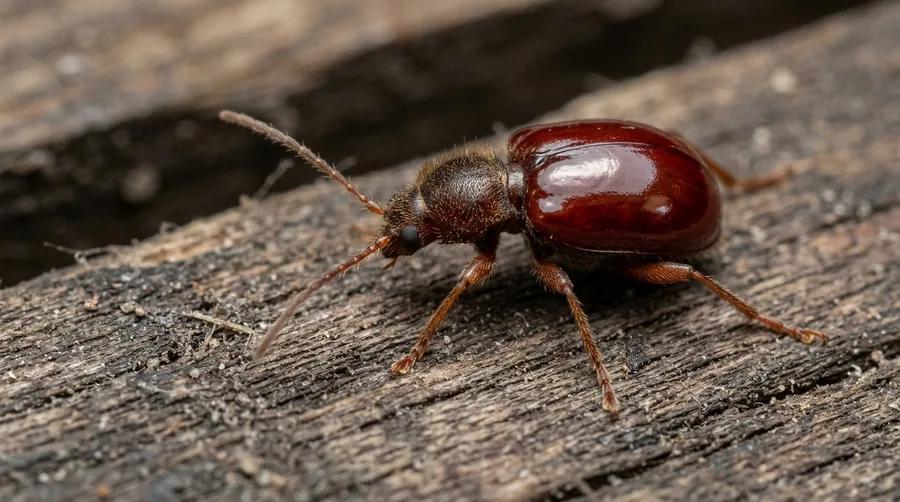
Shiny round-bodied reddish-brown spider beetle with long legs and antennae resembling a mite
Recommended Products


What it does
Spider beetles are slow-moving nocturnal scavengers that feed on a wide range of dried organic matter. Their humped, long-legged shape and habit of tucking their head under the body give them a spider-like look. They tend to infest neglected, undisturbed material and can bore small holes in packaging and even soft wood to pupate.
Where it lives
They thrive in dark, undisturbed places: old pantry stores, attics, wall voids, warehouses, granaries, and rodent or bird nests, where droppings and debris accumulate. Found nationwide, they are often linked to forgotten food, spilled grain, and dead insects in cluttered or historic buildings.
How it breeds
Females lay eggs among the food debris. Grub-like larvae feed, then spin a small cocoon or bore into material to pupate. Development typically takes several weeks to months, and there are usually only one or two generations a year, so populations build more slowly than fast-breeding pantry beetles.
What it eats
Spider beetles eat almost any dried organic material: grains, flour, seeds, dried fruit, spices, and also feathers, wool, animal droppings, dead insects, and other debris. This broad scavenging diet lets them persist on scraps in hidden, undisturbed spots.
Identification
Adults are 1/16 to 1/8 inch with a shiny, bulbous, spider-like abdomen, long legs, and long antennae. The American spider beetle is reddish-brown with a dark, glossy body; the whitemarked spider beetle has pale hair patches on the wing covers. The overall globular, leggy look is distinctive.
Signs of an infestation
- Small, round, spider-like beetles in stored food or corners
- Beetles in attics, pantries, or near old rodent nests
- Tiny holes bored in packaging, cocoons, or soft wood
- Contaminated dried food with debris and cast material
- Slow-moving beetles found in undisturbed clutter
Prevention tips
- Discard old, forgotten dried foods and clear clutter
- Store food in airtight glass or hard-plastic containers
- Clean up rodent and bird nesting debris and droppings
- Vacuum cracks, corners, and neglected storage areas
- Reduce spilled grain and organic debris in storage
Professional solutions
Homeowners can usually clear spider beetles by finding and removing the food debris and nesting material they breed in, then cleaning. A professional helps when the source is hidden in wall voids, rodent nests, or large storage areas, providing inspection, targeted treatment, and monitoring.
Health & safety
Spider beetles do not bite, sting, or transmit disease. Their significance is as contaminants of stored food and as a sign of neglected debris or rodent activity. Infested food should be discarded, and any associated rodent or bird nesting should be cleaned up with normal precautions.
Relevant Products


Frequently asked questions
Is that tiny bug a spider or a spider beetle?
Spider beetles have six legs and a hard, shiny, round body with long antennae, while true spiders have eight legs and two body segments. If it is a small, slow, bead-like bug found in stored food, an attic, or clutter, it is almost certainly a spider beetle, not a spider.
Where do spider beetles come from?
They breed in neglected dried food, spilled grain, and organic debris, and are often tied to old rodent or bird nests in attics and wall voids. Clearing forgotten food and nesting material and cleaning the area removes what they depend on.
Do spider beetles bite or harm people?
No. Spider beetles do not bite, sting, or spread disease. They are scavengers that contaminate stored food, so the main response is to discard infested products, clean up debris, and store dry goods in airtight containers.
Fact-checked by Morgan Vance, Editorial Director (editorial review, not a professional pest-control or medical sign-off). Last reviewed July 15, 2026. We correct anything a reader shows us is wrong — see our corrections policy.