
Cigarette Beetle
Lasioderma serricorne · also called tobacco beetle, cigar beetle
Quick answer
The cigarette beetle (Lasioderma serricorne) is a tiny, reddish-brown, hump-backed beetle that infests stored tobacco plus spices, dried herbs, cereals, seeds, and pet food. Its larvae do the feeding, contaminating pantry and warehouse goods. It flies readily and is drawn to light, but does not bite or spread disease.
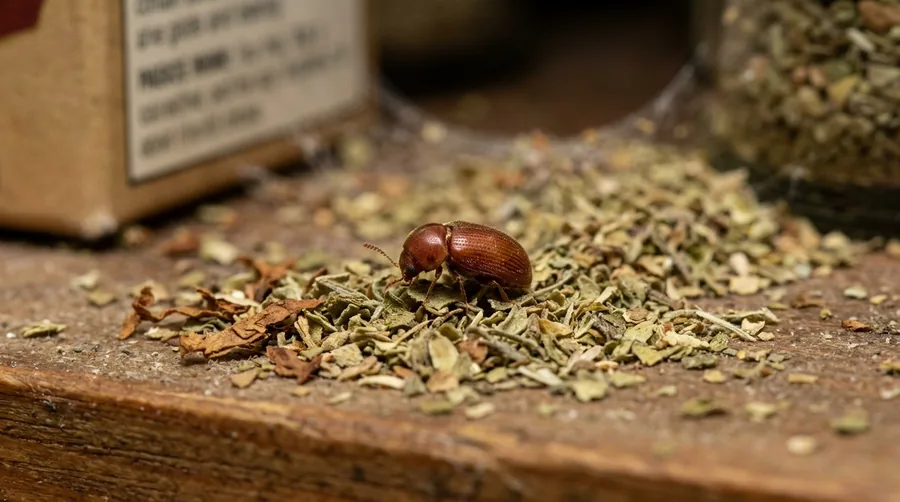
Tiny reddish-brown hump-backed cigarette beetle on spilled dried spice
Recommended Products


What it does
Cigarette beetles are active fliers, most lively in dim light and at dusk, and are strongly drawn to lights. The adults do little feeding; the damage comes from larvae boring into and contaminating stored products. When disturbed, adults often pull in their legs and play dead. Populations can build rapidly in warm storage areas.
Where it lives
They infest homes, groceries, warehouses, and any place dried plant products are stored. Larvae develop inside packages of spices, dried herbs, tobacco, cereals, seeds, and dry pet food, as well as in dried flowers and some museum specimens. They are found nationwide, more numerous in warm months and heated buildings.
How it breeds
Females lay eggs on or in stored food, and the small, hairy, C-shaped larvae tunnel through the product as they feed. After pupating in a small cell, adults emerge, and warm conditions allow several overlapping generations a year, so an unnoticed source can seed a large infestation.
What it eats
Larvae feed on a wide range of dried plant materials, tobacco, spices, paprika, dried herbs, cereals, grains, seeds, nuts, dried fruit, and dry pet food, and can also damage dried flowers and books.
Identification
Adults are small, about 2-3 mm, oval, and uniformly light reddish-brown, with a humped, hunched profile because the head tucks under the body. The antennae are evenly saw-toothed, and the wing covers are smooth, which helps separate them from the very similar drugstore beetle.
Signs of an infestation
- Small reddish-brown beetles flying toward windows or lights
- Tiny larvae or fine powder inside packaged spices, grain, or pet food
- Small holes in packaging and dust-like frass on shelves
- Beetles found near stored tobacco or dried herbs
Prevention tips
- Store dried foods, spices, and pet food in airtight containers
- Rotate pantry stock and discard old or expired dried goods
- Clean up spilled grains, crumbs, and dust in cabinets
- Inspect incoming bulk and dried goods for signs of infestation
Professional solutions
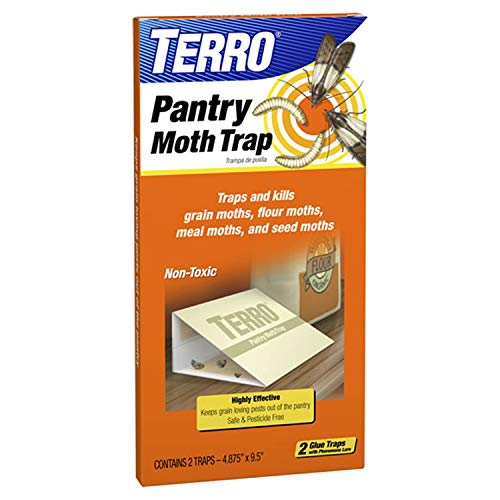
Control centers on finding and discarding the infested product, since a single overlooked package can restart the problem. Clean shelves and cracks, and store food in sealed containers. Pheromone monitoring traps help locate sources in kitchens and warehouses. A professional may be warranted for recurring commercial infestations where the source is hard to pin down.
Health & safety
Cigarette beetles do not bite, sting, or spread disease, and they are not known to be harmful if accidentally eaten. The concern is contamination and spoilage of stored foods and other dried products, which usually must be discarded. They are a nuisance and economic pest rather than a health hazard.
Relevant Products


Frequently asked questions
What attracts cigarette beetles to my home?
They are drawn to stored dried plant products, spices, dried herbs, cereals, seeds, tobacco, and dry pet food, where their larvae develop. Adults also fly toward lights and windows. A forgotten package of old spice or grain in the pantry is a common starting point for an infestation.
How do I get rid of cigarette beetles?
Search the pantry for the source, an infested package of spice, grain, or pet food, and discard it. Clean shelves and cracks, vacuum crumbs, and store remaining dried goods in airtight containers. Pheromone traps can help you find hidden sources and confirm the problem is gone.
Are cigarette beetles harmful to eat?
Accidentally eating a few beetles or larvae in infested food is not known to cause harm or spread disease, though it is understandably unpleasant. The real issue is contamination and spoilage, so infested dried goods should be discarded rather than used.
Fact-checked by Morgan Vance, Editorial Director (editorial review, not a professional pest-control or medical sign-off). Last reviewed July 12, 2026. We correct anything a reader shows us is wrong — see our corrections policy.