
Southern Red Mite
Oligonychus ilicis · also called southern red mite
Quick answer
The southern red mite (Oligonychus ilicis) is a spider mite that attacks broadleaf evergreens like azalea, camellia, holly, and rhododendron. A cool-season mite, it feeds most in spring and fall, stippling and bronzing leaves and spinning fine webbing. Tiny and reddish, it damages shrubs but does not bite or affect people or pets.
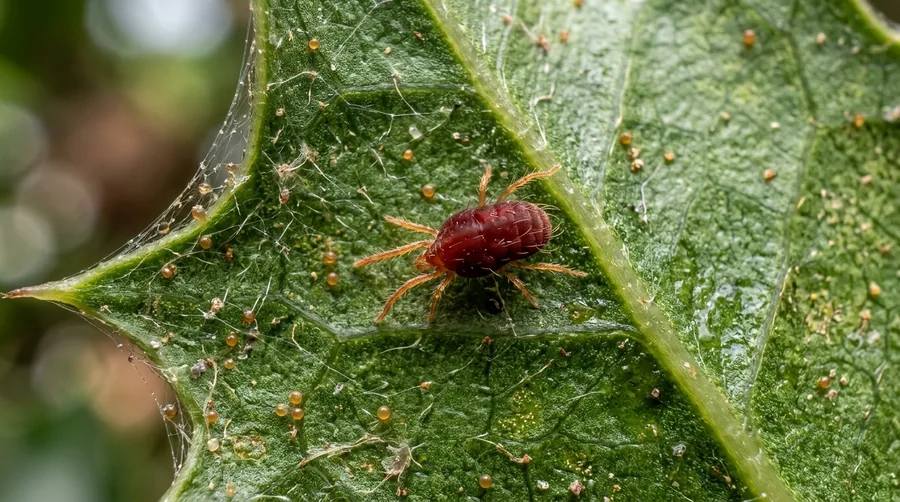
Stippled, bronzed azalea leaves with fine webbing and tiny reddish southern red mites underneath
Recommended Products


What it does
Southern red mites cluster on the undersides of leaves and pierce cells to feed, removing chlorophyll. This produces a fine stippling that merges into a bronzed, dull, or gray-green cast, and heavy feeding adds delicate webbing and leaf drop. They build up in the milder temperatures of spring and fall and slow in summer heat.
Where it lives
It favors broadleaf evergreens: azalea, camellia, holly, rhododendron, and related shrubs in landscapes and foundation plantings. Most damaging in the Southeast and warmer regions, it lives on the leaf undersides, often on shaded, sheltered sides of plants where conditions stay cool and humid.
How it breeds
As a spider mite it can complete a generation in one to two weeks during favorable cool seasons, producing many overlapping generations. Females lay eggs on leaf undersides; the young pass through several stages before maturing. It overwinters as eggs on the foliage and resumes in spring.
What it eats
Southern red mites feed only on the sap and cell contents of their host plants' leaves. They do not feed on other materials and pose no threat to household goods or food.
Identification
The mites are minute (about 0.3 mm) and reddish; a hand lens shows them, and tapping a leaf over white paper reveals tiny moving specks that smear reddish when crushed. The clearest signs are stippled, bronzed leaves and fine webbing on the undersides of broadleaf evergreens in spring or fall.
Signs of an infestation
- Fine stippling giving leaves a dull, bronzed look
- Delicate webbing on leaf undersides
- Tiny reddish specks that smear when wiped on paper
- Off-color, gray-green foliage and premature leaf drop
- Damage worst in spring and fall, easing in summer
Prevention tips
- Rinse leaf undersides with a firm water spray to knock mites down
- Inspect susceptible evergreens in spring and fall
- Avoid drought stress and dusty conditions that favor mites
- Preserve predatory mites and other natural enemies
- Quarantine and check new shrubs before planting
Professional solutions
Light infestations respond to hosing and horticultural oil or insecticidal soap timed to the cool seasons. For persistent damage on valuable evergreens, professionals use labeled miticides and rotate modes of action, since some broad insecticides kill the predators that keep mites in check. Correct timing to spring and fall matters.
Health & safety
The southern red mite does not bite, sting, or transmit disease to people or animals, and it never infests homes. It feeds only on plants. The impact is confined to the health and appearance of broadleaf evergreen shrubs.
Relevant Products


Frequently asked questions
Why do my azalea leaves look dull and bronzed?
A fine, dull, bronzed stippling on azalea, camellia, or holly leaves, often with delicate webbing underneath, points to southern red mite. Tap a leaf over white paper: tiny specks that move and smear reddish confirm it. Damage is usually worst in spring and fall.
When is the southern red mite most active?
Unlike hot-weather spider mites, the southern red mite is a cool-season pest, peaking in spring and fall and slowing in summer heat. That timing matters, because inspections and treatments are most effective during those cooler active periods.
How do I control southern red mites?
Start by hosing off leaf undersides with a firm spray of water and inspecting in spring and fall. Horticultural oil or insecticidal soap timed to the cool seasons works for most cases; persistent infestations on valuable shrubs may need a labeled miticide.
Fact-checked by Morgan Vance, Editorial Director (editorial review, not a professional pest-control or medical sign-off). Last reviewed May 23, 2026. We correct anything a reader shows us is wrong — see our corrections policy.