
Seedcorn Maggot
Delia platura · also called seedcorn maggots, bean seed maggot
Quick answer
The seedcorn maggot (Delia platura) is the small white larva of a fly that burrows into germinating seeds and seedlings of corn, beans, peas, and many vegetables. Feeding kills seeds or produces weak, deformed 'snakehead' sprouts. Damage is worst in cool, wet soils rich in decaying organic matter or manure.
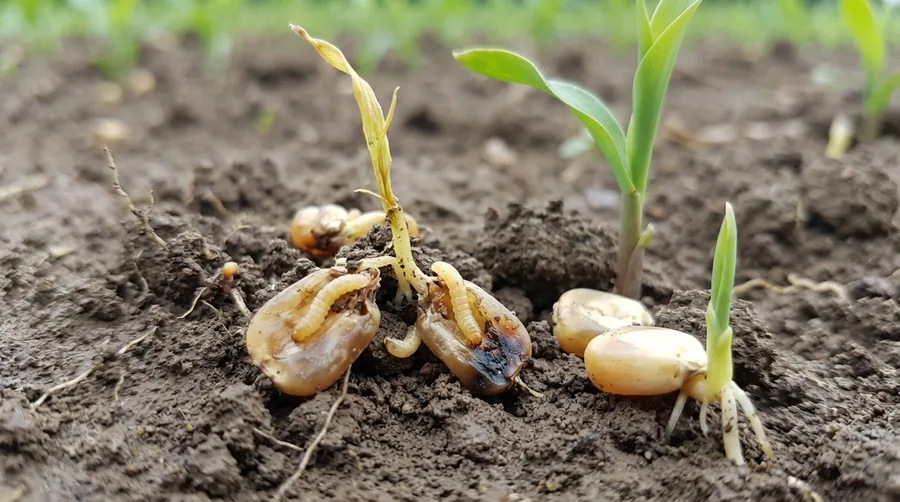
Small white legless seedcorn maggot larva burrowing into a germinating bean seed in dark soil
Recommended Products


What it does
Larvae tunnel into planted seeds and the tender stems of emerging seedlings, hollowing them out before they can establish. Because the damage happens underground, gardeners usually notice only gaps in the row or weak, twisted seedlings. Adult flies are attracted to freshly worked soil high in organic matter, manure, or decaying residue.
Where it lives
Seedcorn maggots occur nationwide in gardens and fields, especially in cool, wet spring soils with abundant decaying organic material or recently incorporated cover crops and manure. They are a classic problem of early plantings before the soil warms and seeds germinate quickly.
How it breeds
Adult flies lay eggs in moist soil near seeds and organic debris. The eggs hatch in a few days, and larvae feed for one to three weeks before pupating in the soil. Several generations occur through the season, but the first spring generation causes nearly all the crop injury.
What it eats
Larvae feed on germinating seeds and seedlings of corn, beans, peas, cucurbits, crucifers, onions, and many other vegetables, and also on decaying organic matter in the soil. Adults feed on nectar and other liquids.
Identification
Larvae are legless, creamy-white to yellowish maggots about 5-7 mm long, tapered toward the head and blunt at the rear, found inside damaged seeds or seedling stems. The adult is a slender, dull gray fly roughly 5 mm long, resembling a small housefly, and is rarely noticed in the garden.
Signs of an infestation
- Gaps and poor, uneven germination along seeded rows
- Seeds hollowed out with small white maggots inside
- Weak, twisted 'snakehead' seedlings that emerge without leaves
- Slow emergence in cool, wet, manure-rich soil
- Small gray flies hovering over freshly worked ground
Prevention tips
- Delay planting until soil warms and seeds germinate quickly
- Avoid seeding right after incorporating heavy manure or green cover crops
- Prepare a fine, well-drained seedbed to speed emergence
- Plant slightly shallower in cool soils to shorten time to sprout
- Replant gaps once soils warm, since later plantings escape most damage
Professional solutions
There is no rescue treatment once maggots are in the seed, so management is preventive. Gardeners rely on planting timing and seedbed conditions; larger growers sometimes use treated seed. If early plantings fail repeatedly, your Cooperative Extension office can confirm seedcorn maggot and advise on planting dates and seed-treatment options.
Health & safety
The seedcorn maggot poses no risk to people or pets. It does not bite, sting, or carry human disease, and the adult fly is a harmless nuisance at most. Its impact is limited to stand loss in the garden, killing seeds and seedlings before they establish.
Relevant Products


Frequently asked questions
Why did my bean or corn seeds fail to come up?
Patchy germination with hollowed-out seeds and small white maggots inside points to seedcorn maggots, especially after early planting in cool, wet, manure-rich soil. Some seedlings emerge as weak, leafless 'snakeheads.' Warmer soil and faster germination usually let later plantings escape the damage.
How do I prevent seedcorn maggot damage?
Because there is no cure once maggots are in the seed, prevention is key: wait until soil warms so seeds sprout quickly, avoid planting right after working in heavy manure or green cover crops, and prepare a fine, well-drained seedbed. Replant gaps once conditions improve.
Are seedcorn maggots harmful to people?
No. Seedcorn maggots and the small gray flies they become do not bite, sting, or carry human disease. They are strictly a seedling pest, and finding them in soil or seeds signals a planting-timing problem rather than any health concern.
Fact-checked by Morgan Vance, Editorial Director (editorial review, not a professional pest-control or medical sign-off). Last reviewed July 9, 2026. We correct anything a reader shows us is wrong — see our corrections policy.