
Pocket Gopher
Thomomys / Geomys spp. · also called gopher, gophers, pocket gophers
Quick answer
Pocket gophers (family Geomyidae) are stocky, burrowing rodents with strong claws, big front teeth, and fur-lined cheek pouches for carrying food. They live almost entirely underground, feeding on roots and tubers. Their fan-shaped soil mounds and tunnels damage lawns, crops, and buried utility and irrigation lines.
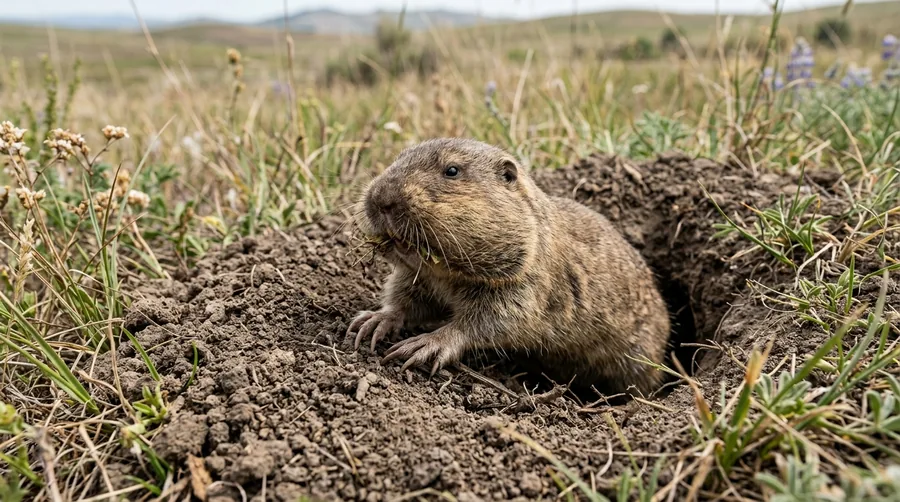
Stocky brown pocket gopher with large front claws emerging from a soil mound
Recommended Products
See the full ranking →

What it does
Pocket gophers are solitary, territorial burrowers that spend almost their whole lives underground, digging extensive tunnel systems with strong claws and teeth and pushing soil to the surface in fan-shaped mounds. They feed on roots from below and plug their tunnels, so they are seldom seen. Their digging and gnawing damage lawns, crops, and buried lines.
Where it lives
They live underground in lawns, gardens, pastures, orchards, croplands, and rangeland across the central, western, and southern US, favoring loose, workable soils. Each gopher maintains its own burrow system of feeding tunnels and deeper nest and food chambers, marked at the surface by crescent- or fan-shaped mounds.
How it breeds
Pocket gophers usually breed once or twice a year, mainly in spring, with litters of about three to five young in irrigated or productive areas. Young are raised in an underground nest and disperse to dig their own burrows within a few months. Most are solitary except when breeding or rearing young.
What it eats
Pocket gophers are herbivores that eat roots, tubers, bulbs, and fleshy underground plant parts, and they pull whole small plants down into their tunnels from below. They also feed on surface vegetation near burrow openings and can damage the roots of trees, shrubs, and crops.
Identification
Pocket gophers are stocky, 5-7 inches in the body, with small eyes and ears, large yellow-orange incisors, powerful clawed forefeet, and external, fur-lined cheek pouches for carrying food, which give them their name. Their fan-shaped soil mounds with a plugged, off-center hole distinguish their work from mole ridges.
Signs of an infestation
- Fan- or crescent-shaped soil mounds with a plugged hole
- Plants wilting or disappearing as roots are eaten from below
- Dead patches in lawns, gardens, or crop rows
- Chewed roots, bulbs, and damaged buried irrigation or utility lines
- Numerous mounds appearing over a season as tunnels expand
Prevention tips
- Use underground hardware-cloth barriers around raised beds and young trees
- Reduce attractive vegetation and control weeds in problem areas
- Flatten mounds and monitor for fresh digging to catch activity early
- Protect buried irrigation and utility lines where gophers are active
- Encourage natural predators and keep beds well maintained
Professional solutions
Pocket gophers are difficult to control because they stay underground and are territorial. Trapping in the main tunnels is the most reliable DIY method, but large properties, croplands, or repeated invasions are best handled by a professional who can trap effectively or apply EPA-registered baits per label. Damage to buried lines often prompts a call to a pro.
Health & safety
Pocket gophers pose almost no direct health risk to people; they stay underground, do not enter homes, and are not significant disease carriers. Their impact is on property: root feeding kills plants and crops, mounds damage mowers and equipment, and their gnawing on buried irrigation and utility lines can be costly to repair.
Relevant Products




Frequently asked questions
How do I tell gopher mounds from mole mounds?
Pocket gopher mounds are fan- or crescent-shaped with a plugged hole off to one side, while mole mounds are more circular and volcano-shaped with the plug in the center. Gophers leave no raised surface ridges; moles often do as they tunnel just below the surface.
Why are my plants disappearing into the ground?
Pocket gophers feed on roots and tubers from below and can pull entire small plants down into their tunnels, so plants may wilt or vanish suddenly. Fan-shaped mounds nearby confirm gophers rather than moles, which eat insects and worms, not plants.
What is the best way to control pocket gophers?
Trapping in the main underground tunnel is the most reliable method, and catching activity early helps. For large areas, croplands, or damage to buried lines, a professional can trap or apply EPA-registered baits per label. Protecting plantings with underground wire mesh also helps.
Fact-checked by Morgan Vance, Editorial Director (editorial review, not a professional pest-control or medical sign-off). Last reviewed July 14, 2026. We correct anything a reader shows us is wrong — see our corrections policy.