Pack Rat (Woodrat)
Neotoma spp. · also called woodrat, wood rat, trade rat
Quick answer
The pack rat, or woodrat (Neotoma species), is a medium rodent with soft fur, big eyes and ears, and often a furry tail. Famous for hoarding shiny objects, it builds bulky stick nests (middens) in the West and Southwest. Pack rats chew vehicle wiring and stored goods and can harbor disease.
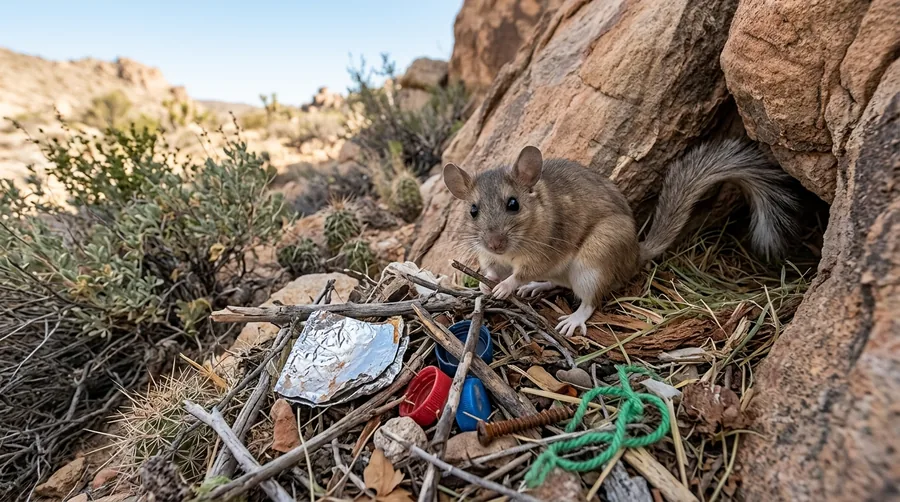
Brown pack rat with large ears and a furry tail beside a stick nest
Recommended Products
See the full ranking →

What it does
Pack rats, or woodrats, are nocturnal collectors famous for hoarding sticks, cactus, bones, and shiny objects into bulky nests called middens, sometimes dropping one item to pick up another. They nest in rock piles, attics, sheds, and, notoriously, vehicle engine compartments, where they chew wiring and hoses, causing costly damage.
Where it lives
They live in deserts, foothills, canyons, and woodlands of the West and Southwest, building stick middens in rock crevices, under cactus, in woodpiles, and inside outbuildings, attics, garages, and stored vehicles. They are strongly tied to rural and suburban-edge properties near natural desert or brushy vegetation.
How it breeds
Pack rats breed mainly in spring and summer, with one to three litters a year of about two to four young, fewer than commensal rats. Young mature over a few months and may reuse and expand a parent midden. Middens can be occupied for generations and grow very large over time.
What it eats
Woodrats are herbivores that eat leaves, seeds, fruit, cactus, nuts, and green vegetation, and they store food in their middens. They get much of their water from succulent plants, which lets them thrive in dry country far from open water.
Identification
Pack rats are 6-8 inches in the body with large eyes and ears, soft brownish-gray fur, a pale belly, and, unlike sleek roof and Norway rats, a noticeably furry (not scaly) tail in most species. The hairy tail, big ears, and gentle look distinguish them from typical urban rats.
Signs of an infestation
- Bulky stick-and-debris nests (middens) in sheds, attics, or rock piles
- Chewed vehicle wiring, hoses, and insulation under the hood
- Collected shiny or odd objects near the nest
- Droppings and dark, tar-like urine deposits on nest sites
- Gnaw marks on stored goods in garages and outbuildings
Prevention tips
- Remove woodpiles, debris, and cactus clippings near buildings
- Seal gaps into attics, sheds, garages, and crawl spaces
- Run vehicles regularly and check under the hood in rural areas
- Store belongings in sealed bins rather than open piles
- Clear brush and cactus back from the foundation
Professional solutions
Live or snap trapping and removing the midden usually resolve pack rat problems, but relocation is often restricted and the sites can be extensive. A wildlife or pest professional can trap, remove nests safely, and seal entry points, which matters because middens can harbor disease. Vehicle and attic infestations are common reasons to call a pro.
Health & safety
Pack rats can carry hantavirus in some regions and, in parts of the West, host fleas associated with plague, and their nests can contain other pathogens; contact should be handled with care. They may bite if cornered. Their chewing of vehicle and structural wiring is a real fire and repair hazard. Wet nest debris before cleanup and wear gloves.
Relevant Products



Frequently asked questions
Why is a pack rat chewing my car wiring?
Pack rats often nest in warm engine compartments and gnaw on wiring, hoses, and insulation, both to keep their teeth worn and to gather nest material. This is common on vehicles parked in rural or desert areas, and repairs can be costly, so exclusion and trapping help.
What is a pack rat midden?
A midden is the bulky nest a pack rat builds from sticks, cactus, debris, and collected objects, cemented with droppings and urine. Middens are often reused and enlarged for generations and can become very large in rock crevices, sheds, or attics.
Are pack rats dangerous to people?
They rarely bite, but their nests and droppings can carry disease, including hantavirus in some regions and, in parts of the West, plague-associated fleas. Their gnawing on wiring is also a fire risk. Handle nests carefully and consider professional removal for large sites.
Fact-checked by Morgan Vance, Editorial Director (editorial review, not a professional pest-control or medical sign-off). Last reviewed June 11, 2026. We correct anything a reader shows us is wrong — see our corrections policy.