
Deer Mouse
Peromyscus maniculatus · also called deer mice, North American deermouse
Quick answer
The deer mouse (Peromyscus maniculatus) is a small, big-eyed rodent with brown fur and a sharply two-toned white belly and tail. Common in rural areas and outbuildings across the US, it is the main carrier of hantavirus, spread through its droppings and urine. Sealing entry points and careful cleanup are essential.
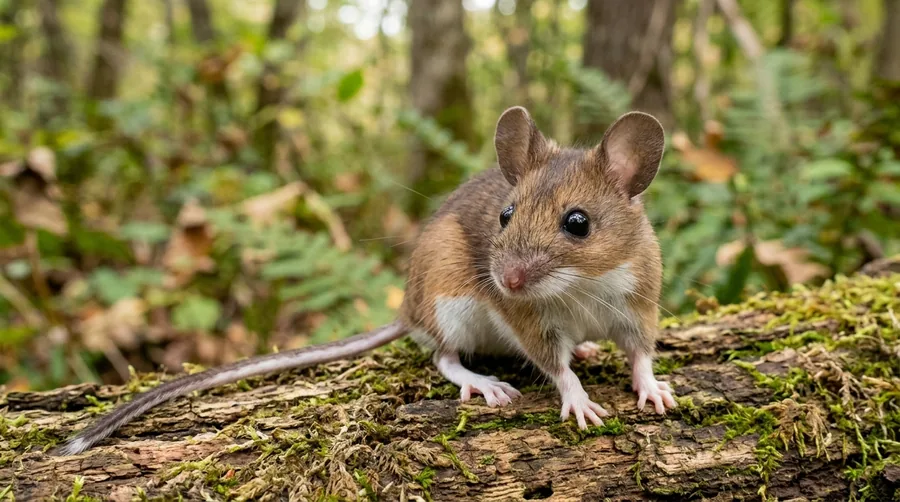
Brown deer mouse with large eyes, white belly, and two-toned tail on a wooden shed floor
Recommended Products
See the full ranking →


What it does
Deer mice are shy, nocturnal, and agile, active outdoors and in outbuildings rather than busy homes. They cache seeds, build nests in sheltered voids, and are strong jumpers and climbers. Their main significance is as the primary carrier of hantavirus, spread when people disturb nests and stir up dried droppings or urine.
Where it lives
Deer mice live in rural and semi-rural settings: fields, woods, and grassland, moving into cabins, sheds, garages, barns, RVs, and vacation homes, especially in fall and winter. They are widespread across the US and most associated with hantavirus risk in rural areas of the West and Mountain regions.
How it breeds
Deer mice breed mainly spring through fall, with several litters a year of about three to six young. They mature quickly, in five to seven weeks, so populations rise fast in good conditions. In mild areas or heated buildings they can breed nearly year-round, overwintering in sheltered nests.
What it eats
Deer mice eat seeds, nuts, berries, and insects, and readily take stored grain, pet food, and crumbs in outbuildings. They hoard food in hidden caches near their nests, which is often how their presence is first discovered in a shed or cabin.
Identification
A deer mouse is 2-3/4 to 4 inches in the body with a similar-length tail, big black eyes and ears, brownish upper fur, and a sharply two-toned tail and belly, white below and dark above. This crisp bicolor tail and white belly separate it from the uniformly gray house mouse.
Signs of an infestation
- Small rod-shaped droppings in sheds, cabins, drawers, or stored items
- Seed and food caches hidden in furniture, boots, or wall voids
- Nests of shredded material in undisturbed storage areas
- Gnawed food packaging and a musky odor in outbuildings
- Activity concentrated in rural buildings, especially fall and winter
Prevention tips
- Seal exterior gaps 1/4 inch or larger with steel wool and caulk
- Store food and pet food in sealed metal or glass containers
- Keep cabins, sheds, and garages clean and clutter-free
- Set snap traps along walls in buildings prone to invasion
- Ventilate closed buildings before cleaning after mouse activity
Professional solutions
Snap traps and exclusion handle most deer mouse problems, but because of hantavirus risk, careful cleanup matters more than usual. A professional can seal entry points, manage trapping, and advise on safe cleanup of heavily soiled buildings. Recurring activity in cabins, barns, or vacation homes is a common reason to bring in a pro.
Health & safety
Deer mice are the main US reservoir of hantavirus (Sin Nombre virus), which can cause a rare but serious lung illness spread by inhaling dust from dried droppings, urine, or nests. Do not sweep or vacuum dry droppings; ventilate the area, then wet everything with disinfectant before cleanup, and wear gloves. Given the disease risk, treat them as a higher-concern rodent.
Relevant Products




Frequently asked questions
How do I tell a deer mouse from a house mouse?
A deer mouse has a sharply two-toned tail and body, white below and brown above, with large eyes and ears. A house mouse is more uniformly gray-brown with a nearly hairless, single-colored tail. Deer mice are also more common in rural buildings than in busy homes.
Are deer mice dangerous?
They can be. Deer mice are the main carrier of hantavirus, a rare but serious illness spread by inhaling dust from dried droppings or nests. They can carry other diseases too, so their droppings should be cleaned carefully, not swept or vacuumed dry.
How do I safely clean up after deer mice?
Ventilate the space for about 30 minutes first, wear gloves, and wet droppings and nests with a disinfectant or bleach solution before wiping them up, rather than sweeping or vacuuming, which can stir up virus particles. Double-bag waste and wash hands afterward.
Fact-checked by Morgan Vance, Editorial Director (editorial review, not a professional pest-control or medical sign-off). Last reviewed August 3, 2026. We correct anything a reader shows us is wrong — see our corrections policy.