
White-Footed Mouse
Peromyscus leucopus · also called white-footed mice, woodmouse, wood mouse
Quick answer
The white-footed mouse (Peromyscus leucopus) is a brown, white-bellied rodent with large eyes and white feet, common across the eastern and central US. It looks nearly identical to the deer mouse. A key reservoir for Lyme disease bacteria, it fuels tick populations and can also carry hantavirus.
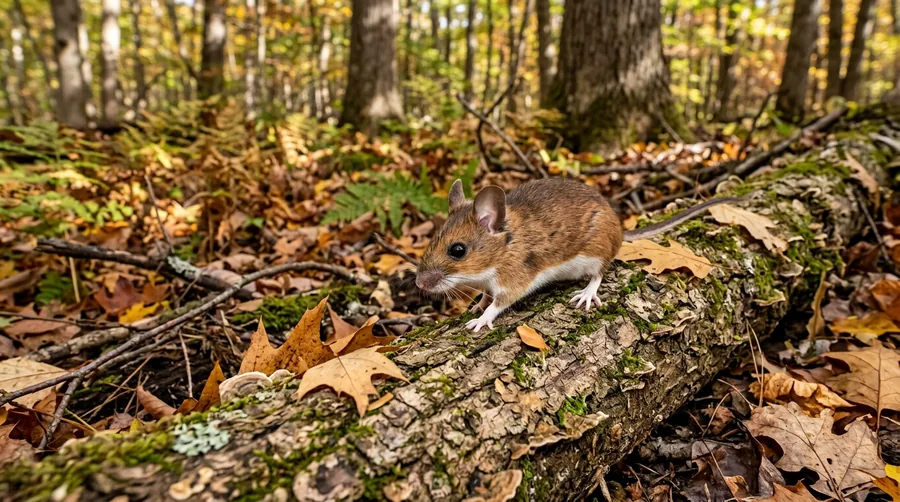
Reddish-brown white-footed mouse with white belly and feet on a mossy log
Recommended Products
See the full ranking →


What it does
White-footed mice are nocturnal, agile climbers active in woods, brushy edges, and nearby buildings. Almost identical to deer mice, they nest in sheltered voids, cache food, and move indoors as weather cools. Their biggest impact is ecological: they are a key host that feeds ticks and helps sustain the bacteria behind Lyme disease.
Where it lives
They favor wooded and brushy habitats and forest edges across the eastern and central US, moving into sheds, garages, cabins, barns, and homes near woodlots, especially in fall. They nest in tree cavities, wall voids, stored items, and undisturbed clutter, and are common wherever suburbs meet forest.
How it breeds
White-footed mice breed spring through fall, sometimes into winter in mild areas, producing several litters of about three to five young. They mature in roughly six to eight weeks, so numbers can build quickly. They typically live less than a year in the wild but reproduce rapidly during the season.
What it eats
They eat seeds, nuts, berries, fungi, and insects, and store food in caches for winter. Indoors and in outbuildings they take grain, pet food, and crumbs. Their seed-hoarding habit often reveals their presence when caches turn up in boots, drawers, or machinery.
Identification
A white-footed mouse is about 3-1/2 to 4 inches in the body with a slightly shorter tail, reddish-brown upper fur, a white belly, and white feet. It looks so similar to the deer mouse that reliable separation often needs an expert; both differ from the grayer house mouse by their white underparts.
Signs of an infestation
- Rod-shaped droppings in sheds, cabins, drawers, or stored goods
- Seed and nut caches tucked into stored items or wall voids
- Nests of shredded material in quiet, undisturbed spaces
- Gnawed packaging and a musky odor in outbuildings
- More ticks in the yard, which these mice help support
Prevention tips
- Seal gaps 1/4 inch or larger around the foundation and utility lines
- Keep woodpiles, brush, and leaf litter away from the house
- Store food and pet food in sealed metal or glass containers
- Reduce clutter in garages, sheds, and basements
- Manage yard ticks and check pets, given the mouse-tick link
Professional solutions
Trapping and exclusion resolve most white-footed mouse issues. Because these mice feed ticks that spread Lyme disease, a professional may combine rodent control with tick management around the yard. Recurring activity in homes near woods, or concern about tick-borne illness, is a common reason to seek professional help.
Health & safety
White-footed mice are a leading reservoir for the bacteria that cause Lyme disease and help feed the blacklegged ticks that transmit it, and they can also carry hantavirus and other pathogens. They rarely bite. Clean droppings carefully by wetting them first rather than sweeping. Their tick connection makes yard and pet tick control worthwhile.
Relevant Products






Frequently asked questions
What is the difference between a white-footed mouse and a deer mouse?
They look almost identical, with white bellies and feet and large eyes, and are often told apart only by experts. In general, white-footed mice favor eastern woodlands and brushy edges. Both differ from the grayer house mouse, which has a single-colored tail and belly.
How are white-footed mice connected to Lyme disease?
White-footed mice are a major reservoir for the bacteria that cause Lyme disease and are a key host that feeds young blacklegged ticks. The ticks pick up the bacteria from the mice and can later transmit it to people, so controlling mice and ticks together helps.
Do white-footed mice come into houses?
Yes, especially in fall as weather cools, in homes and outbuildings near woods and brush. They nest in wall voids, stored items, and clutter, and cache seeds. Sealing entry points and reducing yard cover near the house helps keep them out.
Fact-checked by Morgan Vance, Editorial Director (editorial review, not a professional pest-control or medical sign-off). Last reviewed June 7, 2026. We correct anything a reader shows us is wrong — see our corrections policy.