
Oystershell Scale
Lepidosaphes ulmi · also called oyster shell scale, apple oystershell scale
Quick answer
Oystershell scale (Lepidosaphes ulmi) is an armored scale whose tiny brown covers look like miniature oyster shells cemented to bark. It sucks sap from lilac, ash, dogwood, maple, and many woody plants, and heavy crusts can kill twigs and branches. Hidden and immobile, it damages shrubs and trees but poses no risk to people.
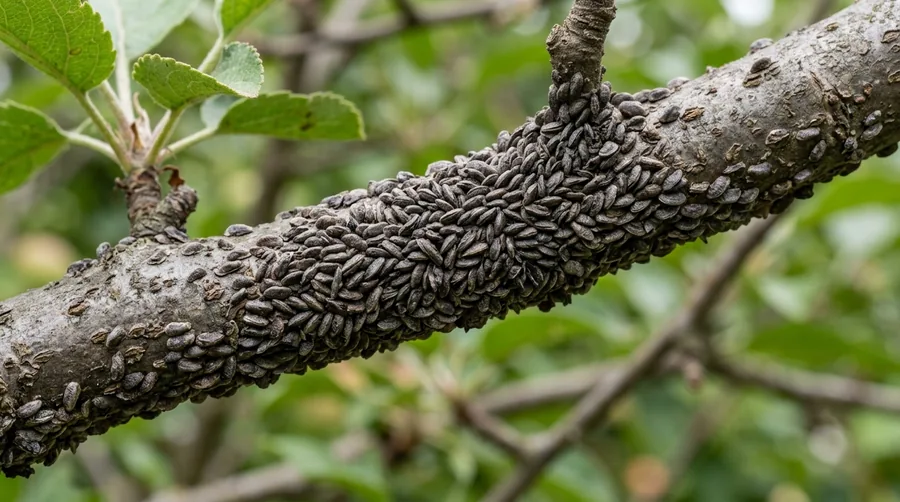
Brown oystershell-shaped armored scales encrusting the bark of a lilac twig
Recommended Products


What it does
Oystershell scale settles permanently on bark under a hard, waxy cover shaped like an oyster shell and sucks sap from the twigs and branches beneath. Only the newly hatched crawlers move. Encrustations build over years, and heavy infestations can girdle and kill twigs, branches, or even whole small shrubs.
Where it lives
It infests the bark of many woody plants, notably lilac, ash, dogwood, maple, willow, poplar, and fruit trees, in landscapes and gardens. It is widespread across the northern US and cooler regions, encrusting stems and branches rather than leaves.
How it breeds
Most populations have one or two generations a year. Scales overwinter as eggs beneath the dead female's cover. In late spring the eggs hatch into crawlers that disperse, settle, insert their mouthparts, and secrete their own covers, becoming immobile for the rest of their lives.
What it eats
Oystershell scale feeds only on sap drawn from the bark and woody stems of its host plants. It does not feed on foliage debris, structures, or stored food.
Identification
The covers are small (2-3 mm), gray-brown, and shaped like a curved oyster shell, often crowded together on bark until the stem looks barnacled. Beneath each cover is a soft, legless insect. Unlike soft scales, it produces little honeydew, so sooty mold is uncommon.
Signs of an infestation
- Brown, oyster-shell-shaped bumps crusting twigs and branches
- Cracked, encrusted, or dying bark on older stems
- Twig and branch dieback and a thinning canopy
- Reduced vigor and yellowing leaves on affected limbs
- White crawlers on bark in late spring
Prevention tips
- Inspect nursery stock and prune infested wood before planting nearby
- Prune out and destroy heavily encrusted branches
- Keep plants vigorous with proper watering and mulch
- Encourage predators such as lady beetles and parasitic wasps
- Apply dormant horticultural oil in early spring per label
Professional solutions
Because armored scales are protected by their covers, timing is key: dormant-season horticultural oil and crawler-stage treatments are most effective. For valuable or heavily encrusted plants, a professional can time applications to local crawler emergence and prune out dead wood to restore the plant.
Health & safety
Oystershell scale does not bite, sting, or carry disease, and it never infests homes or food. It is strictly a plant pest. The only harm is to the health and appearance of shrubs and trees, so there is no risk to people or pets.
Relevant Products


Frequently asked questions
What are the little oyster-shaped bumps on my lilac?
Brown bumps shaped like miniature oyster shells crusting lilac or other bark are oystershell scale, an armored scale insect. Each shell hides a sap-sucking insect. Heavy crusting can kill twigs, so scraping a few off to confirm live insects underneath is worthwhile.
How do I get rid of oystershell scale?
Prune out and destroy heavily encrusted branches, then time treatments carefully: dormant horticultural oil in early spring and a crawler-stage application in late spring work best because the covers protect settled scales. Keeping plants vigorous helps them recover.
Does oystershell scale spread to other plants?
Yes, the mobile crawler stage in late spring can disperse to nearby branches and neighboring host plants like ash, dogwood, and maple. That is why timing control to crawler emergence and removing infested wood matters for stopping its spread.
Fact-checked by Morgan Vance, Editorial Director (editorial review, not a professional pest-control or medical sign-off). Last reviewed July 13, 2026. We correct anything a reader shows us is wrong — see our corrections policy.