
Kudzu Bug
Megacopta cribraria · also called kudzu bug, bean plataspid, globular stink bug
Quick answer
The kudzu bug (Megacopta cribraria) is a small, olive-green, boxy true bug from Asia, first found in the US in Georgia in 2009. It feeds on kudzu, soybeans, and garden beans, and gathers in large numbers on light-colored homes in fall and spring. It does not bite, but it emits a smelly secretion that can irritate or stain skin.
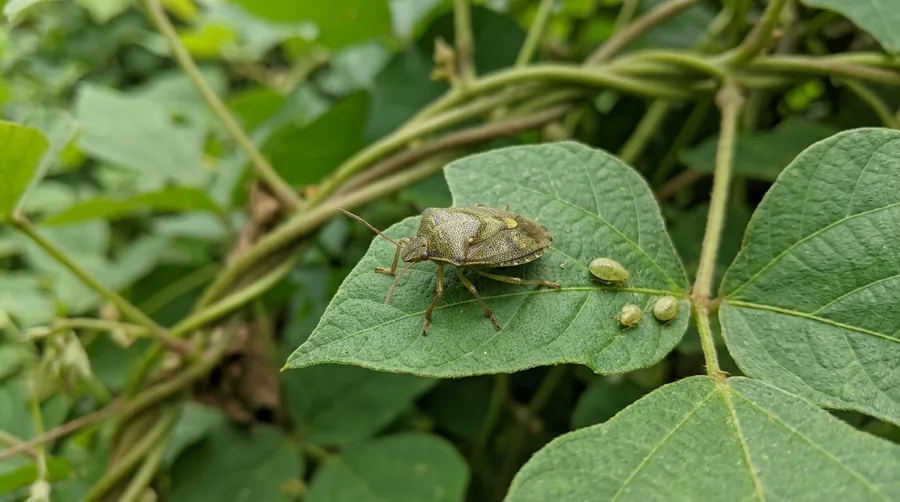
Small olive-green kudzu bug with a squared, boxy body resting on light-colored siding
Recommended Products
See the full ranking →


What it does
Kudzu bugs feed by sucking sap from legumes and cluster in large aggregations. In spring and fall they mass on sunny, light-colored surfaces, including house siding, cars, and around windows, and slip indoors through gaps to overwinter, much like stink bugs and boxelder bugs. When disturbed or crushed they release a foul, staining defensive secretion.
Where it lives
The kudzu bug's main wild host is the invasive kudzu vine, but it also infests soybean fields and garden beans. Native to Asia, it became established across the Southeast and Gulf region after 2009. Adults seek overwintering shelter on and inside homes and other structures, especially light-colored walls warmed by the sun.
How it breeds
There are usually two generations a year. Overwintered adults emerge in spring to feed and lay barrel-shaped eggs in rows on host plants, often beside small brown deposits of symbiotic gut bacteria the nymphs need. Nymphs are fuzzy and greenish, maturing over several weeks. The fall generation seeks shelter to overwinter as adults.
What it eats
Kudzu bugs feed on the sap of legumes: kudzu, soybeans, and garden beans such as snap and lima beans. Heavy feeding reduces soybean yield and can stunt garden beans. They do not chew leaves or feed on stored food, and they eat nothing indoors while overwintering.
Identification
Adults are small, about an eighth to a quarter inch, olive-green to brownish, with a distinctive squared-off, boxy body unlike the shield shape of typical stink bugs. Nymphs are greenish and hairy. Their habit of massing on light-colored walls in spring and fall, plus the odor when crushed, helps confirm them.
Signs of an infestation
- Clusters of small green boxy bugs on light-colored siding
- Bugs gathering around windows and doors in spring and fall
- A foul odor and greenish stain when they are crushed
- Bugs slipping indoors to overwinter in wall voids
- Feeding damage and reduced vigor on beans and soybeans
Prevention tips
- Seal cracks, gaps, and utility openings and add door sweeps before fall
- Repair window screens and vents to block entry
- Vacuum indoor bugs and empty the bag, rather than crushing them
- Reduce kudzu and weedy legumes near the home where practical
- Treat exterior gathering sites with a perimeter insecticide in early fall if needed
Professional solutions
Kudzu bugs are mainly a nuisance invader indoors and a crop pest outdoors. For homes, exclusion and vacuuming are the primary tools; a pest professional can apply an exterior perimeter treatment to gathering sites in fall. In gardens and on soybeans, well-timed insecticide sprays may be warranted for heavy infestations, following the product label.
Health & safety
Kudzu bugs do not bite or sting and spread no disease. Their main issue is the defensive secretion they release when handled or crushed, which has an unpleasant odor and can stain surfaces and irritate skin, sometimes causing redness or mild blistering on sensitive people. Wash exposed skin with soap and water and avoid crushing them on bare skin.
Relevant Products




Frequently asked questions
Why are kudzu bugs all over my house?
In spring and fall, kudzu bugs mass on warm, light-colored surfaces like siding and then squeeze inside to overwinter, similar to stink bugs. They are drawn to the sun-warmed walls of homes, especially light ones. Sealing gaps and repairing screens is the most effective way to keep them out.
Do kudzu bugs bite or sting?
No. Kudzu bugs cannot bite or sting. The catch is the smelly defensive fluid they release when handled or crushed, which can stain surfaces and, on sensitive skin, cause redness or mild irritation. It is best to vacuum them up rather than squash them on your skin or walls.
How do I get rid of kudzu bugs?
Focus on exclusion: seal cracks, add door sweeps, and fix screens before fall. Vacuum any that get inside and empty the bag promptly. An exterior perimeter insecticide applied to gathering spots in early fall can help in heavy years, and reducing nearby kudzu lowers the source population.
Fact-checked by Morgan Vance, Editorial Director (editorial review, not a professional pest-control or medical sign-off). Last reviewed June 18, 2026. We correct anything a reader shows us is wrong — see our corrections policy.