
Elm Seed Bug
Arocatus melanocephalus · also called elm seed bug, ESB
Quick answer
The elm seed bug (Arocatus melanocephalus) is a dark, rusty-marked true bug from Europe that invades homes in summer, especially in the western US. It feeds on elm seeds outdoors, then crowds in through cracks around windows and doors. It does not bite, sting, or damage property, but it is a smelly, persistent nuisance in large numbers.
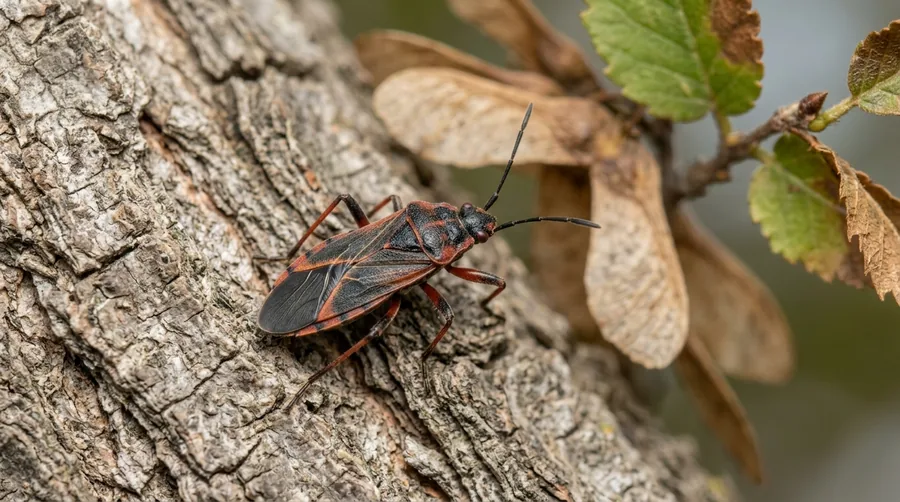
Dark brownish-black elm seed bug with rusty-red markings on a windowsill indoors
Recommended Products
See the full ranking →


What it does
Elm seed bugs feed on developing elm seeds through spring and early summer, then move to buildings as it heats up, entering through gaps around windows, doors, eaves, and vents. They cluster on and inside walls, especially sunny sides, and may become active indoors on warm winter days. Crushed or disturbed, they give off a bitter, almond-like odor.
Where it lives
The elm seed bug lives wherever elm trees grow, especially Siberian elm, in yards, parks, and streets. First detected in Idaho in 2012, it has spread through much of the interior West and Pacific Northwest, including Utah, Oregon, Washington, Colorado, and New Mexico. It overwinters as an adult in sheltered spots, including inside homes.
How it breeds
There is generally one generation a year. Adults overwinter, then mate in spring and lay eggs near elm seeds. Nymphs, reddish and dark, feed on the seeds from late spring into summer and mature into adults over the season. The new adults are the ones that push into homes in the summer heat seeking shelter.
What it eats
Elm seed bugs feed mainly on the seeds of elm trees, particularly Siberian elm, using piercing-sucking mouthparts. They cause no meaningful damage to the trees and do not feed on structures, fabric, or stored food. Indoors they are simply seeking shelter, not a food source.
Identification
Adults are about a third of an inch, dark brownish-black with rusty-red patches and a dark triangular scutellum set in a rust-colored, squared patch on the back. They resemble boxelder bugs but are smaller and lack the bold red lines. Mass appearance at windows in summer and the bitter odor when crushed help confirm them.
Signs of an infestation
- Dark, rusty-marked bugs clustering on and around windows in summer
- Bugs entering through gaps at doors, eaves, and vents
- A bitter, almond-like smell when they are crushed
- Live bugs indoors on warm days, even in winter
- Large numbers on sunny exterior walls
Prevention tips
- Seal cracks and gaps around windows, doors, eaves, pipes, and vents
- Install or repair door sweeps and window screens
- Vacuum bugs indoors and empty the canister, avoiding crushing them
- Reduce Siberian elm near the home where feasible
- Apply an exterior perimeter insecticide to entry points in early summer if numbers are high
Professional solutions
Elm seed bugs are a nuisance invader, not a damaging pest, so exclusion and vacuuming are the mainstays. A pest control professional can apply an exterior perimeter treatment around entry points and gathering areas in early summer to reduce how many get inside. Indoor spraying is generally discouraged; sealing gaps gives longer-lasting relief.
Health & safety
Elm seed bugs are harmless to people and pets. They do not bite, sting, spread disease, or damage the home, its contents, or stored food. The only real complaints are their numbers and the bitter, almond-like odor they release when handled or crushed. They are a nuisance pest, not a health or property threat.
Relevant Products




Frequently asked questions
Why do I have so many elm seed bugs in my house?
Elm seed bugs feed on elm seeds outdoors, then move to buildings as summer heats up, slipping in through gaps around windows, doors, and vents. If you have Siberian elm nearby, expect more. Sealing entry points and repairing screens is the most durable way to keep them out.
Are elm seed bugs harmful or do they bite?
No. Elm seed bugs do not bite, sting, spread disease, or damage your home or food. They are purely a nuisance. The main annoyance is their numbers at windows and the bitter, almond-like smell they give off when crushed, so vacuum them up instead of squashing them.
What is the best way to get rid of elm seed bugs?
Exclusion works best: seal cracks and gaps, add door sweeps, and fix screens. Vacuum the ones inside and empty the bag promptly. In heavy years, an exterior perimeter insecticide applied to entry points in early summer helps, and reducing nearby Siberian elm lowers the source.
Fact-checked by Morgan Vance, Editorial Director (editorial review, not a professional pest-control or medical sign-off). Last reviewed May 28, 2026. We correct anything a reader shows us is wrong — see our corrections policy.