Garden Slug
Deroceras reticulatum · also called slug, gray garden slug, field slug
Quick answer
Garden slugs are soft, slimy, shell-less mollusks that feed at night on leaves, seedlings, and ripening fruit, leaving ragged holes and silvery slime trails. They thrive in cool, damp gardens and can quickly shred tender plants. Rarely, slugs can carry a parasite that infects people through unwashed produce, so wash garden greens well.
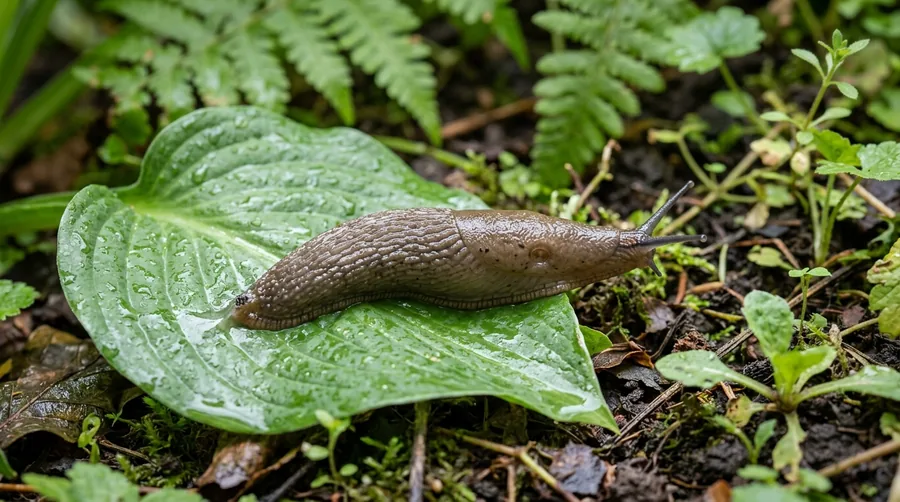
Brown garden slug on a chewed green leaf with a silvery slime trail
Recommended Products


What it does
Garden slugs are most active at night and after rain, gliding on a muscular foot and leaving a silvery slime trail. They rasp holes in leaves, seedlings, flowers, and ripening fruit with a file-like tongue, often destroying young transplants overnight. By day they hide in cool, dark, damp shelter to avoid drying out.
Where it lives
Slugs live in cool, moist gardens, landscapes, and crops throughout much of the US, especially the Pacific Northwest and other damp regions. They shelter by day under mulch, boards, pots, stones, and dense low foliage, and in soil cracks. Wet weather and heavy irrigation greatly increase their numbers and activity.
How it breeds
Slugs are hermaphrodites, and each one can lay eggs. They deposit clusters of clear, pearl-like eggs in moist, protected soil or under debris. Eggs hatch into small slugs that mature over months. Cool, wet spring and fall weather is ideal, and generations can overlap, so populations build where moisture and shelter are plentiful.
What it eats
Slugs eat a wide range of tender plant material, including seedlings, leafy greens, hostas, strawberries, and ripening vegetables and fruit near the ground. They also feed on decaying plants and fungi, but the damage that matters to gardeners is to living, tender growth.
Identification
Common garden slugs are soft, shell-less mollusks, often 1 to 3 inches long, gray, brown, or mottled, with two pairs of retractable tentacles on the head. They leave a dried, silvery slime trail. That glistening trail, plus ragged holes in leaves with smooth edges, distinguishes them from chewing insects.
Signs of an infestation
- Silvery, dried slime trails on leaves, soil, and pavement
- Ragged holes with smooth edges chewed in leaves and fruit
- Seedlings and transplants sheared off overnight
- Slugs found under mulch, pots, and boards by day
- Damage worst after rain or heavy watering
Prevention tips
- Water in the morning so the soil surface dries by night
- Remove boards, debris, and excess mulch that shelter slugs
- Hand-pick slugs at night or trap them under boards and beer traps
- Use copper barriers or diatomaceous earth around beds
- Encourage predators such as ground beetles, birds, and toads
Professional solutions
Slugs are usually a do-it-yourself problem. Iron phosphate baits are effective and are lower-risk around pets and wildlife than older metaldehyde baits; use any bait strictly per the EPA label. Combine baiting with sanitation, barriers, and hand-picking. Persistent nursery or greenhouse infestations may warrant advice from an extension office or professional horticulturist.
Health & safety
Slugs do not bite or sting, but they can carry the rat lungworm parasite, which can rarely infect people who swallow a slug or eat contaminated raw produce. Cases are uncommon and mostly in the Southeast, Gulf, Hawaii, and parts of the West. Wash garden produce well, and wash your hands after handling slugs.
Relevant Products


Frequently asked questions
What is leaving slime trails and holes in my plants?
Slugs are the likely culprit. They feed at night, rasping ragged, smooth-edged holes in leaves and fruit and shearing off seedlings, and they leave a dried, silvery slime trail. Check under mulch, pots, and boards during the day to find them.
Are garden slugs dangerous to people?
Slugs do not bite or sting, but they can rarely carry the rat lungworm parasite, which can infect people who accidentally swallow a slug or eat contaminated, unwashed produce. Cases are uncommon; wash produce thoroughly and wash your hands after handling slugs or garden debris.
What is the safest way to control slugs?
Combine sanitation, barriers, and baiting. Remove daytime hiding spots, water in the morning, and use copper barriers or traps. Iron phosphate baits are effective and lower-risk around pets and wildlife than older metaldehyde baits when used per the label.
Fact-checked by Morgan Vance, Editorial Director (editorial review, not a professional pest-control or medical sign-off). Last reviewed June 5, 2026. We correct anything a reader shows us is wrong — see our corrections policy.