
Field Ant
Formica spp. · also called field ants, thatching ant, wood ant
Quick answer
Field ants (Formica species) are medium-to-large outdoor ants, black, brown, or reddish, often mistaken for carpenter ants. They build soil or thatch mounds in lawns, fields, and along foundations, and tend aphids for honeydew. They can bite and spray formic acid but rarely nest indoors, foraging inside only occasionally.
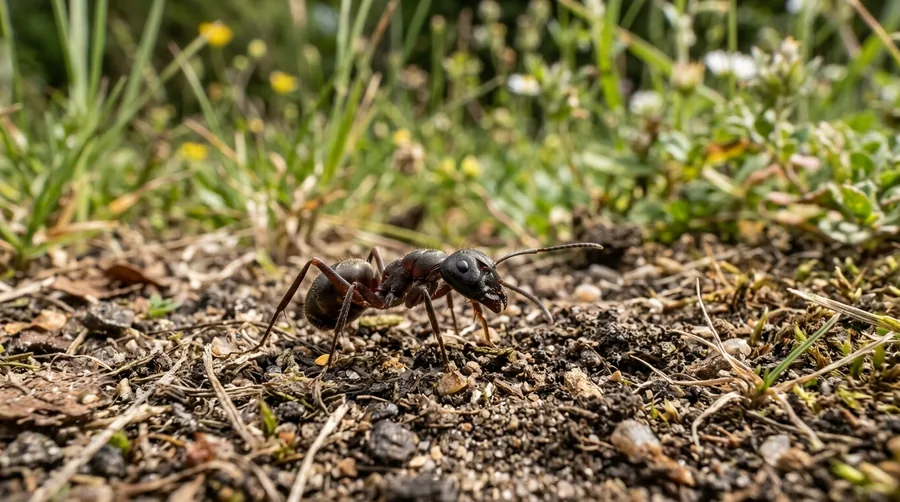
A medium black-and-red field ant on soil beside a low thatch-and-soil mound in a lawn
Recommended Products
See the full ranking →

What it does
Field ants nest outdoors in soil mounds or thatch, forage for honeydew and insects, and can bite and spray formic acid when disturbed. They generally stay outside, entering homes only to forage, rather than establishing indoor nests.
Where it lives
They live in lawns, gardens, fields, wood edges, and along foundations, sidewalks, and under stones, building mounds of soil or plant thatch. They are one of the most common outdoor ant groups and are found nationwide.
How it breeds
Colonies have one or more queens and thousands of workers. Winged reproductives swarm in summer to start new colonies. The ants develop through complete metamorphosis, and established mounds can persist for years.
What it eats
Field ants feed heavily on honeydew from aphids and scale insects, and also prey on other insects and take sweets and proteins. They are largely predatory and honeydew-feeding outdoors.
Identification
Workers are medium-to-large, up to about 1/3 inch, with a single waist node and an unevenly rounded thorax, and are often black, brown, or red. They are easily confused with carpenter ants, but field ants nest outdoors in soil rather than in wood.
Signs of an infestation
- Soil or thatch mounds in the lawn and along edges
- Foraging trails outdoors near gardens and foundations
- Occasional indoor foragers near doors and windows
- Ants tending aphids on plants and shrubs
- Larger ants outdoors mistaken for carpenter ants
Prevention tips
- Seal gaps so foraging trails cannot reach indoors
- Trim vegetation and manage aphids that feed them
- Remove mounds from high-traffic lawn areas
- Keep outdoor food and pet dishes covered
- Bait or treat outdoor nests per the product label
Professional solutions
Field ants are mainly an outdoor nuisance. Large or numerous mounds near the home, or repeated indoor foraging, can be handled by a professional with targeted outdoor treatment and perimeter work. Always read and follow the EPA label on any product.
Health & safety
Field ants can bite and spray formic acid, which stings briefly, but they are not venomous in a medical sense and spread no known disease. They are primarily an outdoor nuisance, so household risk is low.
Relevant Products


Frequently asked questions
Are these big ants in my yard carpenter ants?
Large black ants outdoors are often field ants, which are easily confused with carpenter ants. The key difference is nesting: field ants build soil or thatch mounds outdoors, while carpenter ants tunnel into wood. If you find a lawn mound, it is likely field ants.
Do field ants come inside the house?
They usually stay outdoors and only wander inside to forage near doors and windows, rather than nesting indoors. Sealing entry points and reducing outdoor food and aphid sources near the house limits these occasional intrusions.
Do field ants bite?
Field ants can bite and spray formic acid, which causes a brief stinging sensation, especially if you disturb their mound. They are not medically venomous and spread no disease, so they are considered a nuisance rather than a health threat.
Fact-checked by Morgan Vance, Editorial Director (editorial review, not a professional pest-control or medical sign-off). Last reviewed May 11, 2026. We correct anything a reader shows us is wrong — see our corrections policy.