
Blow Fly
Calliphoridae (Lucilia, Calliphora spp.) · also called bluebottle fly, greenbottle fly, carrion fly
Quick answer
Blow flies (family Calliphoridae) are metallic blue, green, or bronze flies slightly larger than a house fly. Attracted to decay, they are often the first insects to find a dead animal, garbage, or pet waste. Indoors, a sudden cluster of shiny flies usually points to a hidden carcass or rotting organic matter nearby.
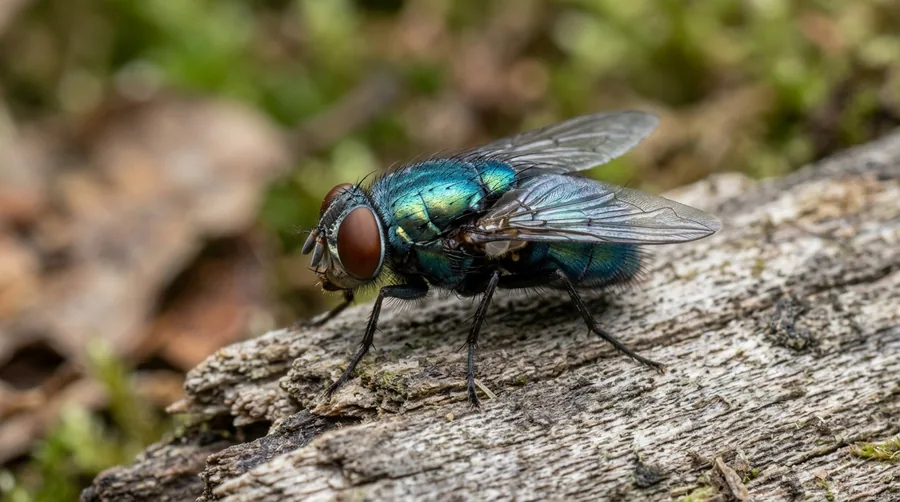
Shiny metallic green blow fly with red eyes resting on a leaf
Recommended Products
See the full ranking →


What it does
Blow flies are strong daytime fliers with a keen sense of smell for decay. They gather at carrion, garbage, feces, and open wounds, and buzz loudly around windows trying to get outdoors. A sudden indoor swarm of shiny flies is a classic sign of a dead animal hidden in a wall, attic, or chimney.
Where it lives
Outdoors they concentrate around garbage cans, compost, roadkill, and pet waste. Indoors they appear when something has died in a wall void, crawl space, chimney, or attic, or where rotting meat or trash has accumulated. Blow flies are found across the US wherever decaying organic matter is available.
How it breeds
Females lay clusters of pale eggs on carrion or decaying matter, often hundreds at a time. Maggots hatch within a day, feed rapidly, then pupate in nearby soil. In warm weather the whole cycle from egg to adult can finish in one to two weeks, allowing several generations each season.
What it eats
Adults feed on nectar, sugary liquids, and fluids from decaying matter. The larvae (maggots) feed on carrion, decaying meat, feces, and other rotting organic material.
Identification
Adults are stout, 8-12 mm flies with a distinctive metallic blue, green, or coppery sheen and reddish eyes. They resemble house flies but are larger and shinier. The larvae are cream-colored, tapered maggots found in decaying matter.
Signs of an infestation
- Clusters of large, shiny metallic flies at windows
- Loud buzzing flies appearing suddenly indoors
- Cream-colored maggots in garbage or on a carcass
- A foul, decaying odor coming from a wall or void
- Flies concentrated around a trash can or drain
Prevention tips
- Bag and seal garbage and empty bins regularly
- Clean up pet waste promptly from yards
- Screen windows, doors, vents, and chimneys
- Locate and remove any dead animals or rotting matter
- Keep compost bins covered and away from the house
Professional solutions
Most blow fly problems are solved by finding and removing the breeding source rather than spraying. If a large, persistent swarm appears with no obvious cause, an animal may have died inside the structure; a pest control or wildlife professional can locate and remove it and clean the affected area.
Health & safety
Blow flies do not bite or sting. Because they move between filth, carrion, and food, they can mechanically carry bacteria to surfaces, so their presence is a sanitation concern rather than a direct danger. Their maggots are also used medically and forensically. Keep them off food and clean any contaminated surfaces.
Relevant Products




Frequently asked questions
Why do I suddenly have big shiny flies in my house?
A sudden burst of large metallic flies at windows often means something has died nearby, such as a rodent or bird in a wall, attic, or chimney. Blow flies find carrion quickly. Locating and removing the source usually ends the problem faster than spraying the flies.
Are blow flies dangerous?
Blow flies do not bite or sting and are not directly dangerous. Because they travel between garbage, carrion, and food, they can carry bacteria onto surfaces, so keep them away from food and clean anything they land on. Their presence is mainly a sanitation issue.
How do I get rid of blow flies?
Find and remove the breeding source, whether that is a dead animal, garbage, or pet waste, then screen entry points and clean the area. Killing individual adult flies without removing what draws them in usually gives only temporary relief.
Fact-checked by Morgan Vance, Editorial Director (editorial review, not a professional pest-control or medical sign-off). Last reviewed May 9, 2026. We correct anything a reader shows us is wrong — see our corrections policy.