
Flesh Fly
Sarcophaga spp. (Sarcophagidae) · also called flesh flies, gray checkered fly, sarcophagid fly
Quick answer
Flesh flies (Sarcophaga species) are gray flies with three dark stripes on the thorax and a checkerboard-patterned abdomen. They breed in carrion, feces, and decaying meat, and unlike most flies they give birth to live maggots. Indoors, they usually signal decaying organic matter, garbage, or a dead animal nearby.
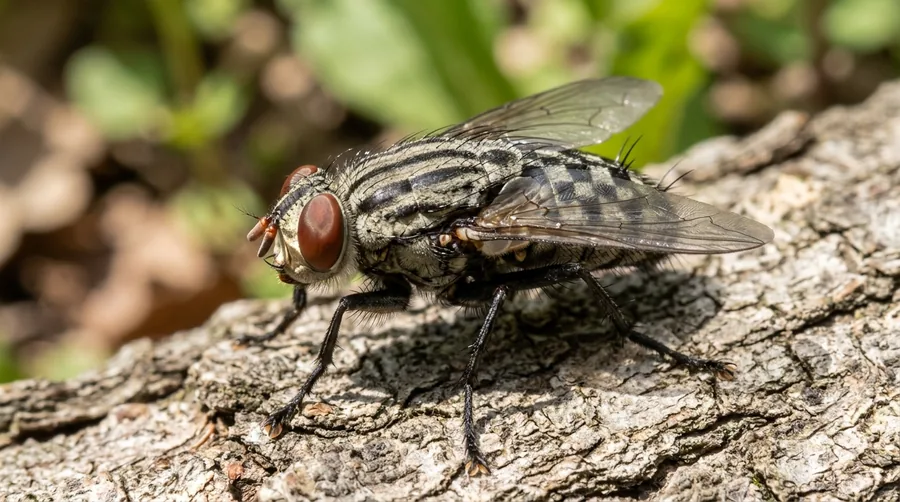
Gray flesh fly with three thorax stripes and a checkered abdomen on a surface
Recommended Products
See the full ranking →


What it does
Flesh flies are active daytime fliers drawn to decaying meat, carrion, feces, and garbage. Unusually, females do not lay eggs but deposit live, already-hatched maggots directly onto a food source, giving their larvae a head start. Like blow flies, an indoor cluster often points to a hidden dead animal.
Where it lives
Outdoors they gather around dumpsters, compost, roadkill, and pet waste. They enter homes through open doors and torn screens and become abundant where garbage or a dead animal is present in a wall, attic, or crawl space. Flesh flies occur throughout the US.
How it breeds
Instead of eggs, the female deposits live larvae onto carrion, feces, or decaying matter. The maggots feed and grow quickly, then move to drier ground to pupate. In warm conditions development from larva to adult takes one to a few weeks, producing multiple generations per year.
What it eats
Adults feed on flower nectar, sap, and fluids from decaying material. The larvae feed on carrion, decaying meat, dung, and other rotting organic matter.
Identification
Flesh flies are 10-13 mm, robust, and dull gray with three lengthwise dark stripes on the thorax and a distinctive gray-and-black checkerboard pattern on the abdomen. Many have a reddish tip to the abdomen. They are larger and less shiny than blow flies.
Signs of an infestation
- Gray, checker-patterned flies indoors or at windows
- Maggots appearing in garbage or on a carcass
- A decaying smell from a wall, attic, or crawl space
- Flies clustering around trash or pet waste
- Repeated large flies near a hidden dead animal
Prevention tips
- Seal and empty garbage frequently, keeping bins clean
- Remove pet waste and any dead animals promptly
- Repair torn screens and keep doors closed
- Keep compost covered and away from the house
- Clean drains and spills where organic residue collects
Professional solutions
Flesh fly control centers on removing the breeding source, not spraying adults. If flies keep appearing indoors with no visible cause, a dead animal may be inside the structure. A pest or wildlife control professional can locate and remove the carcass and treat the affected area.
Health & safety
Flesh flies do not bite or sting. Because they develop in filth and carrion and then contact food and surfaces, they can mechanically transfer bacteria, making them a sanitation concern. In very rare cases their larvae cause accidental myiasis. Keep them off food and clean any surfaces they touch.
Relevant Products





Frequently asked questions
What is the difference between a flesh fly and a blow fly?
Flesh flies are dull gray with three thorax stripes and a checkerboard abdomen, while blow flies have a shiny metallic blue or green body. Both breed in decaying matter and can appear indoors when an animal has died in a wall or attic.
Do flesh flies bite?
No. Flesh flies do not bite or sting people. They can carry bacteria from carrion and garbage to food surfaces, so their presence is a sanitation concern. Keeping food covered and cleaning surfaces they land on reduces any risk.
How do I get rid of flesh flies indoors?
Track down and remove what they are breeding in, whether garbage, pet waste, or a hidden dead animal, then screen entry points and clean the area. Removing the source is far more effective than repeatedly killing the adult flies.
Fact-checked by Morgan Vance, Editorial Director (editorial review, not a professional pest-control or medical sign-off). Last reviewed May 25, 2026. We correct anything a reader shows us is wrong — see our corrections policy.