
Bean Weevil
Acanthoscelides obtectus · also called bean weevils, dried bean weevil, common bean weevil
Quick answer
The bean weevil (Acanthoscelides obtectus) is a small, oval, mottled gray-brown seed beetle whose short snout sets it apart from true weevils. Larvae bore into dried beans and other legumes, developing inside the seed. It can infest beans in the field and continue breeding in stored dried beans indoors.
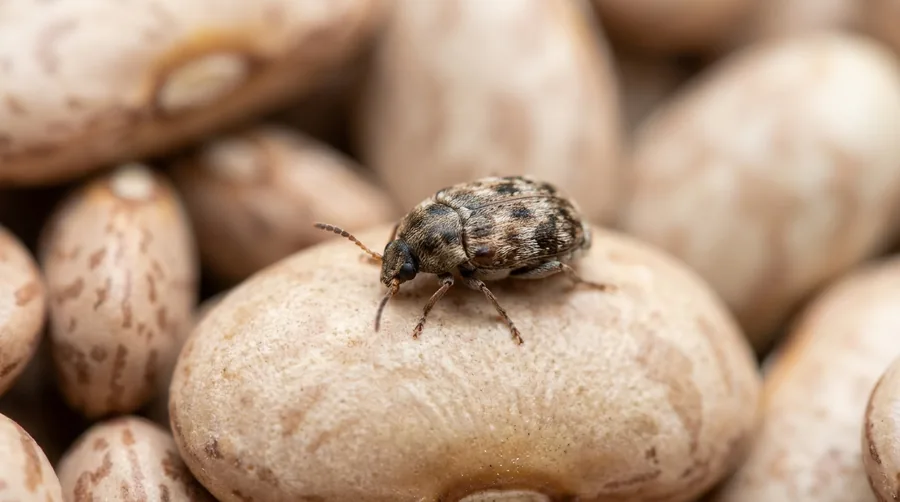
Small oval mottled gray-brown bean weevil on dried beans with tiny round exit holes
Recommended Products


What it does
The bean weevil is a seed beetle rather than a true weevil, with a short, broad head instead of a long snout. Larvae bore into dried legumes and develop inside, and adults chew round exit holes when they emerge. Unusually among stored-bean pests, it can keep breeding in dried beans indoors for many overlapping generations.
Where it lives
It infests dried beans, peas, lentils, and other legumes in home pantries, warehouses, mills, and markets, and can also begin infestations on maturing bean pods in the field. Found nationwide, it persists wherever dried legumes are stored in warm conditions.
How it breeds
Females scatter eggs among beans or lay them in cracks and pods. Larvae bore into the seed, feed, and pupate inside, then emerge as adults through a round hole, completing a generation in about a month when warm. Continuous breeding in stored beans allows numbers to climb quickly.
What it eats
Larvae feed inside dried beans and other legume seeds such as peas, lentils, cowpeas, and soybeans, consuming the interior. Adults feed little and are short-lived. Because larvae develop within whole seeds, dried legumes are the primary target.
Identification
Adults are about 1/8 inch, oval, and mottled olive-gray to brownish, with a short head, clubbed antennae, and the tip of the abdomen often exposed beyond the wing covers. Round exit holes in beans and small larvae inside seeds help confirm an infestation.
Signs of an infestation
- Dried beans with small round exit holes
- Small oval beetles in or around stored legumes
- Larvae or powder found inside split beans
- Beetles emerging from long-stored bean packages
- Reduced, hollowed, or damaged dried beans
Prevention tips
- Store dried beans and legumes in airtight containers
- Freeze newly purchased legumes for several days
- Use older stock first and buy manageable amounts
- Discard old or hole-riddled dried beans
- Clean pantry cracks and vacuum spilled legumes
Professional solutions
Home infestations are usually cleared by discarding infested legumes, cleaning the pantry, and using airtight storage. A professional is helpful for recurring problems or for commercial legume storage, where inspection, sanitation, and controlled treatment protect larger quantities.
Health & safety
Bean weevils do not bite, sting, or transmit disease and do no structural harm. They contaminate and destroy dried legumes. Accidentally cooking a few is not considered dangerous, but infested, hollowed beans should be discarded rather than salvaged.
Relevant Products


Frequently asked questions
Is a bean weevil a true weevil?
Not exactly. The bean weevil is a seed beetle (family Bruchidae) with a short, broad head rather than the long snout of true weevils like the rice or granary weevil. It behaves similarly by developing inside seeds, but is a different family of beetle.
Can bean weevils spread to other foods in my pantry?
They specialize in dried beans and other legumes rather than grains or flour, so they mainly move between legume products. Storing beans in airtight containers and discarding infested packages keeps them from continuing to breed and spread through your dried legume stores.
Are beans with weevils safe to eat?
Bean weevils are not known to carry disease, so eating a few accidentally is not considered harmful. However, infested beans are hollowed and contaminated with larvae and waste, so it is best to discard them and clean the storage area before restocking.
Fact-checked by Morgan Vance, Editorial Director (editorial review, not a professional pest-control or medical sign-off). Last reviewed May 12, 2026. We correct anything a reader shows us is wrong — see our corrections policy.