

Why do mosquito bites itch?
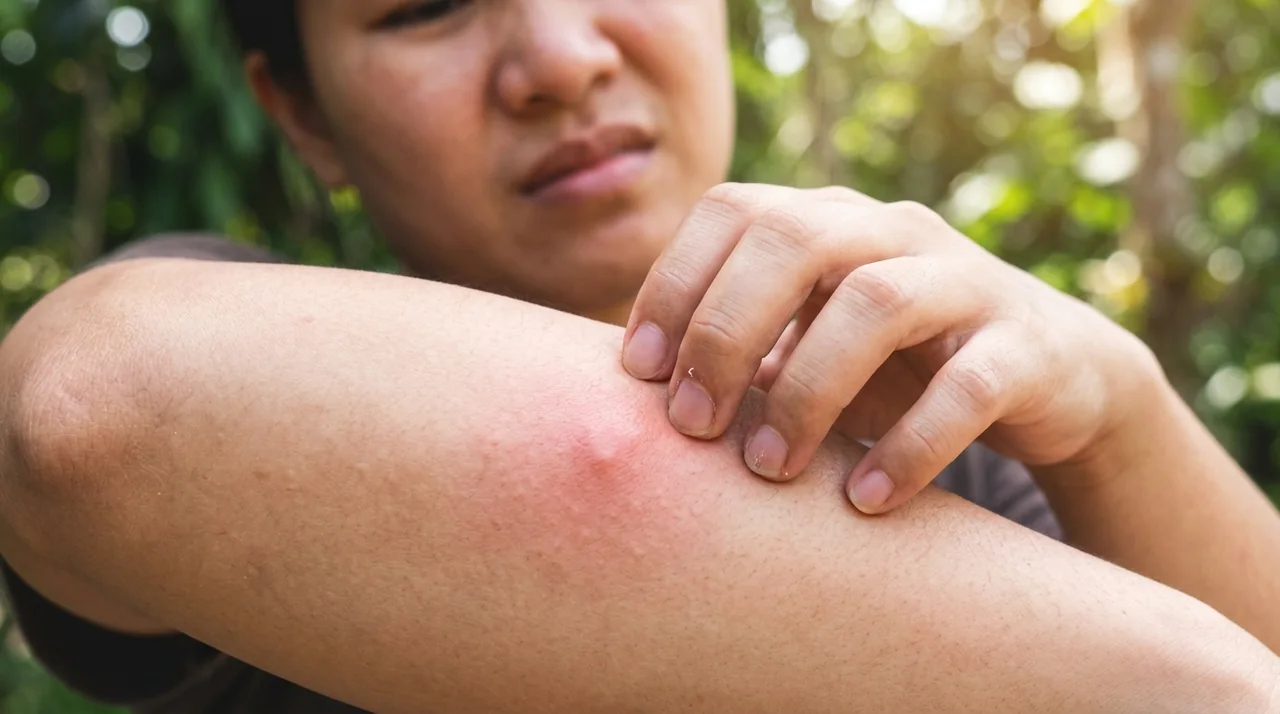
Only female mosquitoes bite, because they need a blood meal to develop their eggs. This is true whether it is a Culex house mosquito, an Aedes daytime biter, or an Anopheles. As a female feeds, she injects saliva containing anticoagulant compounds. These stop your blood from clotting, so it keeps flowing through her mouthparts. Your immune system recognizes those saliva proteins as foreign and responds by releasing histamine. Histamine widens nearby blood vessels and summons immune cells to the area. That reaction turns the tiny puncture into a raised, itchy red bump. You can read more about a common biter in the house mosquito profile.
How soon after a bite does the itch start?
It depends on your prior exposure. The first time your body meets a particular mosquito's saliva, the reaction may be slow. It might show up only after a day. With repeated exposure, many people develop a faster response. Then the welt and itch appear within minutes. The typical pattern looks like this:
- A raised, itchy welt forms soon after the bite.
- Itching and swelling peak within a day.
- The reaction fades over several days as your body clears the proteins.
Why do some people react more than others?
Reaction strength is highly individual and can change over a lifetime. Children often react strongly, because their immune systems have had less exposure. Some adults become desensitized over years of bites and barely react at all. Others stay very sensitive. This variation is about your immune response to the saliva. It is not about the mosquito being different or more venomous. It is also why two people bitten at the same picnic can have completely different-looking welts.
How do I ease the itch?
General self-care usually settles a mosquito bite:
- Wash the area with soap and water.
- Apply a cool compress to reduce swelling.
- Use an over-the-counter anti-itch cream, such as one with hydrocortisone, or an oral antihistamine as directed on the label.
- Resist scratching, which worsens irritation and can break the skin and invite infection.
When is a mosquito bite more than an itch?
For most people, mosquito bites are a passing nuisance. The more important reason to limit bites is that mosquitoes can transmit certain diseases in some regions. This is general information rather than a diagnosis. Still, it is why reducing bites is worthwhile. Seek medical advice if a bite is followed by fever, body aches, a spreading rash, or other unusual symptoms, especially after travel.
How do I prevent mosquito bites in the first place?
Prevention works best when you attack both the mosquitoes and your exposure:
- Eliminate standing water where mosquitoes breed, such as buckets, clogged gutters, plant saucers, and old tires. Even a small amount of water can produce larvae.
- Keep window and door screens in good repair.
- Use an EPA-registered repellent and apply it strictly according to the label.
- Wear long sleeves and pants during peak biting times, which for many species are dawn and dusk.