

How do I ease the itch at home?
Most mosquito bites are minor and clear up on their own within a few days. Simple measures can make them more comfortable in the meantime:
- Wash the bite gently with soap and water.
- Apply a cool, damp cloth or an ice pack wrapped in a towel to reduce swelling and itch.
- Try an over-the-counter anti-itch product such as calamine lotion or hydrocortisone cream.
- Consider an oral antihistamine if itching is bothersome, following the package directions.
How long does a mosquito bite usually last?
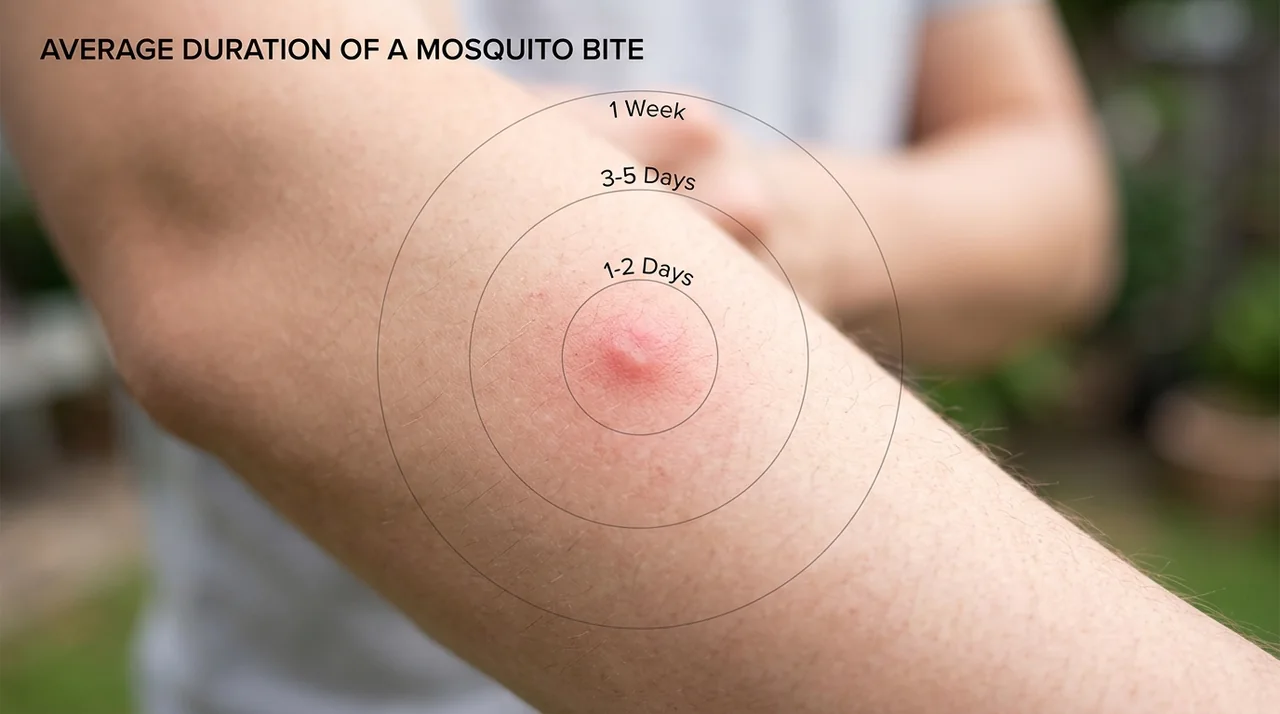
For most people, the itchy bump appears within minutes to a day. It then fades over several days as the body clears the mosquito's saliva proteins that caused the reaction. Some people react more strongly, with larger or longer-lasting welts. Others barely notice a bite. Watch any mark that keeps growing, spreading, or getting more painful after a few days. That pattern points more toward infection than a normal bite.
Why shouldn't I scratch, and what should I avoid?
Scratching feels good briefly, but it breaks the skin. That can introduce bacteria, lead to infection, and make the bite itch longer. Keeping nails short and covering a stubborn bite with a bandage can help you resist. Be cautious with unproven "hacks" too. Very hot or very cold objects applied directly to skin can cause burns or frostbite. Household products like bleach or undiluted essential oils can irritate or damage skin. Stick to gentle, established remedies.
What about bites on children?
Children scratch more and are more likely to break the skin. So keeping the area clean and their nails trimmed matters. For any product used on a child's skin, check that it is right for their age and follow the label. Ask a pharmacist or doctor if you are unsure. If a medicated cream or lotion is swallowed by accident, call Poison Control at 1-800-222-1222.
When should I see a doctor?
Mosquito bites are usually harmless, but reach out to a healthcare provider if you notice:
- A spreading area of redness, warmth, pus, or increasing pain, which can signal a skin infection.
- Signs of a serious allergic reaction such as widespread hives, swelling of the face or throat, or trouble breathing. This is a medical emergency: call 911.
- Fever, headache, body aches, joint pain, or a rash in the days after being bitten.
Can mosquito bites make me sick?
In most of the U.S., the majority of mosquito bites cause nothing more than an itchy bump. However, some mosquitoes can transmit disease. House mosquitoes (Culex) are the main spreaders of West Nile virus, which the CDC monitors nationwide. Other species can carry viruses in certain regions. This is why any fever or flu-like illness after mosquito exposure is worth mentioning to a doctor. You can learn about the common vector on our house mosquito library page.
The bottom line
Clean it, cool it, and resist scratching, and most bites fade quickly. This information is general and is not a substitute for medical advice. For young children, pregnancy, or existing health conditions, ask a doctor or pharmacist which options are appropriate. Always follow the label on any product you apply to skin.