

Does peppermint oil repel mice?
The house mouse (Mus musculus) navigates largely by scent. So it is plausible that a strong odor like peppermint could be off-putting. In a small, enclosed space, a concentrated smell may prompt a mouse to avoid an area for a short time. The trouble is turning that brief reaction into keeping mice out of a whole house. That is where the idea breaks down.
What the evidence actually shows
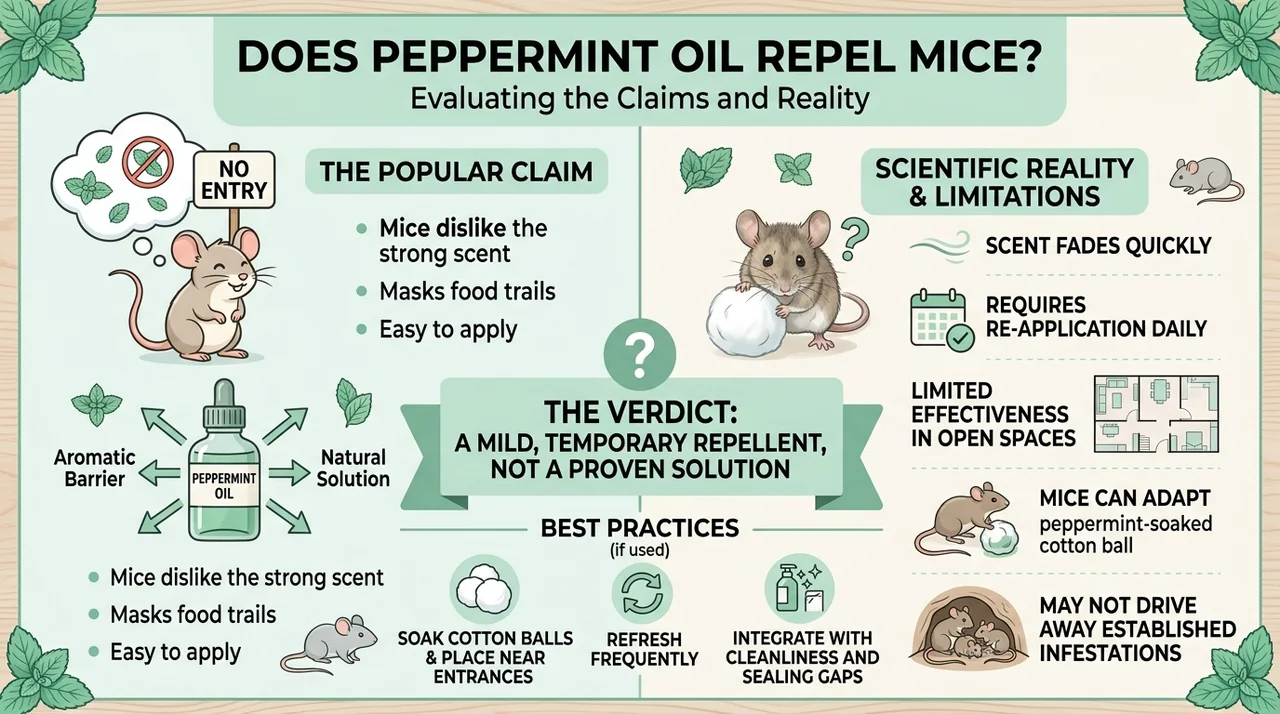
Peppermint oil is best understood as a mild and inconsistent repellent at most, not a barrier. Any avoidance tends to be brief. It also depends on a strong, fresh concentration right at the spot. There is no dependable evidence that peppermint oil keeps mice out of a home over time. This is especially true once food and shelter are available inside. Treat confident claims of "mouse-proofing" with peppermint with healthy skepticism.
Why the effect fades
Essential oils are volatile, meaning they evaporate. Cotton balls and sprays lose their potency within days. They need frequent reapplication to keep any scent going. On top of that, animals can habituate to a constant smell, so a mouse may simply grow used to it. A determined mouse with a nearby nest and food supply will tolerate the odor rather than abandon a good spot.
Repelling versus removing: an important difference
It helps to separate two goals. Repelling is about discouraging mice from entering a spot. Removing is about getting rid of mice that are already inside. Peppermint oil, at best, addresses only the first, weakly and temporarily. It does nothing for the second. If you already have mice, a repellent is the wrong tool. You need trapping and exclusion instead.
How to use peppermint oil realistically
If you would like to try it, treat peppermint oil as an optional supplement rather than a defense you rely on:
- Refresh it frequently, since the scent fades within days.
- Focus it on small, enclosed spots rather than open rooms, where any effect disperses quickly.
- Do not expect it to substitute for sealing gaps or removing food sources.
Keep it away from pets
Some essential oils can be harmful to cats and dogs. So keep peppermint oil and treated cotton balls out of their reach, and ask your veterinarian if you are unsure.
What truly keeps mice out
The measures that genuinely deter mice address access and resources:
- Seal entry gaps about a quarter-inch or larger with steel wool or copper mesh and sealant.
- Store food and pet food in sealed containers and clean up crumbs.
- Reduce clutter and nesting materials.
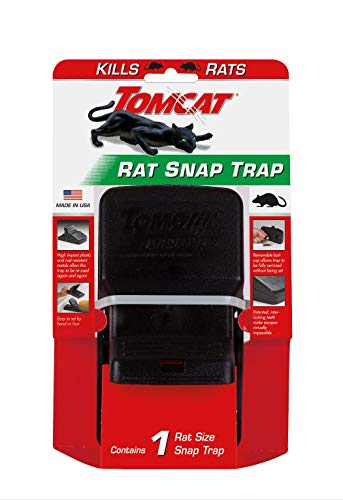
- Set snap traps where droppings and runways appear, to remove any mice already inside.
When to bring in a professional
For an established or recurring problem, a licensed pest control professional can find hidden entry points and build an effective, safe plan. Relying on peppermint oil alone tends to let a small problem grow while the scent quietly wears off.