

Why do bed bug bites itch?
For most people, bed bug bites itch because of an immune response. The bite itself is not toxic. When a bed bug (Cimex lectularius) feeds, it injects a small amount of saliva. That saliva contains numbing and anti-clotting compounds, so the bug can draw blood without waking you. Your body treats the proteins in the saliva as foreign. In response, it releases histamine, the same chemical behind many allergic reactions. Histamine widens blood vessels and draws immune cells to the spot. That reaction produces the familiar red, swollen, itchy welt.
Because it is an immune reaction, the response is highly individual:
- Some people develop itchy bumps within hours.
- Others react slowly, with itching that builds over a day or two.
- A minority never itch and show no visible marks, which is one reason infestations can go unnoticed for weeks.
What do bed bug bites look like?
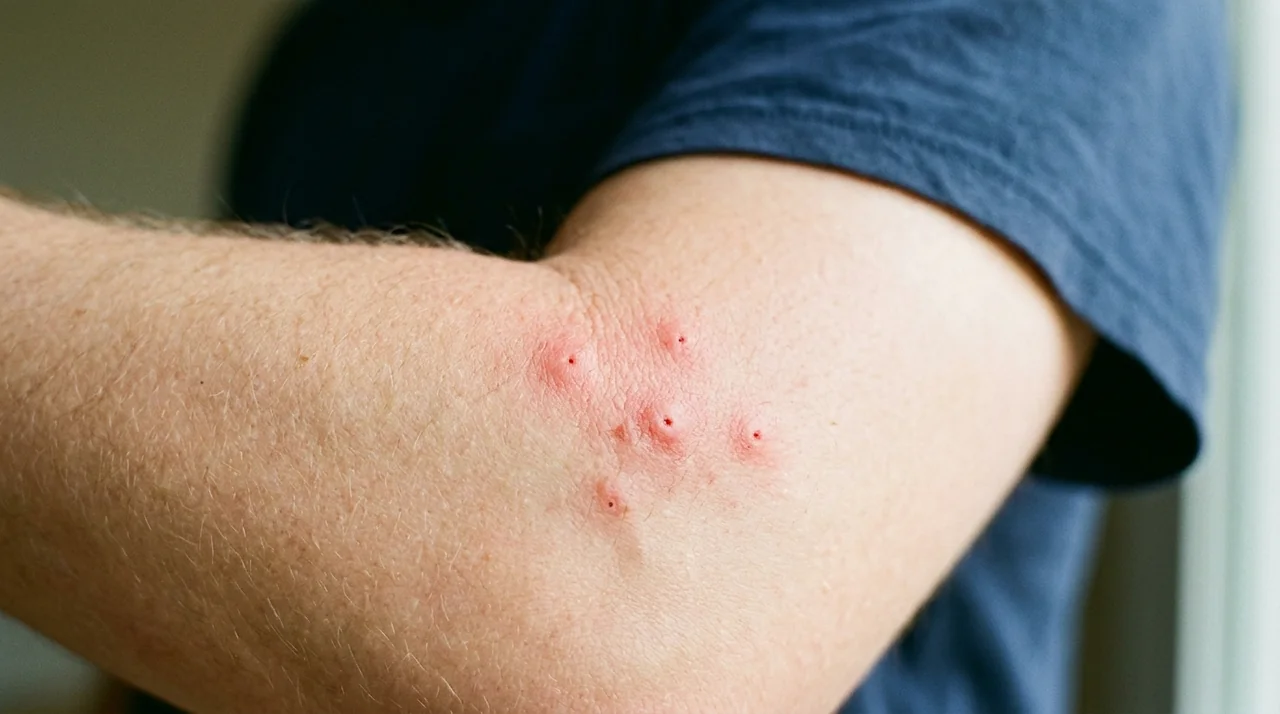
Bed bug bites usually show up on skin left uncovered during sleep. Common spots include the arms, shoulders, neck, and face. Typical features include:
- Small, flat or slightly raised red bumps.
- A rough line or a small cluster of bites close together.
- A darker or clearer center where the skin was pierced.
How long does the itch last?
For most people, the itch and redness fade over several days to a couple of weeks. This happens as the body clears the saliva proteins. Scratching tends to make bites last longer, and it can break the skin. Repeated exposure changes the picture too. Some people become more sensitive over time and react faster to new bites. Others gradually react less.
How do I stop bed bug bites from itching?
You can ease the discomfort with simple, general steps:
- Wash the area gently with soap and water.
- Apply a cool compress to calm swelling.
- Use an over-the-counter anti-itch cream or an oral antihistamine as directed on the label.
- Avoid scratching, which can lead to a secondary skin infection.
How do I tell bed bugs apart from fleas or mosquitoes?
This matters because treating the bites does nothing to stop new ones. Look for evidence of the source rather than guessing from the skin:
- Bed bugs leave rust- or coffee-colored spots on sheets, shed amber skins, and live insects tucked into mattress seams, box springs, and headboards. Bites often appear after sleep.
- Fleas usually bite the ankles and lower legs and are tied to pets and carpets.
- Mosquitoes bite exposed skin outdoors or near open windows, especially at dawn and dusk.
Are bed bug bites dangerous?
For the vast majority of people, bed bug bites are an itchy nuisance rather than a health threat. Bed bugs are not known to spread disease to people. The realistic risks are secondary infection from scratching, lost sleep, and stress. Serious allergic reactions are uncommon but possible. Treat any severe swelling or breathing difficulty as a medical matter.
When should I call a professional?
Bed bugs are notoriously hard to eliminate with DIY methods. They hide deep in cracks, and their eggs resist many products. If you confirm an infestation, you can use EPA-registered products strictly according to the label. You can also apply targeted heat and launder bedding on high heat. When the problem persists or keeps returning, a licensed pest professional has the tools and heat equipment to reach hidden populations. Treating bites alone will never end an infestation. The goal is always to find and remove the source.