

Can bed bugs fly or jump?
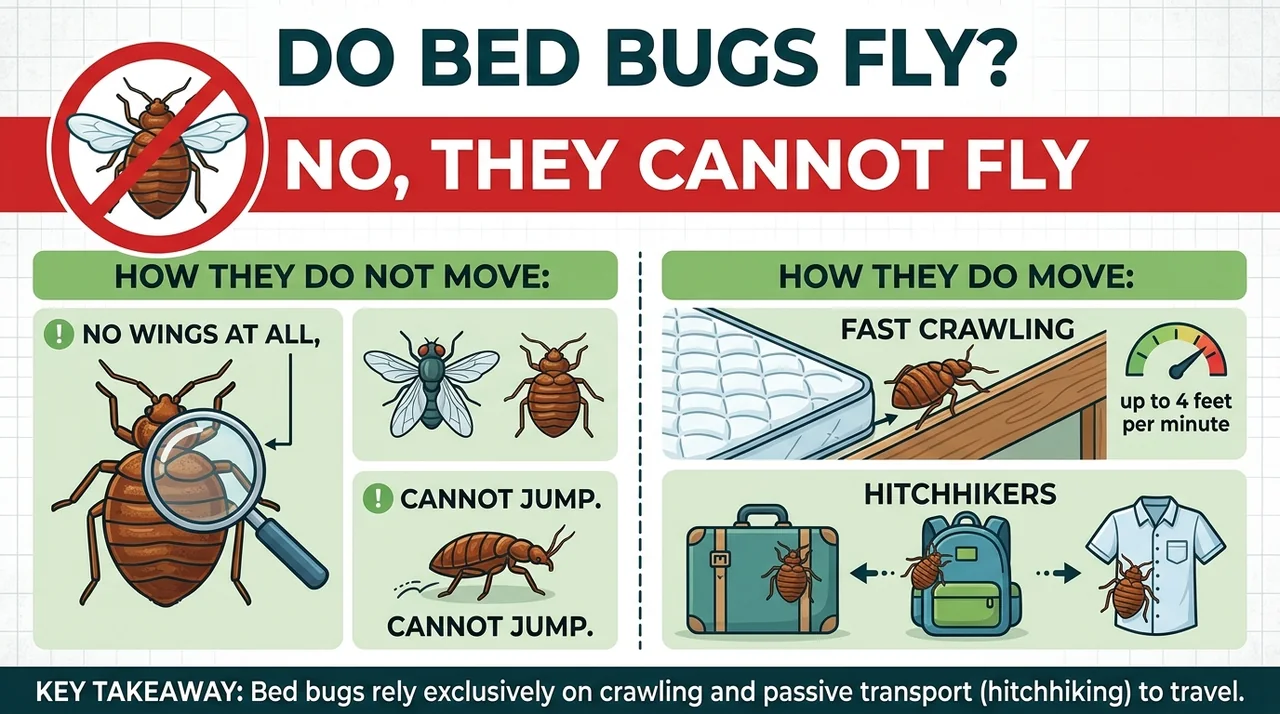
Bed bugs (Cimex lectularius) cannot do either. They have only small, undeveloped wing pads on their backs. They never grow working wings, so flight is impossible. Unlike fleas, they are not built to jump. Instead, bed bugs get around the old-fashioned way: by crawling. They are surprisingly quick over short distances across floors, walls, and bedding.
Because they only crawl, their spread depends on being carried:
- Climbing into luggage, backpacks, purses, and folded clothing
- Riding along inside used furniture, mattresses, and box springs
- Crawling between apartment units through wall voids, baseboards, and utility gaps
Can bed bugs climb walls and ceilings?
Yes. Bed bugs climb well on rough or textured surfaces such as wood, fabric, paper, and painted drywall. That is how they reach headboards, picture frames, and even ceilings. They struggle on very smooth, slick surfaces like polished metal or glass. This is one reason interceptor cups placed under bed legs can trap them. So they will not swoop down from above. A bug on the ceiling climbed there rather than flew.
How do bed bugs get into a home if they can't fly?
Bed bugs travel by being transported. So an infestation almost always starts with an item or person coming from an infested place. Common routes include returning from a hotel, motel, or shared lodging. Others are bringing home secondhand furniture or living next to an infested unit. Being clean or wealthy offers no protection. Bed bugs feed on blood, not crumbs, so hygiene is not the deciding factor. You can learn more about their biology and signs on our bed bug library page.
Do bed bugs live on people the way lice do?
No, and this is an important difference. Bed bugs do not stay on the body, burrow into skin, or nest in hair. They crawl onto a person only briefly to feed, usually at night. Then they return to a hidden spot nearby. Because they do not live on you, they rarely pass directly from person to person through casual contact. Instead they hitch a ride on the things people carry. That is why a bag left on an infested seat, or a coat hung against an infested wall, is a far more likely route than a handshake.
What does this mean for prevention?
Because bed bugs are carried rather than airborne, prevention centers on inspection and caution:
- When traveling, check mattress seams and headboards, keep luggage on a hard rack away from the bed, and hot-dry clothing after trips.
- Examine secondhand furniture closely, especially seams, joints, and screw holes, before bringing it inside.
- Reduce clutter near the bed, and consider encasing the mattress and box spring to remove hiding spots.
Common myths about how bed bugs spread
A few beliefs persist that simply are not true. Bed bugs do not fly, so they cannot enter through a window screen on their own. They are not a sign of a dirty home. And unlike some biting pests such as fleas, they are not known to spread disease to people. What they are is persistent. If you find live bugs or rusty spotting on bedding, act early. Use heat, thorough vacuuming, and EPA-labeled products strictly as directed. When an infestation is established, bring in a professional for a heat treatment.