

Why don't mothballs repel mice?
Mothballs are made to control clothes moths inside sealed containers. In that closed space, their naphthalene or paradichlorobenzene vapors can build up to a level that affects insects. Out in the open, in a basement, attic, or wall void, the concentration disperses. It stays far too low to deter a determined house mouse (Mus musculus). A mouse driven by food and warmth will simply walk past them. You can learn more about the species on our house mouse library page.
Is it even legal or safe to use mothballs this way?
No. The EPA-registered product label lists only enclosed uses, such as storing woolens in a sealed bin or garment bag. Scattering mothballs around living spaces, crawl spaces, sheds, or gardens is an off-label use. Using a pesticide in a way the label does not allow is a misuse. Those vapors are meant to stay sealed in a container. Breathed indoors, they can be unpleasant, and over time unhealthy, for people and pets.
Are mothballs dangerous to children and pets?
Mothballs look like candy or a toy to a small child, and pets may be tempted to chew them. Swallowing them can be harmful. Keep any mothballs used for their intended purpose in sealed, out-of-reach containers. If a child or pet swallows a mothball, or someone feels ill from the fumes, call Poison Control at 1-800-222-1222. Seek medical care for an emergency.
What about other home remedies like peppermint oil or ultrasonic devices?
Many popular "repellent" fixes share the same weakness as mothballs. They may smell strong to us, but they do little to move a mouse away from reliable food and shelter. Peppermint oil, cotton balls soaked in scent, and plug-in ultrasonic devices are widely sold. None are dependable substitutes for exclusion and trapping. At best, they are a minor, short-lived nuisance to a mouse. At worst, they give a false sense that the problem is handled while the population keeps growing.
Why do scent-based repellents fail over time?
Even when a strong smell startles a mouse at first, the effect rarely lasts. Mice are adaptable. They quickly get used to a constant odor once they learn it poses no real threat, especially when food and a warm nest sit on the other side of it. This habituation is the core reason odor and sound "repellents" disappoint. Hunger and the drive to nest almost always win out over a smell. Physically closing the gaps a mouse uses removes the choice entirely. That is why exclusion outperforms any repellent.
What actually works?
Effective mouse control focuses on keeping them out and removing what attracts them:
- Seal gaps larger than about a quarter-inch (roughly the width of a pencil) around pipes, vents, and the foundation with steel wool and sealant.
- Store food, including pet food and birdseed, in sealed containers.
- Remove clutter and soft nesting material.
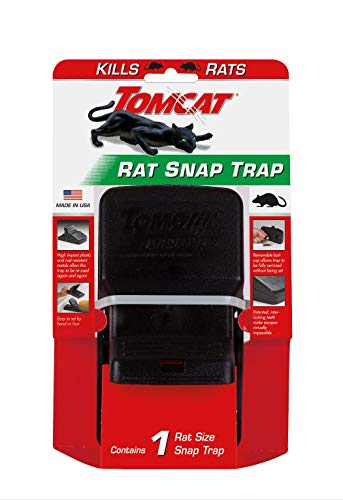
- Set snap traps or other traps along walls, where mice naturally travel.
When should I call a professional?
Some mouse problems need a pro. If you have a large or ongoing rodent problem, keep finding droppings or gnaw marks, or hear activity in walls and ceilings, a licensed pest control professional can help. They can locate entry points and set up a safe, effective plan. Our exterminator directory can help you find one.