
Warehouse Beetle
Trogoderma variabile · also called warehouse beetles, cabinet beetle
Quick answer
The warehouse beetle (Trogoderma variabile) is a small, oval, mottled brown-and-black stored-product beetle. Its bristly larvae are the damaging stage, feeding on grains, seeds, pet food, and dead insects. The larval hairs can irritate the digestive tract if swallowed in infested food, so contamination, not disease, is the main concern.
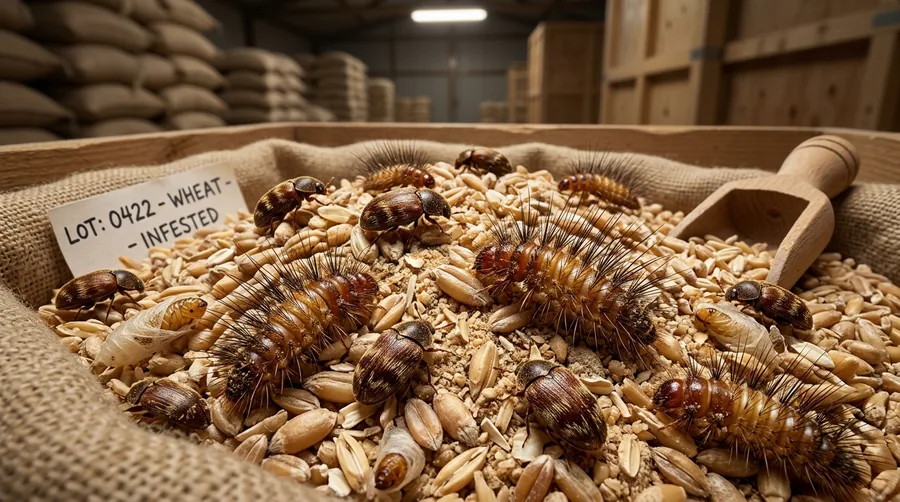
Small oval mottled brown-and-black warehouse beetle beside a bristly cast larval skin
Recommended Products


What it does
The warehouse beetle is a dermestid whose larvae do the feeding and damage, while short-lived adults are drawn to light and windows. Larvae are highly mobile, roam widely from the food source, and can survive long periods on very little, making infestations persistent and hard to trace in large facilities.
Where it lives
It is chiefly a pest of warehouses, mills, food plants, and pet-food storage, but also turns up in home pantries and bird-seed. Larvae shelter in spilled grain, cracks, and dead-insect debris. It occurs nationwide and, like its relatives, thrives in warm, dry stored-product environments.
How it breeds
Females lay eggs in or near food. The bristly larvae molt several times, shedding cast skins that accumulate, and can extend development for weeks to months, entering a resting state when food is scarce. A generation often takes one to a few months, with multiple generations a year in warm storage.
What it eats
Larvae eat a very broad range of stored products, including grains, cereals, seeds, nuts, dried pet food, dead insects, and animal debris. This wide diet lets populations persist on scraps and hidden residue even after obvious infested food is removed.
Identification
Adults are about 1/8 inch, oval, and mottled brown and black. The pale-tan larvae are more diagnostic: elongated, tapered, and covered in stiff hairs, with distinctive arrow-shaped hair tufts at the rear. Shed larval skins in food are a telltale sign.
Signs of an infestation
- Hairy, banded larvae in grain, seeds, or pet food
- Numerous cast larval skins accumulating in stored products
- Small oval adult beetles at windows and lights
- Contaminated food with a shed-skin, dusty appearance
- Beetles or larvae in spilled grain and cracks
Prevention tips
- Rotate stock and use older inventory first
- Keep storage areas clean of spilled grain and debris
- Store food in sealed, insect-proof containers
- Vacuum cracks, corners, and shelving regularly
- Use pheromone monitoring traps in commercial storage
Professional solutions
Because warehouse beetle larvae range widely and hide in cracks, commercial infestations often need a professional for thorough inspection, sanitation, targeted crack-and-crevice treatment, and pheromone monitoring. In homes, discarding infested food and deep-cleaning usually suffices, with a pro called for repeat problems.
Health & safety
Warehouse beetles do not bite, sting, or spread disease. Their main health concern is the barbed larval hairs (hastisetae): swallowing them in heavily infested food can irritate the mouth, throat, and digestive tract and may trigger reactions in sensitive people. Discard contaminated food rather than eating around the insects.
Relevant Products


Frequently asked questions
Are warehouse beetle larvae dangerous if eaten?
The larvae are covered in tiny barbed hairs that can irritate the mouth, throat, and digestive tract if swallowed in infested food, and may cause reactions in sensitive individuals. They do not spread disease, but contaminated food should be thrown out rather than eaten.
What is the difference between a warehouse beetle and a carpet beetle?
Both are dermestids with hairy larvae, but warehouse beetles focus on stored foods like grain, seeds, and pet food, while carpet beetles often target wool, hides, and other animal fibers. Warehouse beetle larvae also have distinctive arrow-shaped hair tufts at the tail end.
Why do warehouse beetles keep coming back?
The larvae roam far from the food source and survive on scraps, dead insects, and debris in cracks, so removing one infested package rarely ends it. Thorough cleaning, sealed storage, and pheromone monitoring, plus a professional in commercial settings, are usually needed for lasting control.
Fact-checked by Morgan Vance, Editorial Director (editorial review, not a professional pest-control or medical sign-off). Last reviewed August 12, 2026. We correct anything a reader shows us is wrong — see our corrections policy.