
Larder Beetle
Dermestes lardarius · also called bacon beetle, larder beetles
Quick answer
The larder beetle (Dermestes lardarius) is a dark, elongate beetle with a pale band across its wing covers. It infests high-protein foods like cured meat, cheese, pet food, and dried fish, and also feeds on dead insects and animal remains. Larvae may bore into wood to pupate; it spreads no disease.
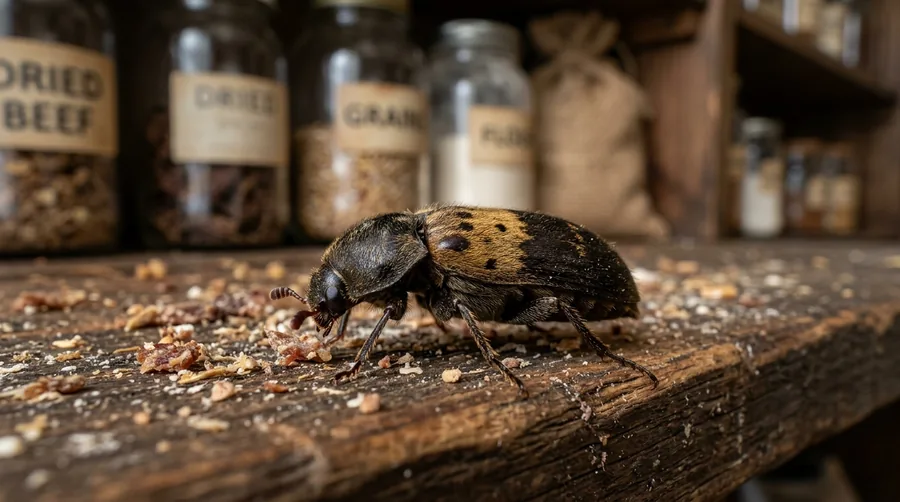
Dark larder beetle with a pale banded stripe across its wing covers on a pantry surface
Recommended Products


What it does
Larder beetles are named for their old reputation as pests of stored meats. Larvae and adults feed on high-protein animal materials, and when ready to pupate the larvae often bore into wood, insulation, or other firm materials, which can cause minor structural nuisance damage. Adults may fly and are sometimes seen at windows in spring.
Where it lives
Indoors they infest pantries and stored animal-based foods, and also turn up feeding on dead insects, animal carcasses, and dried pet food in attics, wall voids, and around chimneys. A dead rodent or bird in a wall is a common hidden source. They are found in homes and food-handling businesses nationwide.
How it breeds
Females lay eggs near a protein-rich food source, and the dark, hairy larvae feed and grow before boring into a solid material to pupate. There is usually one generation per year in homes, though conditions with abundant food can support more. Adults may live for several months.
What it eats
Larder beetles feed on animal proteins and fats, cured or smoked meats, cheese, dried fish, pet food, hides, and feathers, as well as dead insects and animal carcasses.
Identification
Adults are 7-9 mm, dark brown to black, elongate-oval, with a broad pale yellowish band across the front half of the wing covers dotted with several dark spots. The larvae are dark and hairy with two curved spines at the rear, and are often found near the food source.
Signs of an infestation
- Dark, banded beetles found indoors, often near windows in spring
- Hairy larvae near pet food, stored meats, or a dead animal
- Small bore holes in wood or insulation where larvae pupated
- A hidden dead rodent or bird as the source of repeated beetles
Prevention tips
- Store meats, cheese, and pet food sealed and refrigerated where possible
- Promptly remove dead insects, and any dead rodents or birds in voids
- Vacuum and clean pantry spills and accumulated debris
- Screen vents and seal gaps to keep animals from dying in walls
Professional solutions
The key is finding and removing the protein source, which is often a dead animal in a wall, chimney, or attic rather than pantry food. Clean and vacuum the area, and discard infested goods. If beetles keep appearing and the source cannot be found, a professional can help locate a hidden carcass or nest and treat affected voids.
Health & safety
Larder beetles do not bite, sting, or spread disease to people. Their significance is contamination of stored animal-based foods and minor damage when larvae bore into wood or insulation to pupate. Repeated indoor beetles often signal a dead animal nearby, which is the real issue to resolve; the beetle itself is not hazardous.
Relevant Products


Frequently asked questions
Why do I keep finding larder beetles in my house?
Repeated larder beetles often point to a hidden protein source, commonly a dead rodent or bird in a wall, attic, or chimney, or overlooked pet food and stored meat. Finding and removing that source usually stops the beetles; they are feeding on something you have not yet located.
Do larder beetles damage the house?
They do not eat structural wood the way termites do, but when the larvae are ready to pupate they bore into wood, insulation, and other firm materials, which can cause minor nuisance damage. The bigger issues are contaminated food and the dead animal that often draws them in.
Are larder beetles dangerous?
No. Larder beetles do not bite, sting, or spread disease to people or pets. They are a nuisance and food-contamination pest. If they keep appearing, the priority is finding the animal-based food source, often a dead animal, that is sustaining them.
Fact-checked by Morgan Vance, Editorial Director (editorial review, not a professional pest-control or medical sign-off). Last reviewed May 13, 2026. We correct anything a reader shows us is wrong — see our corrections policy.