
Varied Carpet Beetle
Anthrenus verbasci · also called carpet beetle, buffalo bug
Quick answer
The varied carpet beetle (Anthrenus verbasci) is a tiny, round beetle mottled with white, brown, and yellow scales. Its bristly larvae are the pests, quietly chewing holes in wool, silk, furs, feathers, and other natural fibers stored indoors. Adults are harmless and feed on pollen outdoors; the beetle spreads no disease.
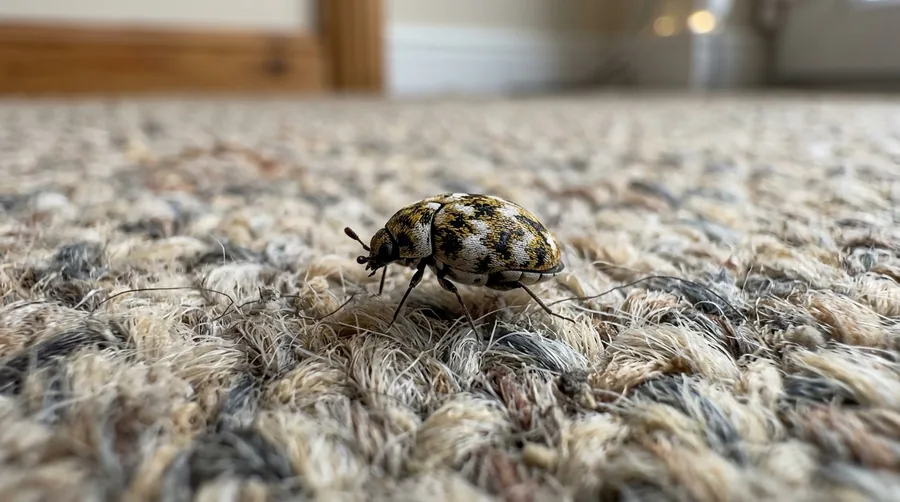
Tiny round varied carpet beetle mottled with white, brown, and yellow scales beside a bristly larva
Recommended Products
See the full ranking →


What it does
The damage is done by the larvae, which feed in dark, undisturbed places on natural fibers and animal materials, while the small adults fly to windows and are drawn outdoors to flowers. Larvae avoid light and can go unnoticed for months in closets, under furniture, and in stored textiles, slowly chewing irregular holes.
Where it lives
Indoors, larvae live in closets, drawers, under baseboards and heavy furniture, in air ducts, and around stored wool, furs, and dried goods. They also feed on accumulations of pet hair, lint, and dead insects in wall voids and attics. Adults are often found at windows and are common in homes nationwide.
How it breeds
Females lay eggs on or near suitable larval food such as wool, feathers, or dead insects. The bristly larvae feed and molt many times, and development can take several months to more than a year depending on temperature and food. Adults are short-lived and lay the eggs for the next generation.
What it eats
Larvae feed on keratin-rich materials, wool, silk, fur, feathers, leather, hair, and dead insects, plus stored dry goods; adults feed on pollen and nectar from flowers outdoors.
Identification
Adults are tiny, 2-3 mm, rounded, and mottled with white, brown, and yellow scales that fade to solid brown with age. The larvae are small, carrot-shaped, and banded brown, with tufts of stiff hairs, and are usually what people find near damaged fabrics.
Signs of an infestation
- Irregular holes in wool, silk, or other natural-fiber items
- Shed, bristly larval skins in drawers, closets, and along edges
- Small hairy larvae near stored clothing, rugs, or dead insects
- Adult beetles at windowsills in spring
Prevention tips
- Clean and vacuum closets, rugs, and under furniture regularly
- Store wool, furs, and off-season clothing in sealed containers
- Launder or dry-clean items before long-term storage
- Remove bird and rodent nests and clean up dead insects near the home
Professional solutions
Most cases are handled by finding and removing the infested material, thorough cleaning and vacuuming, and laundering, dry-cleaning, or freezing affected items. Residual insecticides labeled for crack-and-crevice use can treat edges and voids. A professional can help locate a hidden source, such as a dead animal or old nest, when damage keeps recurring.
Health & safety
Varied carpet beetles do not bite, sting, or spread disease. The main issue is property damage to fabrics and stored goods. Some people develop skin irritation or an allergic reaction from contact with the larval hairs or shed skins, and the fibers can aggravate allergies, but the beetle itself is not a health hazard.
Relevant Products




Frequently asked questions
How do I know if I have carpet beetles?
Look for irregular holes in wool, silk, or fur items, shed bristly larval skins in drawers and closet corners, and small hairy, carrot-shaped larvae near stored fabrics or dead insects. Seeing tiny mottled beetles at windows in spring is another common clue.
Do carpet beetles bite?
No. Carpet beetles do not bite people or pets and do not spread disease. Bumpy, itchy skin that some people blame on carpet beetle bites is usually an allergic reaction to the larval hairs, not an actual bite. The real damage is to fabrics and stored goods.
How do I get rid of carpet beetles?
Find and remove the infested item, then vacuum thoroughly and launder, dry-clean, or freeze affected fabrics. Store wool and furs in sealed containers, and clean up lint, pet hair, and dead insects. A crack-and-crevice insecticide along edges and voids helps in persistent cases.
Fact-checked by Morgan Vance, Editorial Director (editorial review, not a professional pest-control or medical sign-off). Last reviewed June 25, 2026. We correct anything a reader shows us is wrong — see our corrections policy.