
Khapra Beetle
Trogoderma granarium · also called khapra beetles, cabinet beetle
Quick answer
The khapra beetle (Trogoderma granarium) is one of the world's most destructive stored-grain pests and a federally regulated quarantine pest not established in the United States. Small and mottled brown, its hairy larvae devastate stored grain and resist many treatments. Any suspected find should be reported to agricultural authorities.
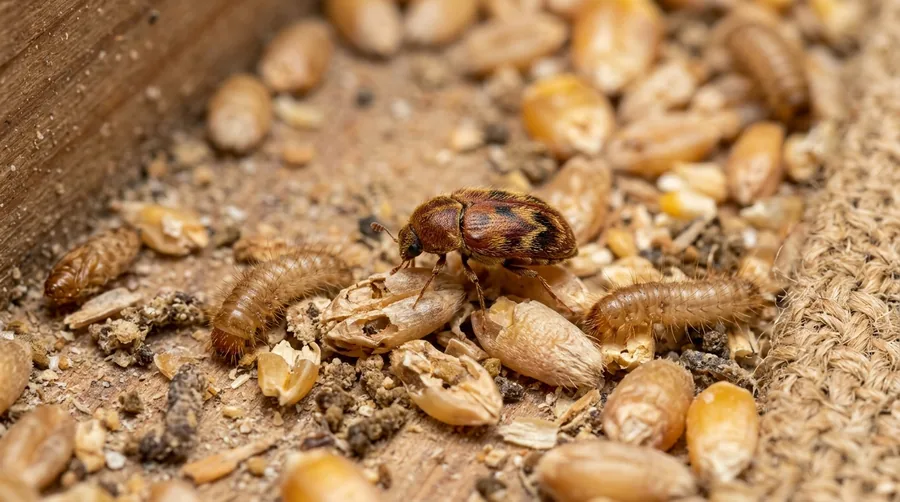
Small oval mottled brown khapra beetle and hairy larva on damaged wheat kernels
Recommended Products


What it does
The khapra beetle is a dermestid whose larvae cause the damage, feeding voraciously on stored grain and preferring hot, dry conditions. Larvae can enter a long dormant state (diapause) that lets them survive years without food and tolerate desiccation and many fumigants, which is why this pest is so hard to eradicate once introduced.
Where it lives
Native to South Asia, it is a serious pest of grain stores, warehouses, and shipping worldwide. It is not established in the United States; past introductions were eradicated at great cost, and it is intercepted at ports in imported goods. It survives in dry, warm storage and hides deep in cracks and packaging.
How it breeds
Females lay eggs on or near grain. The hairy larvae molt repeatedly and may pause development for months or years in diapause when conditions are poor, then resume when warmth and food return. This flexible life cycle, plus tolerance of dryness, makes populations extraordinarily persistent.
What it eats
Larvae feed on a wide range of stored plant products, especially wheat, barley, rice, and other grains and seeds, and can damage food to a degree that makes it unfit for use. They favor grain but exploit many dried foods and animal-based debris.
Identification
Adults are tiny, oval, and mottled reddish-brown to black. The yellow-brown larvae are densely hairy with a tail tuft, resembling warehouse beetle larvae. Because the two are easily confused and khapra is quarantine-significant, suspected specimens should be identified by an official diagnostic lab.
Signs of an infestation
- Hairy larvae and many cast skins in stored grain
- Heavily damaged, powdery grain unfit for use
- Small mottled beetles in imported dry goods
- Larvae hidden deep in cracks and packaging seams
- Infestation persisting despite normal cleaning
Prevention tips
- Inspect imported grains and dry goods for hairy larvae
- Buy from reputable suppliers and rotate stock
- Report any suspected khapra beetle to agricultural authorities
- Keep storage clean and free of spilled grain and debris
- Never move suspect infested material to a new location
Professional solutions
This is a regulatory matter, not a routine DIY pest. Suspected khapra beetles must be reported to the USDA or your state agriculture department, who direct identification and eradication. Because of diapause and treatment tolerance, control requires official, professional-grade fumigation and monitoring, never over-the-counter products.
Health & safety
The khapra beetle does not bite, sting, or transmit disease to people, and its hairy larvae may cause minor irritation like other dermestids. The overriding concern is economic and regulatory: it can ruin large volumes of stored food and is a federally regulated quarantine pest that must be reported, not treated privately.
Relevant Products


Frequently asked questions
Is the khapra beetle in the United States?
It is not established in the United States. Earlier introductions were eradicated, and it is treated as a federally regulated quarantine pest, intercepted at ports in imported goods. Any suspected find should be reported to the USDA or a state agriculture office rather than treated at home.
Why is the khapra beetle considered so dangerous?
It is one of the most destructive stored-grain pests worldwide because its larvae can survive years without food in a dormant state and tolerate many treatments, including some fumigants. This makes it extremely hard to eradicate and a major economic threat to stored food.
What should I do if I think I found a khapra beetle?
Do not move or discard the material, and do not rely on household products. Contact the USDA or your state department of agriculture so the specimen can be officially identified and, if confirmed, handled through regulated eradication procedures.
Fact-checked by Morgan Vance, Editorial Director (editorial review, not a professional pest-control or medical sign-off). Last reviewed August 2, 2026. We correct anything a reader shows us is wrong — see our corrections policy.