Two Lined Spittlebug
Prosapia bicincta · also called two-lined spittlebug, twolined spittlebug
Quick answer
The two-lined spittlebug (Prosapia bicincta) is a black, orange-striped insect of the southeastern US whose nymphs hide in frothy 'spittle' masses at the base of turfgrass and hollies. Both nymphs and adults suck sap, and heavy feeding can yellow and thin lawns, especially centipedegrass. The telltale sign is the white foamy spittle near the soil.
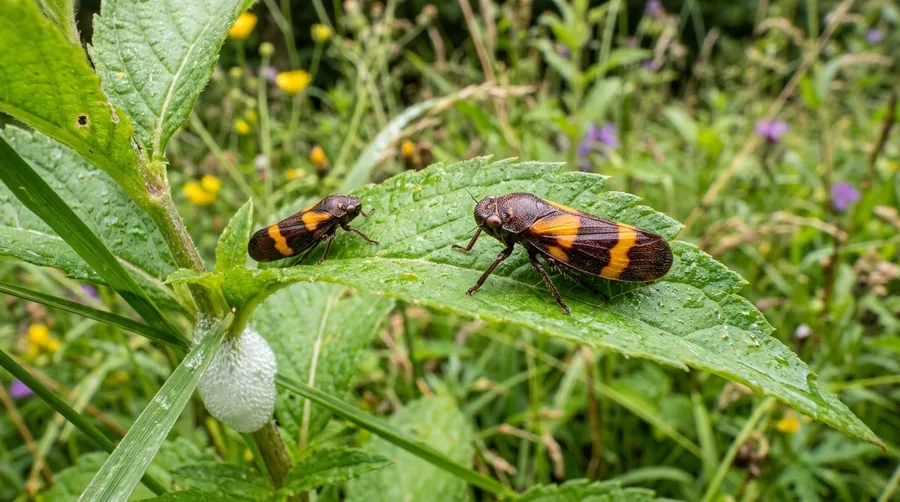
Black two lined spittlebug with two orange-red lines across its back on a blade of turfgrass
Recommended Products


What it does
Nymphs feed at the base of grass and plants while surrounded by a protective mass of white froth, or 'spittle,' that they produce; this foam hides them and keeps them moist. Adults are active, sap-feeding insects that hop and fly and feed higher on the plant. Heavy feeding removes sap and can yellow, streak, and thin turf, along with damage to hollies.
Where it lives
The two-lined spittlebug is chiefly a southeastern and Gulf Coast pest of warm-season turfgrasses, especially centipedegrass, and of ornamental hollies. It thrives in the thatch layer of lawns, which holds the humidity nymphs need, and is most numerous in warm, humid summer conditions.
How it breeds
There are generally two generations per year in the Southeast. Eggs overwinter in thatch and plant debris, hatching in late spring. Nymphs feed within spittle masses for several weeks before maturing into adults; a second generation typically develops in mid-to-late summer, when damage is often most noticeable.
What it eats
Nymphs and adults feed on plant sap, primarily from warm-season turfgrasses such as centipedegrass and also hollies and various ornamental and weedy plants in the landscape.
Identification
Adults are about 8-10 mm, black or very dark brown, with two distinctive orange to red lines running crosswise over the back and reddish legs and eyes. Nymphs are pale yellow to orange and hidden inside the frothy spittle. The white foamy masses low in the grass or on stems are the easiest way to detect them.
Signs of an infestation
- White frothy 'spittle' masses at the base of grass or on stems
- Yellowing, streaking, or thinning of centipedegrass lawns
- Black adults with two orange-red lines hopping from the turf
- Wilting or purpling of holly foliage from adult feeding
- Damage concentrated in warm, humid summer weather
Prevention tips
- Reduce excess thatch, which shelters eggs and holds humidity
- Avoid over-watering and over-fertilizing warm-season turf
- Mow and dethatch to lower the humid microclimate nymphs need
- Scout the lawn base for spittle masses in early summer
- Keep grass healthy so it tolerates light feeding
Professional solutions
Most lawns tolerate light spittlebug activity, and cultural steps like dethatching and proper watering reduce numbers. For heavy, damaging populations in centipedegrass, labeled turf insecticides timed to the nymphs help. Your Cooperative Extension office or a lawn-care professional can confirm the pest and advise on timing suited to your region.
Health & safety
The two-lined spittlebug does not bite, sting, or carry human disease, so it is harmless to people and pets; the spittle it produces is simply plant-fluid froth. Its impact is limited to plants, where sustained feeding can discolor and thin warm-season lawns and damage ornamental hollies.
Relevant Products


Frequently asked questions
What is the white foam at the base of my grass?
White, frothy 'spittle' at the base of turfgrass or on plant stems is produced by two-lined spittlebug nymphs, which hide and stay moist inside the foam while they feed on sap. Parting the froth reveals a small pale yellow-orange nymph within.
Is spittlebug froth harmful to touch?
No. The spittle is simply froth the nymph whips up from plant sap, and it is harmless to people and pets. Spittlebugs do not bite, sting, or carry disease. The concern is plant damage, particularly yellowing and thinning of centipedegrass lawns.
How do I control two-lined spittlebugs in my lawn?
Cultural steps help most: reduce excess thatch that shelters eggs and humidity, avoid over-watering and over-fertilizing, and keep warm-season grass healthy. For heavy, damaging populations in centipedegrass, a labeled turf insecticide timed to the nymphs can be used; check leaf litter and thatch when scouting.
Fact-checked by Morgan Vance, Editorial Director (editorial review, not a professional pest-control or medical sign-off). Last reviewed May 12, 2026. We correct anything a reader shows us is wrong — see our corrections policy.